
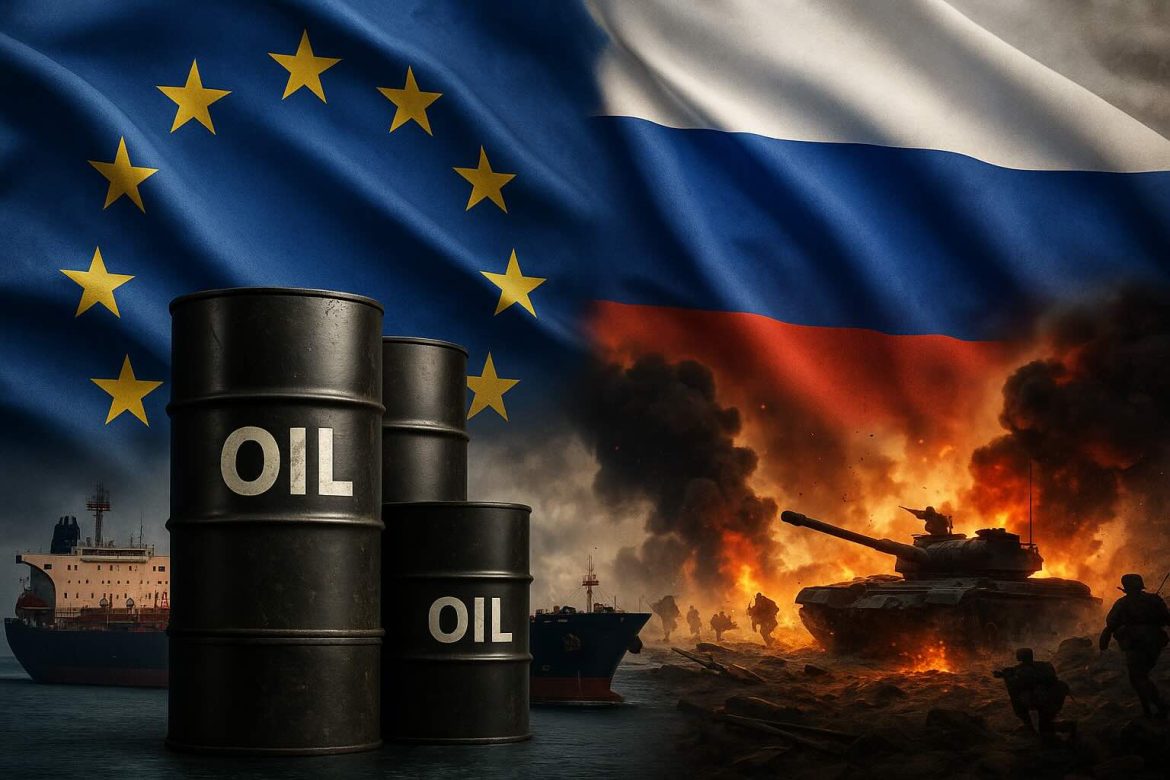
The European Commission has presented a 19th package of sanctions against Russia that tightens energy and financial restrictions and seeks to curb sanctions evasion via third countries. The proposal now goes to the 27 member states and would require unanimous approval before entering into force.
A central measure is an accelerated prohibition on imports of Russian liquefied natural gas (LNG) into the European Union from 1 January 2027, bringing forward an envisaged phase-out by one year. The step follows earlier EU action against trans-shipments of Russian LNG and is aimed at further reducing Moscow’s hydrocarbon revenues.
On oil, the Commission proposes additional designations against Russia’s so-called “shadow fleet” of ageing tankers used to move crude and products outside Western oversight. A further 118 vessels would be listed, taking the total to more than 560, with associated restrictions on re-insurance. The package also ends remaining exemptions for Rosneft and Gazprom Neft by introducing a full transaction ban on the companies.
Alongside enforcement on Russia-linked activity, the draft introduces measures directed at actors in third countries that facilitate breaches of Western oil restrictions. The Commission plans to list oil traders, refineries and petrochemical companies outside the EU—including in China—if they are found to purchase Russian crude above the G7/EU price cap or otherwise help circumvent sanctions. The proposal follows the recent lowering of the crude cap to $47.6 per barrel.
In the financial sphere, the package widens transaction bans to cover additional Russian banks and operations routed through third countries. It introduces a full transaction ban on cryptocurrency platforms and further limits crypto-related services for Russian nationals. The draft also envisages restrictions on Russia’s domestic payment systems—such as MIR—and the fast payments system (SBP), which have been used to skirt earlier measures.
Export controls would be tightened through designations of 45 additional entities in Russia and in third countries, including in China and India, for their role in supplying components or technologies with military applications to Russia’s defence sector. The Commission also proposes new bans on specified chemicals, metals, salts and ores deemed useful to the military-industrial complex.
Investment-related provisions include curbs on transactions connected to certain Special Economic Zones in Russia that are considered relevant to the war effort, with an option to extend measures to selected ports outside Russia if they are used for weapons transfers or to serve the shadow fleet.
The package contains listings tied to the unlawful deportation and indoctrination of Ukrainian children, continuing a sanctions track that targets individuals and entities implicated in violations of international humanitarian and human rights law.
European Commission President Ursula von der Leyen said the measures aim to further degrade Russia’s capacity to finance and conduct its war and to close residual loopholes in energy trade and financial channels. The Commission’s presentation highlights a dual focus: compressing direct revenues from hydrocarbons and constraining procurement for Russia’s war economy through expanded controls and enforcement against intermediaries.
If adopted as proposed, the measures would have implications for EU and non-EU energy actors. The forward-dated LNG ban would allow time for contractual adjustments while signalling an end-state to market participants. Expanded designations of shadow-fleet vessels, coupled with insurance restrictions, are intended to raise compliance risks and costs for transporting Russian oil outside the price-cap regime. The removal of exemptions for Rosneft and Gazprom Neft could affect remaining pipeline oil purchases in parts of the EU by complicating settlement and service provision.
The EU’s 19th package follows successive rounds adopted since 2022 that have targeted banks, state enterprises, technology imports, services and individuals. According to the Commission, Russian fossil-fuel earnings derived from European markets have declined substantially since the start of the invasion, and the latest measures seek to sustain that trend while strengthening enforcement. Final scope and timing will depend on deliberations among member states in the Council.

