
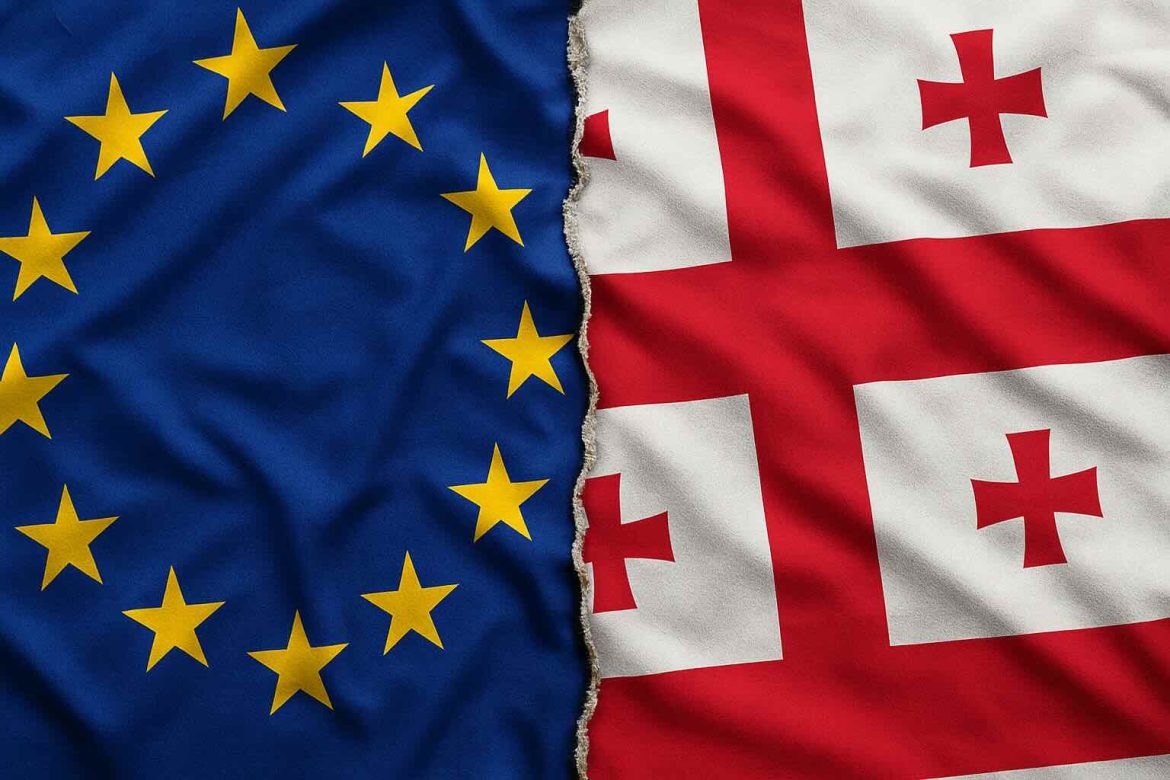
The European Commission has confirmed it intends to restrict aspects of the European Union’s visa-free travel regime for Georgia, starting with holders of Georgian diplomatic passports, once revised EU rules enter into force at the end of December.
The position was set out on 19 December in the Commission’s eighth report under the Visa Suspension Mechanism, the annual assessment of non-EU partners whose citizens can enter the Schengen area for short stays without a visa. Under the current regime, Georgian citizens may travel visa-free for up to 90 days in any 180-day period.
In its report, the Commission said Georgia had “violated numerous commitments” undertaken during the visa liberalisation dialogue and had failed to implement recommendations made in the previous year’s review. The Commission highlighted what it described as shortcomings in the protection of fundamental rights, including freedoms of association, assembly and expression, and said continued compliance with these benchmarks is a core condition for maintaining visa-free travel.
The document also refers to legislation adopted in 2024, including Georgia’s Law on Transparency of Foreign Influence and a legislative package on Family Values and Protection of Minors. The Commission said these measures were found to be in violation of fundamental rights and freedoms, and it listed recommendations including repeal of the transparency law and changes to policies affecting the rights of LGBTQ persons. It further stated that subsequent legislative changes, including a Foreign Agents Registration Act (FARA) and amendments to laws governing grants, political associations, administrative offences, broadcasting and the criminal code, had “curtailed civic space” and restricted dissenting voices, including independent media and civil society organisations.
The report notes that the Commission sent a formal letter to the Georgian authorities on 14 July 2025 recalling the obligation of continued compliance and requesting detailed information on implementation of earlier recommendations. It says Georgia’s response did not report meaningful progress and that in several areas the situation had further deteriorated. The Commission concludes that Georgia has regressed on governance and rule-of-law benchmarks and has also backtracked on visa-policy alignment and anti-corruption efforts.
Against that backdrop, the Commission said it would consider “appropriate measures” under the revised Visa Suspension Mechanism, which will apply from 30 December 2025. According to the report, a first phase could target holders of diplomatic, service and official passports issued by Georgian authorities. The Commission also indicated that later stages could extend to the broader population if the identified issues are not addressed, and that, ultimately, Georgia could lose visa-free status entirely and be moved to the EU list of third countries whose nationals require visas.
A restriction limited to diplomatic passports would have little practical effect on ordinary travel, because Georgian citizens would still be able to use standard biometric passports for short-term visa-free visits. Diplomatic sources cited by Radio Free Europe/Radio Liberty said a majority of EU member states would prefer a targeted approach focusing on Georgian decision-makers while avoiding measures that would directly affect the wider public.
The revised mechanism itself was designed to make suspension decisions quicker and more flexible, adding new grounds that extend beyond migration-management indicators to include security risks and human rights concerns. The European Parliament backed the reform in an October vote covering 61 visa-exempt countries, and the Council later approved updated rules that broaden the circumstances in which visa-free access may be suspended or revoked.
Georgia has enjoyed visa-free travel to the Schengen area since 2017, a step long presented by Brussels as part of closer engagement with Eastern Partnership states. The Commission’s report, which covers 2024 and major developments in 2025, signals that the EU intends to link the continuation of that benefit more directly to governance and rights benchmarks set during the original liberalisation process.

