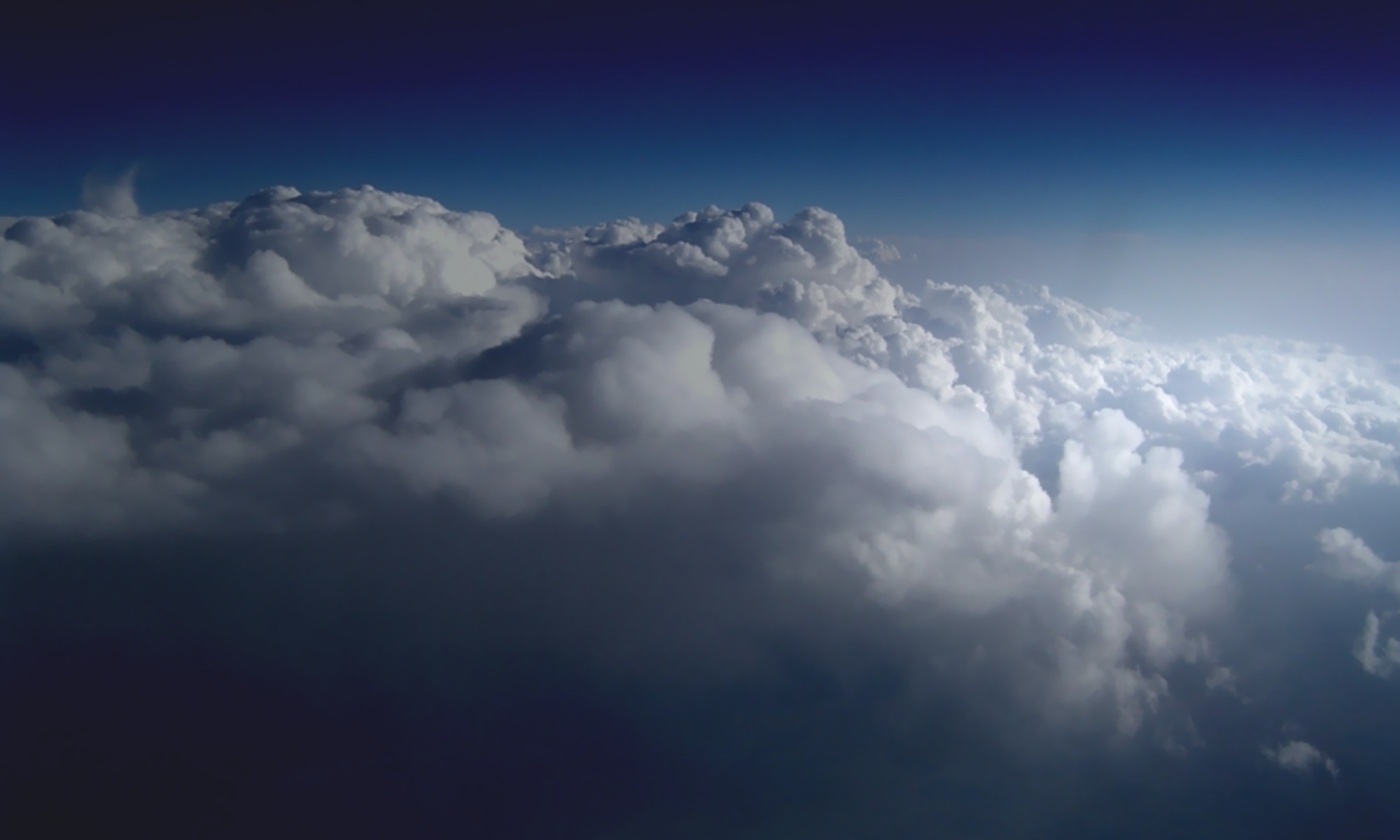
It is the silent giant of climate change, often absent from headlines and policy debates: water vapour. Unlike carbon dioxide and methane, water vapour rarely gets top billing in climate narratives, yet it is the most abundant greenhouse gas in our atmosphere and a critical amplifier of global warming.
Recent advances in climate science are bringing its role into sharper focus—particularly its paradoxical response to rising temperatures.
As global temperatures climb, water vapour is flooding the skies—but it isn’t staying there for long. Warming appears to be accelerating the hydrological cycle, reducing the residence time of atmospheric moisture and thereby intensifying rainfall and snowfall events. This dynamic, underappreciated by the public and policymakers alike, is rapidly reshaping precipitation patterns across the globe.
The Dual Role of Water Vapour
Water vapour is unique among greenhouse gases. Unlike carbon dioxide, which persists for centuries, water vapour has a short atmospheric residence time—typically nine to ten days. It enters the atmosphere primarily through evaporation and exits via condensation and precipitation. This makes it a feedback gas, not a forcing gas: it doesn’t initiate warming, but amplifies it.
When global temperatures rise so do water levels, more water evaporates from oceans, lakes, and soil surfaces. The warmer air can hold more moisture—roughly 7% more for every degree Celsius, according to the Clausius-Clapeyron relation, a law well-known in thermodynamics. This means that as greenhouse gases like CO₂ warm the Earth, water vapour multiplies that affect, trapping even more heat in a self-reinforcing loop.
But the picture becomes even more complex—and more urgent—when we consider what warming does to the lifetime of that water vapour in the atmosphere.
Warming and the Water Cycle: A Faster Turnover
The residency time of water vapour in the atmosphere is not fixed. As Earth’s climate warms, scientists have found that the water cycle accelerates. This means that while total atmospheric moisture increases, it also cycles through more quickly.
In essence, a warmer atmosphere behaves like a more efficient conveyor belt: water evaporates faster, moves through the atmosphere more quickly, and precipitates sooner. This shorter residency time doesn’t diminish water vapour’s greenhouse effect—in fact, it intensifies regional climate extremes. Moisture doesn’t stay aloft as a diffuse layer; instead, it’s dumped in bursts.
According to recent studies, this manifests in more intense rainfall and snowfall events, often occurring in shorter timeframes. The atmospheric sponge, saturated with water vapour, wrings itself out with increasing ferocity. The global water cycle is not just turning faster—it is lurching forward in violent spasms.
Global Consequences: From Deluge to Drought
An accelerated water cycle may sound benign—more rain, more snow—but the real-world consequences are deeply destabilising.
In regions like the UK, central Europe, and parts of North America, climate records show a marked increase in extreme precipitation events. The Met Office has noted an uptick in “once-in-a-century” rainfalls occurring multiple times in a decade. Flooding is becoming more frequent, not necessarily because of greater annual rainfall, but due to heavier, shorter-lived storms delivering more water than the ground or infrastructure can absorb.
In colder regions, increased water vapour has led to paradoxical spikes in snowfall. Warmer air holds more moisture, but when that moisture encounters sub-zero temperatures, it precipitates as snow. This is why places like the northeastern United States have seen record-breaking snowstorms even as average temperatures rise.
At the same time, dry regions are drying faster. Because the atmosphere is more efficient at drawing moisture from land, evaporation rates increase—even if precipitation does not. This leads to more frequent and intense droughts. It’s a climatic double-whammy: floods where you don’t want them, and droughts where you can’t afford them.
Scientific Foundations: A Hydrological “Acceleration Hypothesis”
The theory that global warming speeds up the water cycle is not new, but recent observations and climate models have confirmed it with increasing confidence. Satellite data from missions like NASA’s AIRS and ESA’s Sentinel series show that global specific humidity (the amount of water vapour in the air) is rising, consistent with warming trends.
However, what’s changing now is our understanding of the residency dynamics. A 2023 study published in Nature Climate Change found that the time water vapour spends in the atmosphere may be decreasing by as much as 5% per degree Celsius of warming. This supports what some researchers are calling the Hydrological Acceleration Hypothesis.
The key insight? More water vapour, moving faster, means less stability. Storm systems become more intense, more chaotic. Atmospheric rivers—long plumes of moisture that deliver rainfall over continents—are swelling and speeding up, causing floods like those seen in California in early 2023.
Implications for Policy and Infrastructure
All this presents a challenge to climate adaptation strategies. Many flood control systems, dams, and urban drainage networks are designed based on historic rainfall patterns, assuming stationarity—essentially, the idea that climate variability remains within a predictable range. That assumption is rapidly becoming obsolete.
Cities must now prepare for rainfall intensities that exceed their design limits, while agricultural zones must contend with erratic precipitation schedules. Drought-prone areas will require new water storage strategies that account for higher evaporative losses, even during wetter seasons.
In the longer term, these changes could influence global food security, migration patterns, and economic stability. Farmers cannot plant or harvest reliably if rainfall is feast-or-famine. Insurance models are failing to price the risk of extreme events that occur with increasing regularity. It’s not just a scientific issue—it’s a civilisational one.
A Clock Ticking Faster
Water vapour may not have the political resonance of carbon dioxide, but it is arguably the most immediate engine of climate volatility today. As global warming accelerates, the planet’s hydrological cycle is spinning faster, turning what was once a slow dance of clouds and rain into a frenetic whirlwind of extremes.
Understanding—and adapting to—this accelerated cycle will be a defining challenge of the 21st century. Because it’s not just that there is more water in the sky. It’s that it’s falling faster, harder, and less predictably than ever before.
Main Image: By Arun Kulshreshtha – Own work, CC BY 3.0 us, https://commons.wikimedia.org/w/index.php?curid=1902748