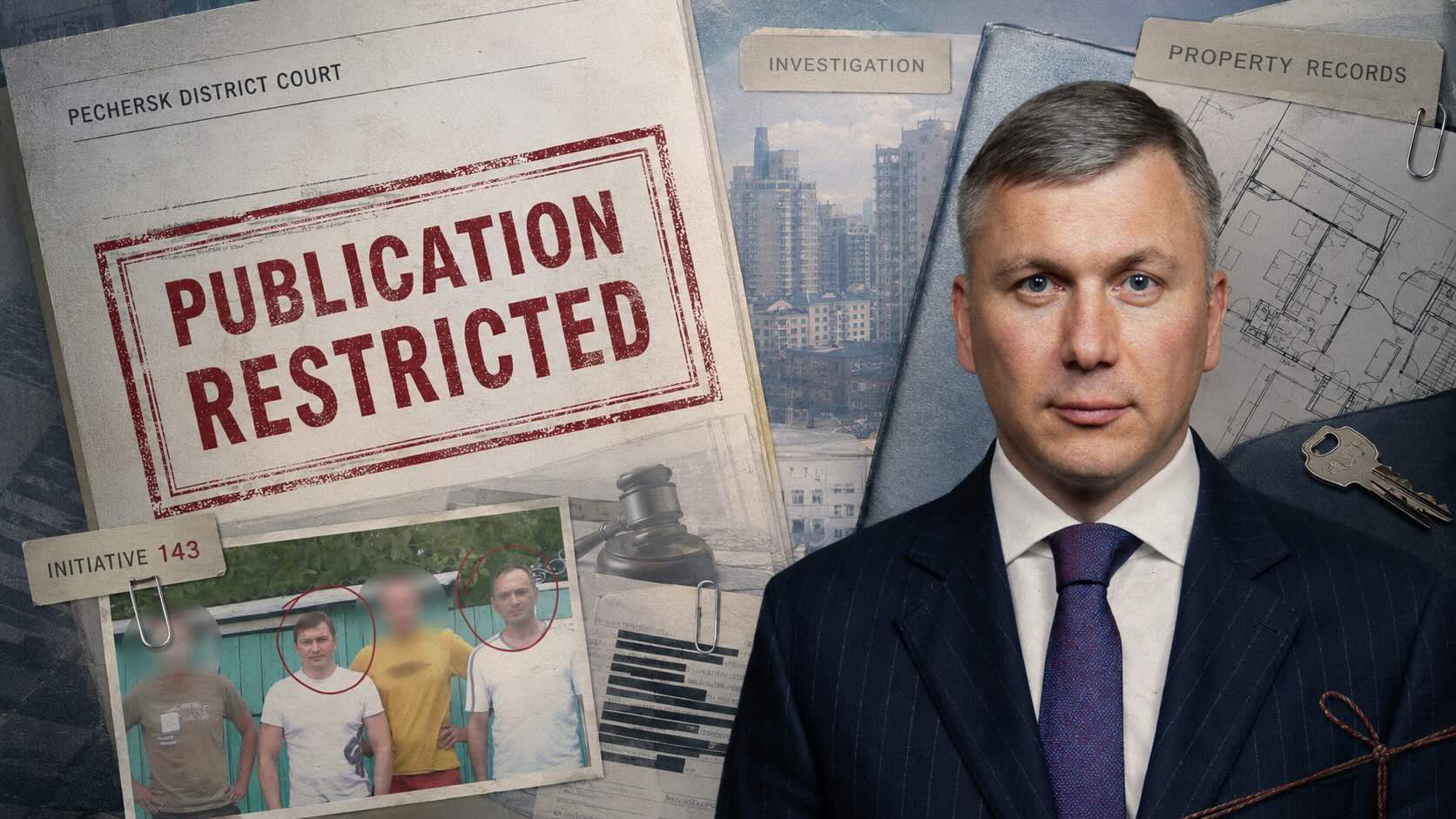
Initiative 143 turns a pre-publication injunction into a wider test of judicial power, media freedom and wartime accountability.
Eight Ukrainian newsrooms have jointly published an investigation into 143 properties associated with the family of State Bureau of Investigation director Oleksandr Sukhachov, despite a court order that had barred publication.
The OCCRP report on 17 July said the outlets acted together under the name “Initiative 143” after a Kyiv court issued a pre-emptive injunction on 6 July. The investigation concerns property allegedly linked to Sukhachov’s family and inner circle.
The hard news is not only the property investigation. It is the collective decision by newsrooms to publish after a court order sought to prevent the material from appearing. That changes the case from an ordinary corruption story into a confrontation over prior restraint, judicial power and the limits of press freedom in wartime.
Ukraine’s anti-corruption record is central to its EU accession path and to the confidence of donors funding the country’s defence and reconstruction. Cases involving senior law-enforcement officials therefore carry particular weight. The State Bureau of Investigation is supposed to investigate high-level wrongdoing; scrutiny of its leadership is a public-interest issue.
The outlets’ decision also shows how Ukrainian media are trying to resist legal pressure collectively rather than as isolated organisations. That approach reduces the vulnerability of any single newsroom and signals that pre-publication bans can produce wider attention rather than silence.
None of the allegations should be treated as established facts without legal process and responses from those concerned. The article’s central issue is the transparency conflict: whether courts can block reporting before publication and whether such orders can be used to protect powerful officials from scrutiny.
For Brussels, the case will be watched through the lens of rule-of-law reform. Ukraine’s accession process depends not only on formal institutions but on whether journalists, prosecutors and courts can operate without selective pressure.
The outcome may shape more than one investigation. If the injunction is upheld or repeated, it could chill reporting on public officials. If the collective publication model holds, it may strengthen media resistance to legal suppression.