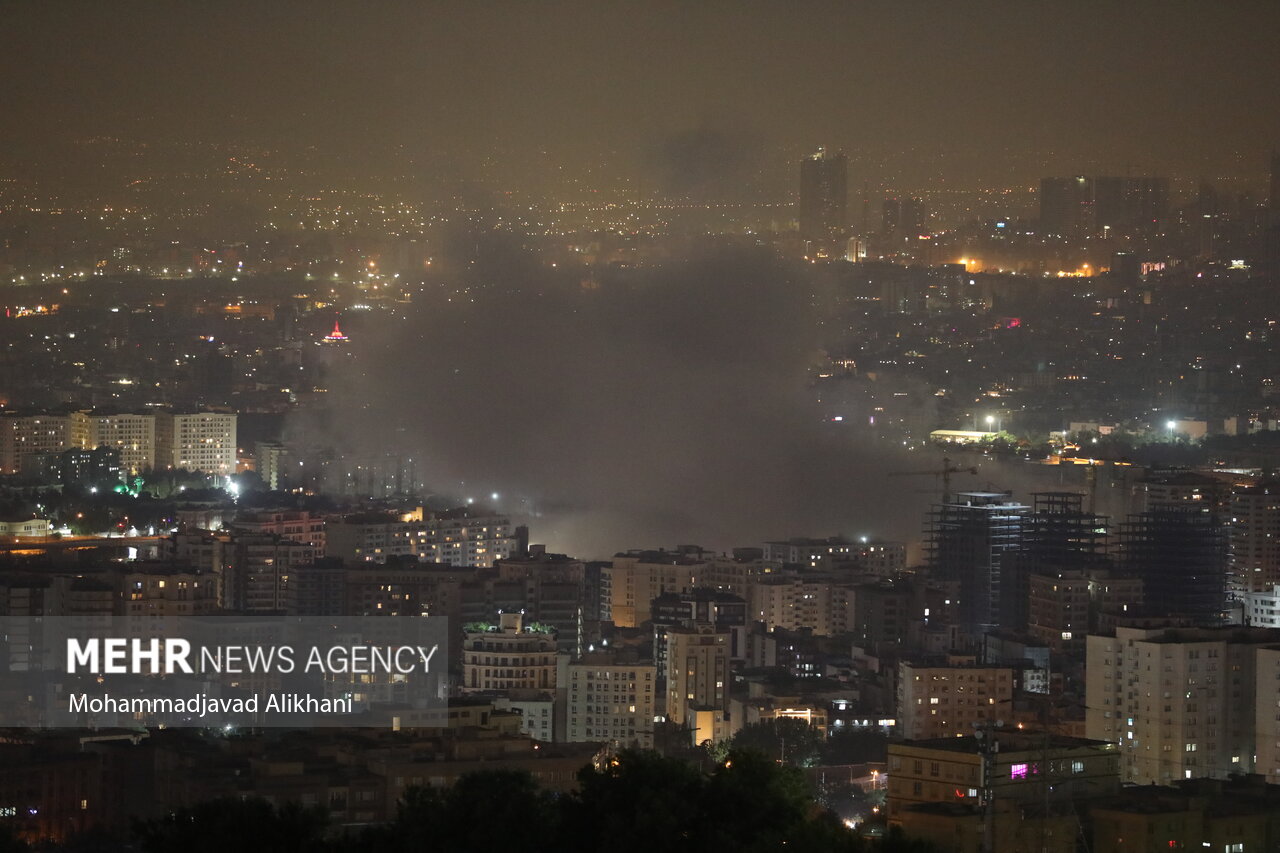
The Middle East stands on the cusp of a wider war after Israel launched an audacious overnight attack on Iranian nuclear facilities – dubbed Operation Rising Lion – prompting Tehran to respond with a wave of drones, further stoking a crisis that has been quietly simmering for years.
According to the Israel Defense Forces, the strikes targeted key nuclear sites deep inside Iranian territory. Israel claims the attack successfully eliminated top commanders of the Islamic Revolutionary Guard Corps, including its leader, Hossein Salami.
Tehran has not confirmed these deaths, but state television admitted that several residential areas in the capital were hit and that civilians, including children, were killed.
In retaliation, Iran fired an estimated 100 drones toward Israeli airspace, marking the most serious direct confrontation between the two regional powers in years. US and UK fighters have reportedly scrambled to intercept these drones.
As of writing, Israel has declared a nationwide state of emergency and warned of “imminent” further attacks from Iran or its regional proxies.
The question being asked in every chancery in the West is simple: why now?
The answer lies in a volatile mix of strategic calculation, political timing, and a hardening belief in Jerusalem that Iran is no longer deterred by diplomatic ambiguity or proxy wars.
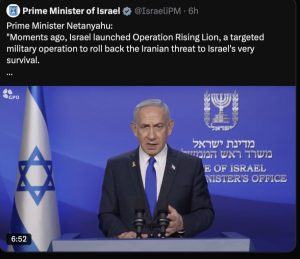
For months, Israeli officials have warned of Iran creeping ever closer to nuclear weapons capability. While talks in Vienna and Geneva stumbled, Iran pushed forward with uranium enrichment, and Israeli intelligence reports increasingly suggested the Islamic Republic was within a year of assembling a functional nuclear device.
The Israeli government – led by Prime Minister Benjamin Netanyahu – has long insisted it would never allow that to happen.
But this attack is not simply about uranium stockpiles or centrifuge counts. It comes at a time when Iran has grown emboldened across the region, projecting power from Yemen to Lebanon, backing militias in Iraq and Syria, and fuelling instability along Israel’s northern borders. Only weeks ago, Hezbollah threatened further escalation along the Golan Heights. The mood in Israel’s security establishment has darkened considerably.
There is also a domestic political dimension. Netanyahu is governing amid a fragile coalition and growing unrest at home over judicial reforms and economic malaise. But few issues unify Israel’s fractious politics like the Iranian threat. By launching a decisive strike, Netanyahu can cast himself once again as the nation’s protector – a tried and tested playbook that has served him well over the decades.
Iran, for its part, will not let this pass quietly. Supreme Leader Ayatollah Khamenei has promised revenge, declaring that Tel Aviv will “pay the price.” But Tehran is walking a delicate line. It cannot afford a full-scale war with Israel, especially with its economy battered by sanctions and its population restless after months of protests. Still, the regime may choose to escalate through deniable means – cyberattacks, missile strikes from proxies, or further drone incursions.
For now, Tehran’s most immediate response has been direct – a remarkable escalation in itself. The launch of 100 drones is a statement of intent, not just a tactical response. Iran is testing Israel’s air defences and, by extension, the resolve of the international community.
The reaction from Washington has been, if anything, even more tense. Iranian officials have accused the United States of complicity in the attack. President Trump – no stranger to bold Middle East policy himself – confirmed he was aware of Israel’s plans beforehand but insisted that the US played “no part whatsoever” in the operation.
It is difficult to believe Washington was completely blindsided. Intelligence sharing between the two allies is routine, and coordination on Iran is longstanding. Yet, the Biden administration now faces a deeply uncomfortable dilemma. It must support its closest Middle Eastern ally while avoiding direct involvement in a war it has no appetite for.
Europe, too, is watching nervously. There is little appetite in Brussels, Paris or Berlin for another Middle East conflagration, particularly one that could shatter already fragile energy markets and send new waves of migrants toward the continent. But diplomatic leverage is limited, and the EU has long been marginalised in this theatre.
As dawn breaks over a region that has seen too many, the echoes of this night’s assault will be long and loud. Israel believes it acted to prevent an existential threat. Iran sees itself as the victim of naked aggression. Both are now locked in a cycle that may prove difficult to unwind.
The world should hope that cooler heads prevail. But hope, as history has often reminded us in this region, is rarely enough.
Main Image: By Mehr News Agency, CC BY 4.0, https://commons.wikimedia.org/w/index.php?curid=167528215