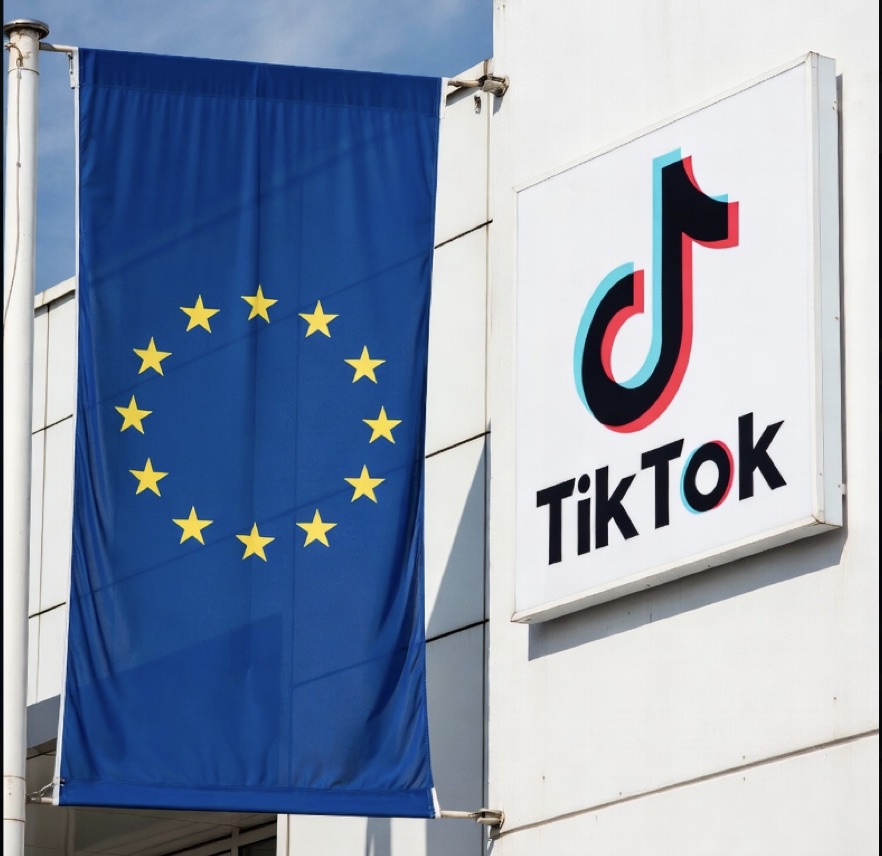
The European Commission has formally charged TikTok with breaching the EU’s groundbreaking Digital Services Act (DSA), alleging that its addictive design imperils the mental and physical wellbeing of millions of users — particularly children.
The move, announced in Brussels, sets the stage for a high-stakes confrontation between regulators intent on curbing the social media behemoth’s influence and a company unprepared to yield without a fight.
At the heart of the Commission’s allegations lie the core elements that have made TikTok phenomenally successful: endless personalised content, “infinite scroll,” autoplay features and push notifications designed to pull users ever deeper into the app’s feed. According to EU officials, these features do more than engage; they can cultivate compulsive usage patterns, with particularly troubling effects on minors and vulnerable adults.
Henna Virkkunen, the European Commissioner responsible for tech enforcement, did not mince her words in outlining the Commission’s concerns. Under provisions of the DSA, first enacted to govern the behaviour of digital platforms across the 27-nation bloc, regulators can take action against companies that fail to assess and mitigate systemic risks arising from their services. Brussels argues that TikTok has repeatedly failed to meet these obligations — and must now either redesign key elements of its platform or risk punitive fines of up to 6 per cent of the global revenue of parent company ByteDance.
This is not a nuanced discussion about algorithmic preference or banal interface tweaks; it is a fundamental clash over how technology that now shapes youth culture in Europe should be governed. With an estimated 170 million users across the EU, many of them under 18, TikTok is arguably more influential in shaping social discourse and daily habits than traditional broadcasters. That influence, according to the regulator, brings with it responsibility — and so far, Brussels is unconvinced TikTok has taken adequate steps to shoulder it.
Central to the Commission’s charges is TikTok’s failure to implement “reasonable, proportionate and effective measures” to counter compulsive use. Regulators cite evidence of nocturnal usage spikes among teenagers and frequent reopening of the app as red flags that TikTok neither fully appreciates nor effectively addresses. Parental control tools, more robust screen-time management and meaningful breaks in the user experience — measures widely considered industry best practice — are conspicuously absent or under-developed, in the eyes of EU enforcers.
Unsurprisingly, TikTok has responded with defiance. In a strongly worded statement, a company spokesperson labelled the Commission’s findings as “categorically false and entirely meritless,” promising to challenge them “through every means available.” The dispute underscores a broader tension between a fast-moving private sector and a regulatory apparatus struggling to keep pace with the social and psychological impacts of digital platforms.
Critics of the Commission’s stance, including some libertarian policy analysts and US tech lobbyists, argue that Brussels’ approach risks stifling innovation. They contend that personal responsibility and parental guidance, not heavy-handed regulation, remain the best bulwark against any platform’s worst effects. Yet, there is a palpable shift among European lawmakers and regulators toward a more interventionist stance, one that places child welfare and societal wellbeing above unfettered technological expansion.
This is not the EU’s first brush with Big Tech over digital harms. In recent years, Brussels has levied fines and demanded reforms from global giants — including Meta and Google — over breaches of privacy, antitrust and safety rules. TikTok’s case, however, represents perhaps the most significant attempt yet to tackle the very architecture of an app that has redefined social media for a generation.
The repercussions of this regulatory push extend far beyond Brussels. National legislators in France, Spain and Italy have floated age-based restrictions or caps on daily usage; Spain’s prime ministers have even proposed partial bans for users under 16. In Australia, lawmakers have enacted restrictions on under-16s’ access to major social networks altogether. Whether TikTok’s design overhaul in Europe will satisfy these rising calls for protection remains to be seen.
For ByteDance, the stakes could not be higher. A fine on the scale envisaged — up to 6 per cent of global turnover — would amount to billions, dwarfing many previous penalties for digital misconduct. More consequential still would be any enforced design changes that blunt the very mechanisms driving TikTok’s addictive draw. Investors will watch closely; regulators elsewhere may take a cue from Europe’s line in the sand.
What unfolds next hinges on a procedural dance between regulator and regulated. TikTok has the right to review the Commission’s evidence and submit a formal response. This back-and-forth — likely involving legal challenges and public relations campaigns — could play out over months or even years in European courts. Meanwhile, the public will continue to judge the company by metrics that matter most to its bottom line: user engagement and growth.
In a digital era where platform power can rival that of states, Brussels’ move against TikTok marks a bold attempt to assert democratic control over technological consequence. Whether this enforcement constitutes overdue protection for society’s youngest citizens or an overreach that impairs freedom of expression will be debated passionately in op-ed pages and courtrooms alike. Yet one thing is clear: the meek age of Big Tech deference in Europe, for better or worse, is over.
Click here for more News & Current Affairs at EU Today
Click here to check out EU TODAY’S SPORTS PAGE!
_____________________________________________________________________________________________________________________________