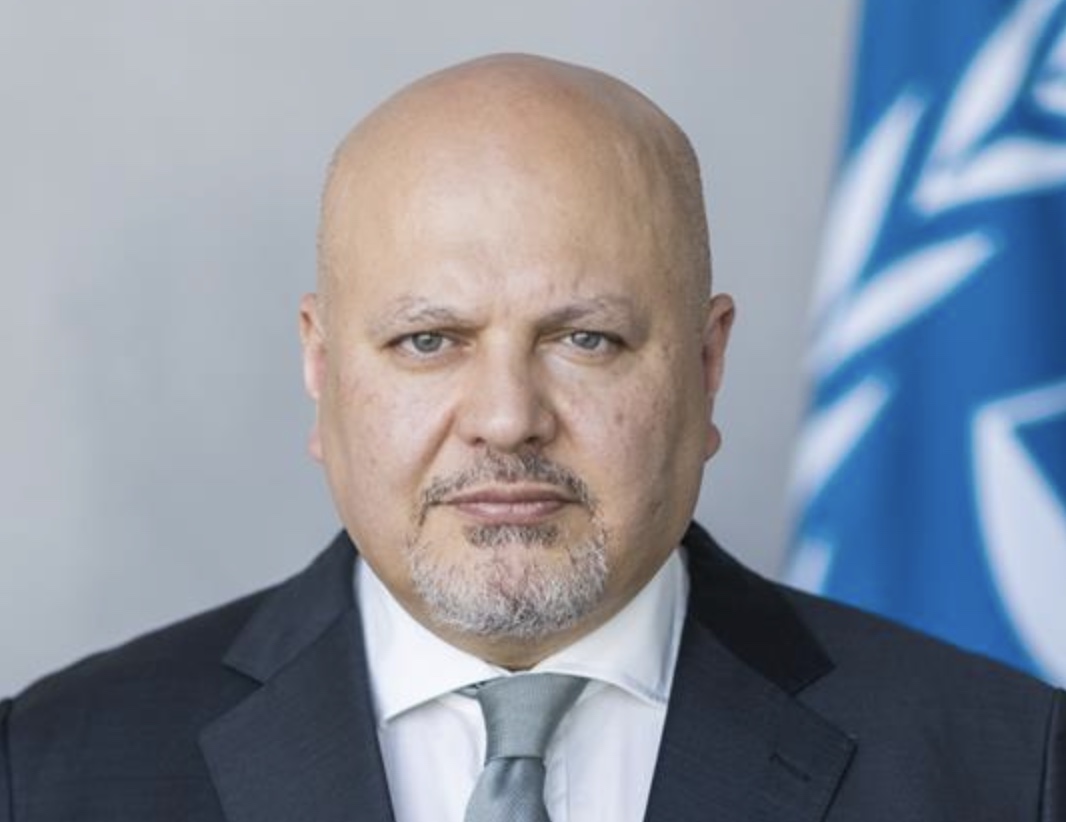
The suspension of Karim Khan, the chief prosecutor of the International Criminal Court (ICC), marks an extraordinary moment in the history of the world’s foremost war crimes tribunal.
Already grappling with mounting geopolitical pressures and accusations of selective justice, the court now finds itself confronting a crisis of confidence from within.
Khan, a distinguished British barrister who assumed the role in 2021, has been suspended with immediate effect while allegations of sexual misconduct continue to be examined through the ICC’s internal disciplinary framework. The decision was taken by the Bureau of the Assembly of States Parties (ASP), the body responsible for the court’s overall management and oversight. The matter has now been referred to the ICC’s 125 member states, which will decide Khan’s fate during a special session expected to convene in the coming weeks.
The Bureau was careful to stress that the suspension should not be interpreted as a determination of guilt. Yet, for an institution whose authority rests heavily upon moral legitimacy, the optics are deeply damaging.
Khan has consistently denied all allegations against him. Through his legal representatives, he has condemned the suspension as “unlawful, procedurally unfair and unsupported by evidence”. Those close to the prosecutor argue that he has become the target of a flawed and politically charged process that has failed to establish wrongdoing despite extensive investigation.
The allegations first emerged in May 2024, when claims involving an ICC staff member were reported to the court by a third party. The ICC’s Independent Oversight Mechanism initially opened an inquiry, only for it to be closed after the alleged complainant declined to participate further.
That outcome did little to settle the matter. Critics argued that the process itself had been mishandled, undermining confidence in the court’s ability to police its own ranks. Although investigators ultimately concluded that there was insufficient evidence to substantiate the allegations, a second referral followed in October 2024.
This time, the investigation was transferred to the United Nations Office of Internal Oversight Services. The resulting inquiry, which ran from November 2024 until December 2025, examined allegations of sexual misconduct and abuse of authority. By the time investigators concluded their work, they had amassed more than 5,000 pages of testimony and documentary evidence.
The findings were then scrutinised by a panel of three judges charged with advising the ASP Bureau on whether Khan’s alleged conduct constituted serious misconduct, less serious misconduct, or no misconduct at all. Previous media reports have referred to allegations including unwanted sexual touching and abuse.
Should the member states determine that serious misconduct occurred, a two-thirds majority would be required to uphold such a finding. A separate vote would then be necessary to remove Khan permanently from office.
The legal and institutional complexities do not end there.
Khan has been on voluntary leave since May 2025, stepping aside to defend himself against the accusations. However, any attempt to dismiss him could trigger years of further litigation. He would retain the right to challenge the decision before the Administrative Tribunal of the International Labour Organization, which adjudicates employment disputes involving ICC personnel. If procedural flaws were identified, reinstatement and substantial financial compensation could follow.
Whatever the eventual verdict, the damage to the court’s reputation may prove difficult to repair.
Staff within the Office of the Prosecutor have reportedly warned that Khan’s return could undermine morale and public trust, with some expressing fears of retaliation. Conversely, Khan’s supporters insist that repeated investigations have failed to produce evidence sufficient to justify the extraordinary measures now being contemplated.
The controversy has unfolded against a backdrop of intense political pressure on the court itself.
The United States imposed sanctions on Khan after he sought arrest warrants for Israeli Prime Minister Benjamin Netanyahu and former Israeli defence minister Yoav Gallant over alleged crimes linked to the conflict in Gaza. Those sanctions were later broadened to include two deputy prosecutors, eight ICC judges, the United Nations Special Rapporteur on the Occupied Palestinian Territories, and Palestinian organisations that had assisted the court’s investigations.
The episode once again highlighted the awkward reality confronting international justice: while the ICC seeks universal accountability, some of the world’s most powerful states remain outside its jurisdiction. Neither the United States, Russia nor Israel is a party to the Rome Statute establishing the court, though the ICC may still prosecute crimes committed by their nationals on the territory of member states.
For supporters of the institution, the Khan affair represents an unwelcome distraction at a moment when international law is already under strain from conflict in Ukraine, Gaza and elsewhere. For critics, it exposes deeper questions about transparency, governance and due process within an organisation that routinely sits in judgment of others.
The coming vote by member states will determine Karim Khan’s immediate future. Yet regardless of the outcome, the ICC faces a more enduring challenge: restoring confidence in an institution whose credibility is among its most valuable assets.
In international justice, perceptions matter almost as much as verdicts. For the Hague-based court, both are now on trial.
Main Image: ICC
Click here for more News & Current Affairs at EU Today
Click here to check out EU TODAY’S SPORTS PAGE!
___________________________________________________________________________________________________________________