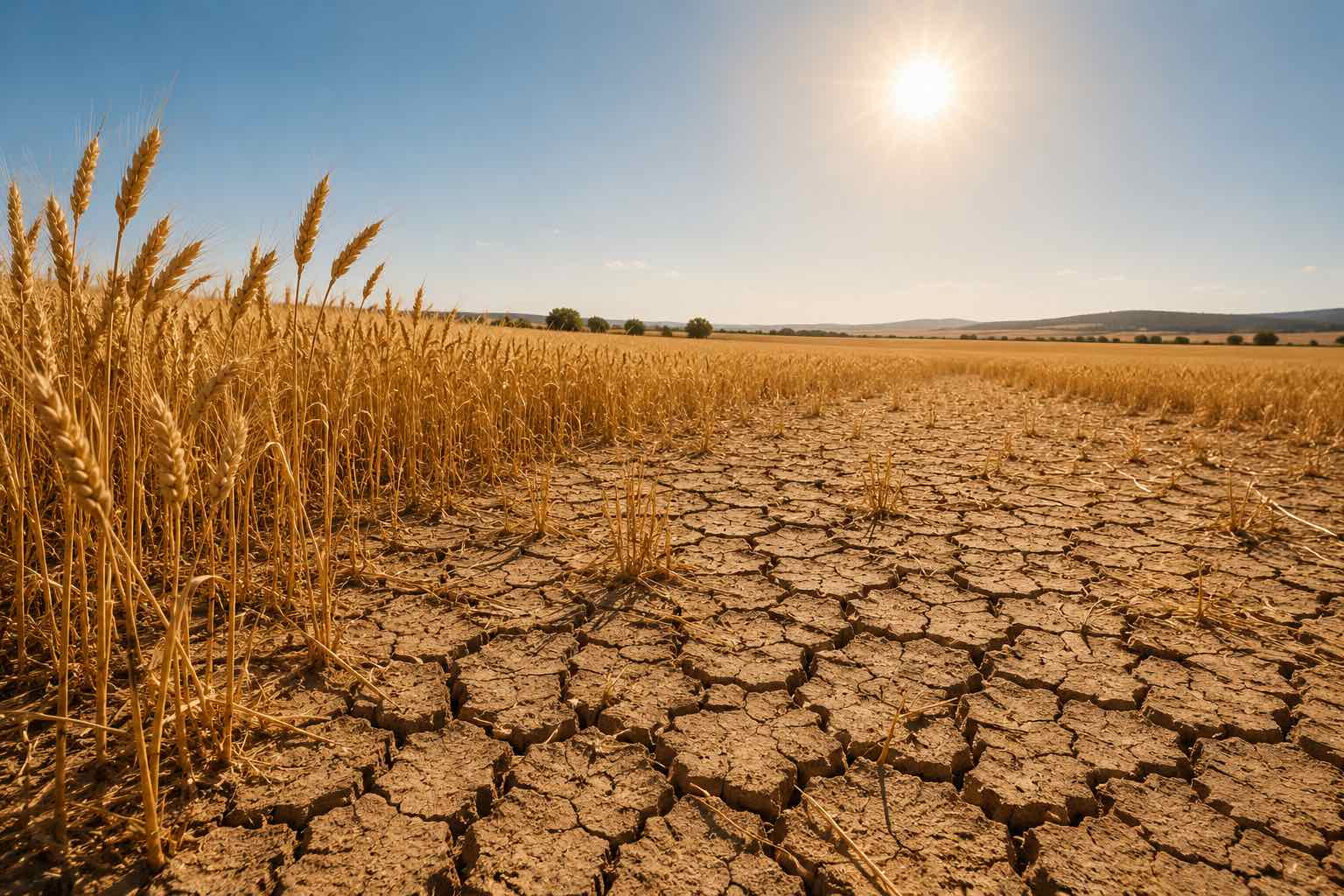
As temperatures soared across Europe and the United Kingdom over the past three days, attention naturally focused on public health warnings, strained infrastructure and the growing realities of climate change.
Yet beneath the immediate concerns of record-breaking heat lies another issue that is quietly becoming one of Europe’s most contentious environmental battles: the future of pesticides and modern agriculture.
The timing is difficult to ignore.
From Spain and Italy to France, Germany and southern England, farmers have watched crops endure intense heat and increasingly erratic weather patterns. Fields that only weeks ago appeared promising are now being tested by prolonged dry conditions, while water reserves in several regions are already under pressure. For many agricultural producers, the challenge is not merely how to increase yields, but how to preserve them.
This reality is reshaping the debate over pesticides.
For environmental groups, the current weather conditions strengthen the case for accelerating the transition towards more sustainable farming practices. They argue that excessive reliance on chemical pesticides and fertilisers has contributed to the degradation of soil health, reduced biodiversity and weakened the resilience of agricultural ecosystems. In their view, healthier soils and more diverse farming systems are better equipped to withstand the extremes that climate change is increasingly delivering.
The argument is gaining traction among policymakers in Brussels. The European Union’s broader environmental agenda increasingly links biodiversity protection, climate adaptation and agricultural reform into a single policy framework. Concerns over declining insect populations, contamination of waterways and the long-term health of rural ecosystems continue to influence regulatory thinking.
Yet the view from Europe’s farms is often markedly different.
Many growers see the current heatwave as evidence of the mounting pressures already confronting agricultural production. Faced with drought, unpredictable rainfall and emerging plant diseases, farmers argue that reducing access to crop protection products could leave them even more vulnerable.
The debate has become particularly sensitive because it touches on questions of food security.
Europe’s agricultural sector is expected simultaneously to reduce emissions, protect biodiversity, use less water, lower chemical inputs and maintain affordable food supplies. Achieving all of those objectives at once is proving considerably more complicated than policymakers initially envisaged.
Recent protests by farmers across several European countries reflected these tensions. While environmental regulations were not the sole cause of discontent, many producers expressed frustration at what they perceive as growing regulatory burdens imposed at a time of rising costs and increasing uncertainty.
The heatwave has amplified those concerns.
As temperatures rise, crops become more susceptible to stress. Some pests thrive under warmer conditions, while changing weather patterns can create favourable environments for new diseases to spread into regions where they were previously uncommon. Agricultural scientists increasingly warn that climate change may alter the entire pest landscape of Europe over the coming decades.
That prospect raises uncomfortable questions for regulators.
Can pesticide use be substantially reduced while maintaining productivity? Are alternative technologies sufficiently advanced to replace existing chemical solutions? And how quickly can farmers adapt without jeopardising profitability?
The answers remain uncertain.
Technological innovation offers some grounds for optimism. Precision agriculture, artificial intelligence-driven crop monitoring, biological pest controls and gene-edited crops are all being promoted as potential solutions. Advocates argue that these tools could significantly reduce chemical dependence while maintaining yields.
However, large-scale adoption remains uneven. Many technologies require significant investment, placing them beyond the immediate reach of smaller farms already facing tight margins. Moreover, regulatory approval processes for new agricultural technologies often move far more slowly than the climatic changes they are intended to address.
The result is a growing policy dilemma.
Europe’s environmental ambitions are broadly supported by the public, particularly when linked to cleaner water, healthier ecosystems and reduced chemical exposure. At the same time, consumers remain highly sensitive to food prices, while governments are increasingly aware of the strategic importance of domestic food production.
The recent spell of extreme weather serves as a reminder that these objectives cannot be considered in isolation.
Climate change is no longer a distant environmental concern; it is becoming a direct economic challenge for Europe’s agricultural sector. Every heatwave, drought or flood strengthens the argument that farming systems must become more resilient. The disagreement lies in how that resilience should be achieved.
For some, the answer is fewer chemicals and more ecological approaches. For others, it is access to every available tool, including pesticides, to safeguard harvests in an increasingly unpredictable climate.
What is becoming clear is that the debate can no longer be framed as a simple contest between environmental protection and agricultural productivity. The heat gripping Europe this week demonstrates that both goals have become inseparable.
The challenge facing policymakers is not choosing between them, but finding a path that secures both.
Europe’s Growing PFAS Reckoning Tests Industry and Regulators Alike
__________________________________________________________________________________________________________________
Click here for more News & Current Affairs at EU Today
Click here to check out EU TODAY’S SPORTS PAGE!
___________________________________________________________________________________________________________________