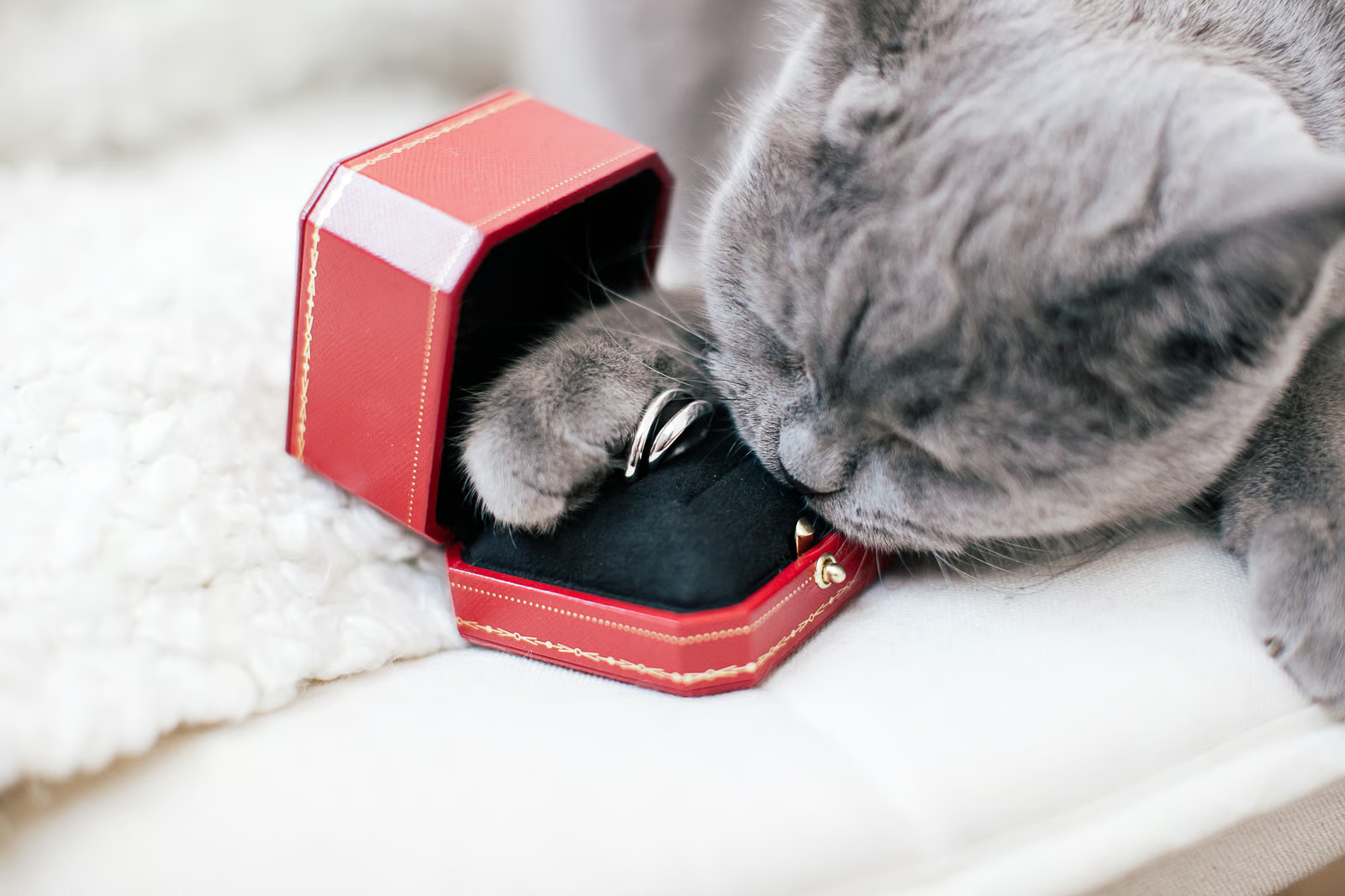
Richemont’s stronger-than-expected quarter shows high-end jewellery demand holding up even as Europe’s broader consumer economy remains uneven.
Richemont’s stronger-than-expected first-quarter sales have given luxury investors a rare positive signal, suggesting that demand for high-end jewellery and watches can still grow even as Europe’s wider consumer economy remains under pressure.
The Cartier owner reported sales of about EUR6.3 billion for the quarter to 30 June, with organic growth well ahead of analyst expectations. Reuters reported on 15 July that the results sent the group’s shares sharply higher in early trading. Other market reporting pointed to particularly strong jewellery demand and regional momentum in Japan and the Americas.
The figures matter because luxury has spent much of the past two years adjusting to slower Chinese demand, weaker aspirational spending and investor concern that the post-pandemic boom had faded. Richemont’s performance does not prove that the whole sector has recovered. It does show that the strongest brands and categories can still attract high-income consumers.
That distinction is important for markets. A strong Richemont quarter can lift sentiment across the sector, but investors still have to separate jewellery-led resilience from weaker areas such as fashion, handbags or entry-level accessories. The luxury slowdown has not affected every category equally.
Jewellery is the centre of the story. Cartier and Van Cleef & Arpels occupy a different position from many fashion and leather-goods brands. High jewellery is often bought by wealthier clients, can be treated as a store of value, and is less exposed to the discretionary spending squeeze affecting younger or aspirational consumers. That gives Richemont a defensive quality inside the luxury sector.
The regional pattern is just as important. Growth in the Americas points to the continued strength of high-net-worth consumption, supported by asset prices and wealth concentration. Japan has benefited from tourism flows, currency effects and strong demand from international shoppers. Mainland China remains more uneven, reflecting a luxury market still adjusting to weaker confidence and changed consumer behaviour.
For Europe, the results cut two ways. Richemont is Swiss, globally diversified and less dependent on mass consumer demand than many European companies. Its performance therefore cannot be read as a broad European recovery signal. But it does show that European luxury houses remain powerful exporters of brand value, especially when they can capture spending in the Americas and Asia.
The market reaction also reflects scarcity. Investors have been searching for evidence that premium brands can still grow in a slower environment. Richemont’s quarter offered that evidence, while some peers remain more exposed to fashion cycles, creative transitions or weaker handbag demand. The result may lift sentiment across the sector without removing the differences between companies.
The result also points to the importance of pricing power. Luxury groups with strong brand control can raise prices, manage distribution and protect margins more effectively than companies competing mainly on volume. That gives the best-positioned houses a cushion when broader consumer confidence weakens.
The stronger luxury signal contrasts with the wider debate over Europe’s competitiveness. EU Today has recently covered how Europe’s industrial policy remains divided between national subsidies and common reform. Richemont sits in a different part of the economy, but the underlying question is similar: where can European companies still command pricing power in global markets?
Luxury is one answer. It depends less on low-cost production and more on heritage, design, scarcity, distribution control and brand trust. Those advantages are difficult to replicate quickly. But they are also narrow. A continent cannot build its economic future on luxury goods alone, even if the sector remains one of Europe’s most successful global franchises.
The risk for investors is overgeneralisation. Richemont’s strength may say more about jewellery, brand quality and wealth concentration than about the entire luxury sector. Companies exposed to entry-level consumers or weaker categories may not enjoy the same resilience. Currency movements and tourism patterns can also shift quickly.
The quarter therefore offers a useful signal, not a simple sector verdict. High-end demand has not disappeared, and Europe’s best luxury groups can still outperform. But the same results also underline the unevenness of the consumer economy: the top of the market is holding up better than the middle.