Amidst the controversy initiated by Polish President Karol Nawrocki after Ukrainian President Zelensky validated the choice by a unit of the Ukrainian military to adopt a name memorializing the combatants of the Word War II Ukrainian Insurgent Army (UPA), two sets of statements of sanity stand out.
One set of statements was made by the Oxford historian Norman Davies, probably the leading historian of Poland in the English-speaking world and in every respect a friend of Poland.
In a recent interview in the Polish digital news platform Wiadomosci Onet, Davies made the following points. Poles should be more careful in what they say about Ukraine and its history. What President Zelensky did when he approved by presidential declaration the vote of the Ukrainian unit to adopt the Heroes of UPA name had nothing to do with Volyn.
.
Current respect in Ukraine for the UPA is based on their protracted and sacrificial struggle against the Soviet and German occupations of Ukraine, and although what the UPA did in Volyn in 1943 was obviously a terrible crime, 90% of UPA had nothing to do with Volyn. And Davies warned Poles that this controversy may cost Poland in the future because at the very moment when Ukraine is in the fifth year of a war with Russia, Polish officials have given Russia a very useful pretext for propaganda.
Second, in a brief public presentation, Polish Prime Minister Donald Tusk reminded Poles that attempts to revive historical grievances against Ukrainians constitutes playing with fire; that every missile or drone that Ukraine uses to successfully destroy a Russian missile, drone or aircraft makes Poland safer; and that, in summary, helping Ukraine is in Poland’s national security interests. With respect to these statements, it is discouraging that obvious points need to be restated, but restated they need to be.
The two crucially important points made by Tusk and Davies are: it is in Polish national interests that Ukraine sustain its defense against Russia and prevail; and that even regardless of immediate and future Polish security interests, history is actually rather more complicated than officials such as President Nawrocki and his supporters like to imagine.
The convergence of Polish and Ukrainian security interests is so complete that even Nawrocki has consistently acknowledged it. But while acknowledging it, Nawrocki and his ideological allies seem to think that even given current circumstances in Russia’s war against Ukraine, taking shots at Ukraine now is for Poland a costless and painless exercise, a position that Professor Davies exposes as folly.
And then in a recent letter to members of his opposition Law and Justice party (PiS), its leader Jaroslaw Kaczynski declared that a future PiS government would refuse to approve Ukraine’s EU membership unless Kyiv abandoned its purported “cult of Bandera” and the “glorification” of the UPA and the Organization of Ukrainian Nationalists (the underground political party that created the UPA). Unfortunately, this posture has some earlier history that had already involved the European Parliament, which misconceived involvement the European Parliament has just now repeated.
In a 2010 Joint Motion for a Resolution on the Situation in Ukraine adopted by the European Parliament, the Polish delegation proposed and argued for the inclusion of paragraph Q 19, which was then adopted. Paragraph Q 19 provides that the European Parliament “Deeply deplores the decision by the outgoing President of Ukraine, Viktor Yushchenko, posthumously to award Stepan Bandera, a leader of the Organization of Ukrainian Nationalists (OUN) which collaborated with Nazi Germany, the title of “National Hero of Ukraine”; hopes, in this regard, that the new Ukrainian leadership will reconsider such decision and will maintain its commitment to European values.”
The problem with this paragraph is that it is based on a healthy dose of historical illiteracy and a dose of historical amnesia. With respect to illiteracy, as Prof. Davies pointed out in his recent interview as regards the specific issue of the massacre of Polish civilians in Volyn in 1943, Stepan Bandera was then interned in a German concentration camp (Sachsenhausen), as he was for much of the war. And to add to the professor’s point, there is no evidence that Bandera did or was capable of forwarding any directives from the camp to the UPA units in Volyn or anywhere else.
The European Parliament’s specific insinuation that Bandera is to be condemned because he was a leader of OUN “which collaborated with Nazi German” involves both illiteracy and amnesia. As the political scientist John McGary has persuasively demonstrated in his recent The Politics of Domination, national or racial or religious groups or communities that are dominated by another group almost always need outside help in order to try and escape from that domination. Ukraine, particularly western Ukraine, was for centuries dominated, colonized and earlier enserfed by its neighbors the Poles during the period of the Polish-Lithuanian Commonwealth, and also by the Russian, then Soviet, empire, the Austro-Hungarian empire and by the interwar Polish Republic.
In addition, during the first half of the 20th century, the territory that is today’s Ukraine was in part or in whole invaded and occupied by 10 different foreign armies on 9 different occasions. Ukraine was invaded: by the tsarist Russian army in 1914-15; three times by the Red Army between 1918-1920; by the Russian Volunteer or White Army in 1919-20; by the Polish army in 1918-19; by the German army along with its Hungarian, Romanian, Slovak and Italian allies in 1941-44; and by the Soviet army’s invasion and occupation of western Ukraine in 1944 and thereafter. Ukrainian demographers estimate that as a result of these invasions and occupations, Ukraine lost approximately 15 million inhabitants. It is noteworthy that during all of these invasions and occupations, Ukrainian nationalists invaded no one.
The Organization of Ukrainian Nationalists and the UPA were devoted to national liberation and to ending foreign invasions, occupations and rule. Unfortunately, opportunities for any kind of outside help were extremely limited. Ukrainian Marxists who in the 1920s and early 30’s had believed in an autonomous communist Ukraine had completely been deceived and betrayed by Stalin.
Western democracies such as France and Britain had no interest in what Ukrainians were enduring, and France had actually outfitted the Polish army led by General Haller, the same army that in 1919 had participated in the invasion and defeat of the Western Ukrainian Republic. And it bears reminding that today’s post-1960’s western democracies were not quite the same paragons of virtue that they have tried to be since the 1960s. Britain and France were colonial empires.
The Ukrainian nationalists in the 1920s and 1930s looked to the Irish Republican Army and Ireland’s successful liberation from the British as models, not to the British. And at the time we Americans, or at least our government, probably couldn’t even find Ukraine on the map. After all, President Theodore Roosevelt chose to open the first American diplomatic relations with the Soviet Union in 1933, just months after Stalin had starved some 4 million Ukrainian peasants to death in the genocidal Holodomor.
The Ukrainian nationalists had a relationship with German intelligence preceding Hitler’s rise to power. These continued after Hitler came to power because at least some in the German government, the less ideological, led the Ukrainians to believe that Germany might be sympathetic to the Ukrainian cause of liberation. When Germany attacked the Soviet Union in the summer of 1941, the OUN proclaimed a reasserted Ukrainian independence in Lviv. That was negated by the Germans who arrested the top leaders of the OUN for internment at Sachsenhausen, sent others to Auschwitz and simply executed still others. So while the OUN did hope to be able to cooperate or collaborate with Germany for the purpose of escaping political powerlessness, that didn’t work.
Can, therefore, OUN be condemned if for geo-political reasons it sought an ally? Didn’t Britain, France and Italy for their countries’ respective geo-political reasons collaborate with the Germans in 1938 in Munich for the purpose of dismembering Czechoslovakia? Didn’t Poland also participate in this dismemberment by grabbing the Zaolzie region for itself? Didn’t the Soviet Union collaborate with Germany in 1939-41 while Germany was invading western Europe and bombing Britain? Didn’t for geo-political reasons the Polish government in exile collaborate with Stalin in 1941 against Hitler? And didn’t the Allies collaborate with the equally murderous Stalin’s regime against Hitler’s regime after the German invasion of the Soviet Union?
When I twice lived and worked in Ukraine, I was amused to find that when I would ask a cab driver or other casual acquaintance what he or she might think about Bandera, what was noteworthy was that both those who had a positive view and those who had a negative view of him actually knew nothing about what he had done or where he had been or how or where he had died. A few thought that Bandera was still alive.
There have been and still are various appraisals of Bandera—even within the OUN itself. He initially became a symbol of resistance because during two public trials for terrorist activity against Poland in the 1930s, he showed fearlessness in his statements at trial even though he was facing the death penalty. Later the Soviets called every Ukrainian who demonstrated any kind of Ukrainian patriotism or even just spoke Ukrainian in public a “Banderite.”
What is true about the historical Stepan Bandera, in addition to his fearlessness, is the extraordinary sacrifices he and his family paid for his liberation activities. He was himself murdered by a Soviet assassin in Germany in 1959. Prior to that he had spent years in Polish and German prisons and concentration camps, respectively. His father Andriy, a Greek Catholic priest, was murdered by the Soviet secret police. His two brothers Oleksandr and Vasyl were arrested and sent to Auschwitz by the Germans where they were both killed by Polish prisoners. His three sisters Oksana, Marta and Volodymyra were all jailed and sent to the Gulag by the Soviet NKVD.
And here we return to amnesia. Josef Pilsudski is a Polish hero. There are Pilsudski statues and busts throughout Poland. He is compared in Poland to George Washington. Pilsudski was the first commander of the Polish army and the reborn Polish state in 1918. Then in 1926 he led a coup and was Poland’s dictatorial leader until he died in 1935. What is remarkable, in light of the Polish campaign to demonize Bandera and the OUN, is that the history of Pilsudski and his Polish Socialist Party, of which he was a primary leader, is very similar to the history of Bandera and the OUN in the 1930s.
Prior to 1918, Poland was divided up and ruled by Germany, Russia and Austria. Pilsudski’s Polish Socialist Party engaged in numerous acts of terrorism, including the killings of hundreds of people, robberies of post offices and banks and other related activity. Pilsudski was the founder and head of the Combat Organization of the Polish Socialist Party, which was the organization that engaged in the terrorist activities. This history is not a secret in Poland. It is admired. In fact several years ago there was a public exhibition near Warsaw about the terrorist exploits of Pilsudski and his Polish Socialist Party, but it was not an exhibition of terrorism but an exhibition of the heroic liberation activities of Pilsudski and his colleagues.
As Prof. Davies has stated, it is a mistake at this point for Poland to seek to weaponize historical memory. I would add that it was also a mistake back in 2010 for the European Parliament to have done so. It is now a mistake that the European Parliament has repeated in 2026 by again adopting Polish language in a report on Ukraine, which language includes the statements that the Parliament: “regrets the recent unnecessary and unprovoked escalation by President Volodymyr Zelensky by renaming an elite military unit of the Ukrainian Armed Forces after the UPA,” that it “regrets the disregard for Polish sensitivities and grief related to the UPA’s estimated many tens of thousands of victims and their families,” and that it finds that Zelensky’s decision was “not in line with European values.” Actually, one would rather think that it is not consistent with European values to weaponize a distorted version of historical memory.
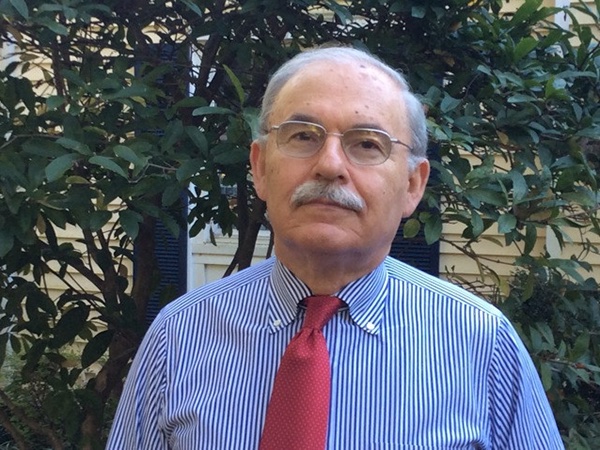
Dr. Bohdan Vitvitsky is a retired federal prosecutor and a former U.S. diplomat who holds a Ph.D. in philosophy.
__________________________________________________________________________________________________________________
Click here for more News & Current Affairs at EU Today
Click here to check out EU TODAY’S SPORTS PAGE!
___________________________________________________________________________________________________________________
Poland’s Memory War Should Not Be Smuggled Into Ukraine’s EU File