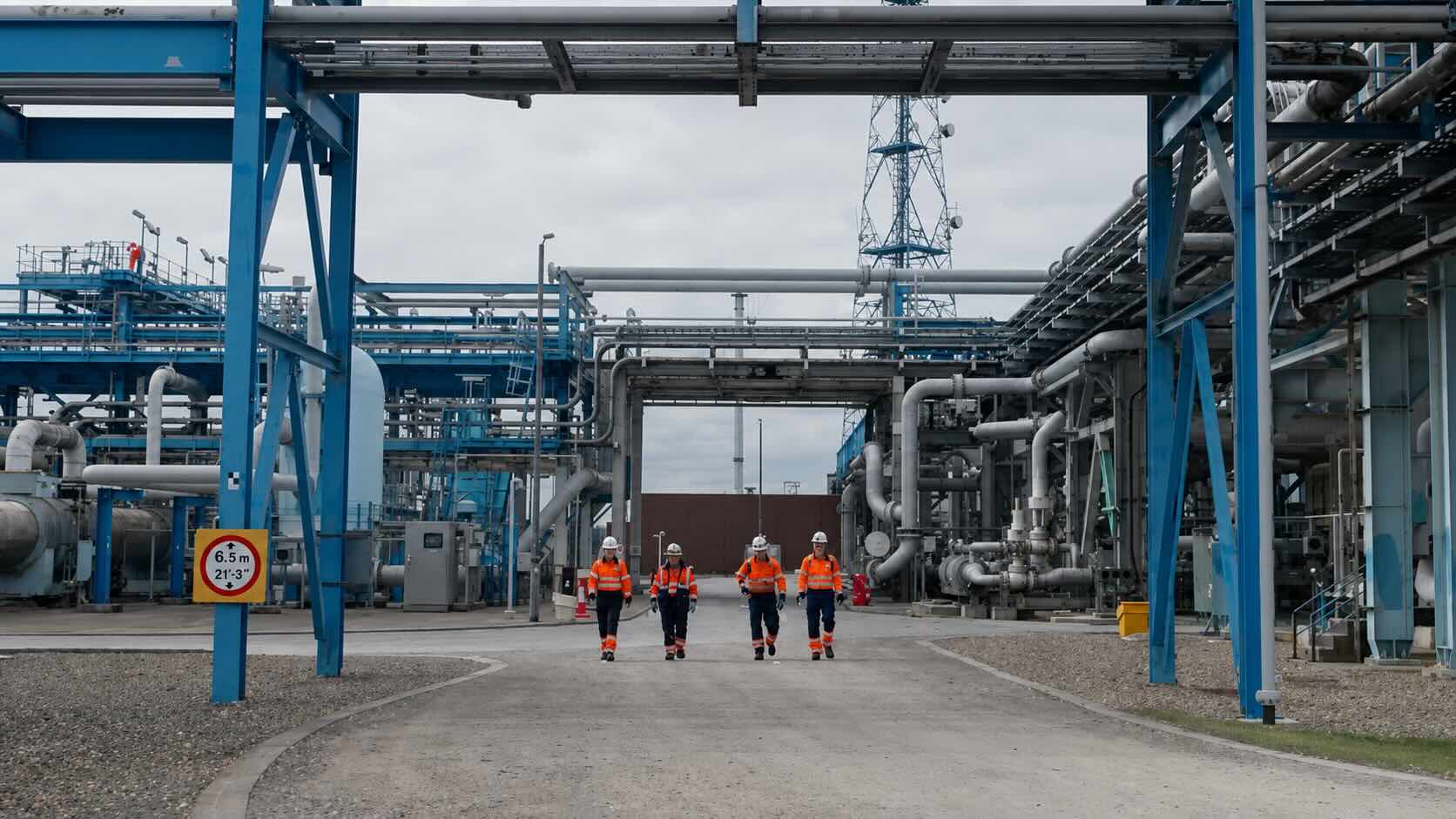
The British Gas owner is cutting roles while investing in energy infrastructure, showing how volatility can squeeze labour even inside strategically important utilities.
Centrica plans to cut about 1,300 jobs after reporting weaker first-half profit, linking restructuring at the British Gas owner to a tougher operating environment in UK energy. Reuters reported that adjusted core profit fell 18 per cent to 737 million pounds in the six months to 30 June. The company’s earlier AGM statement had already warned that retail earnings were likely to be toward the lower end of guidance because of warmer weather, commodity-curve effects and bad-debt challenges.
The job cuts include contact-based staff in customer operations and fewer outsourced offshore positions, according to Reuters. That distinction matters. A reduction in direct customer-service staff has a different public effect from lower reliance on external contractors. Customers judge energy suppliers partly through billing, complaints, repairs and support during price shocks. If restructuring weakens service quality, the savings may create reputational costs.
Centrica’s problem is not simply that profits fell. Energy companies are operating in a market where wholesale volatility, political intervention, consumer debt, weather and infrastructure investment collide. War in the Middle East has increased energy-market uncertainty. Warmer weather can reduce demand. Production outages and asset sales can change earnings. At the same time, the company is investing in strategic assets, including nuclear-related projects.
The result is a familiar corporate choice: cut costs to protect margins while continuing to invest in future energy capacity. That may be financially rational, but it is politically sensitive when the company supplies households. British Gas is not a niche brand. It is part of the everyday energy system for millions of customers. Job losses therefore become a public story, not only an investor update.
EU Today has recently examined how strategic sectors create accountability questions when private companies perform public functions, including in the Southern Water monitoring case. Energy retail raises a different accountability problem. Companies must be commercially viable, but households experience them as essential-service providers. Cost cutting in that context is judged against service, affordability and resilience.
The labour dimension is also changing because energy companies are digitising customer contact. If more customers use apps, online billing and automated systems, call volumes may fall. Companies then argue that fewer staff are needed. Unions and affected workers may argue that automation shifts costs onto customers and reduces help for vulnerable households. Both claims can be true depending on execution.
Bad debt is a central pressure. When energy prices rise, some customers fall behind. Suppliers must manage collections, support schemes and regulatory obligations. Cutting customer-support capacity while debt stress remains high can be risky. The most expensive customer problems are often the ones that require human intervention: vulnerable customers, billing errors, prepayment disputes and complaints.
The Iran-war volatility adds another layer. Energy companies can benefit from trading opportunities or infrastructure exposure, but retail arms may suffer if higher wholesale prices feed into affordability problems. Integrated groups can look strong at the top line while parts of the business face margin pressure. Centrica’s restructuring shows that volatility does not distribute gains evenly.
For the government, Centrica’s announcement creates two policy concerns. The first is employment. Job cuts across customer operations and support functions affect communities and household incomes. The second is energy resilience. Britain wants companies to invest in nuclear, gas storage, flexibility, customer systems and low-carbon services. If margins weaken too far, investment may slow. If companies protect investment through job cuts, political resistance grows.
For investors, the question is whether restructuring improves productivity without damaging the brand. British Gas competes in a regulated, reputation-sensitive market. A leaner workforce can improve efficiency, but poor service can increase churn, complaints and regulatory scrutiny.
Centrica’s results therefore show the narrow path for household-energy suppliers. They must absorb market volatility, handle customer debt, invest in infrastructure, satisfy regulators and maintain service quality. A 1,300-job reduction may help costs, but it also raises the burden on management to prove that efficiency is not being purchased at the expense of customers.
The wider lesson is that energy security is labour as well as infrastructure. Plants, storage and contracts matter, but so do the people who manage households through volatile markets. When volatility hits profits, employment becomes one of the first adjustment points. That is why Centrica’s results deserve attention beyond the earnings column.