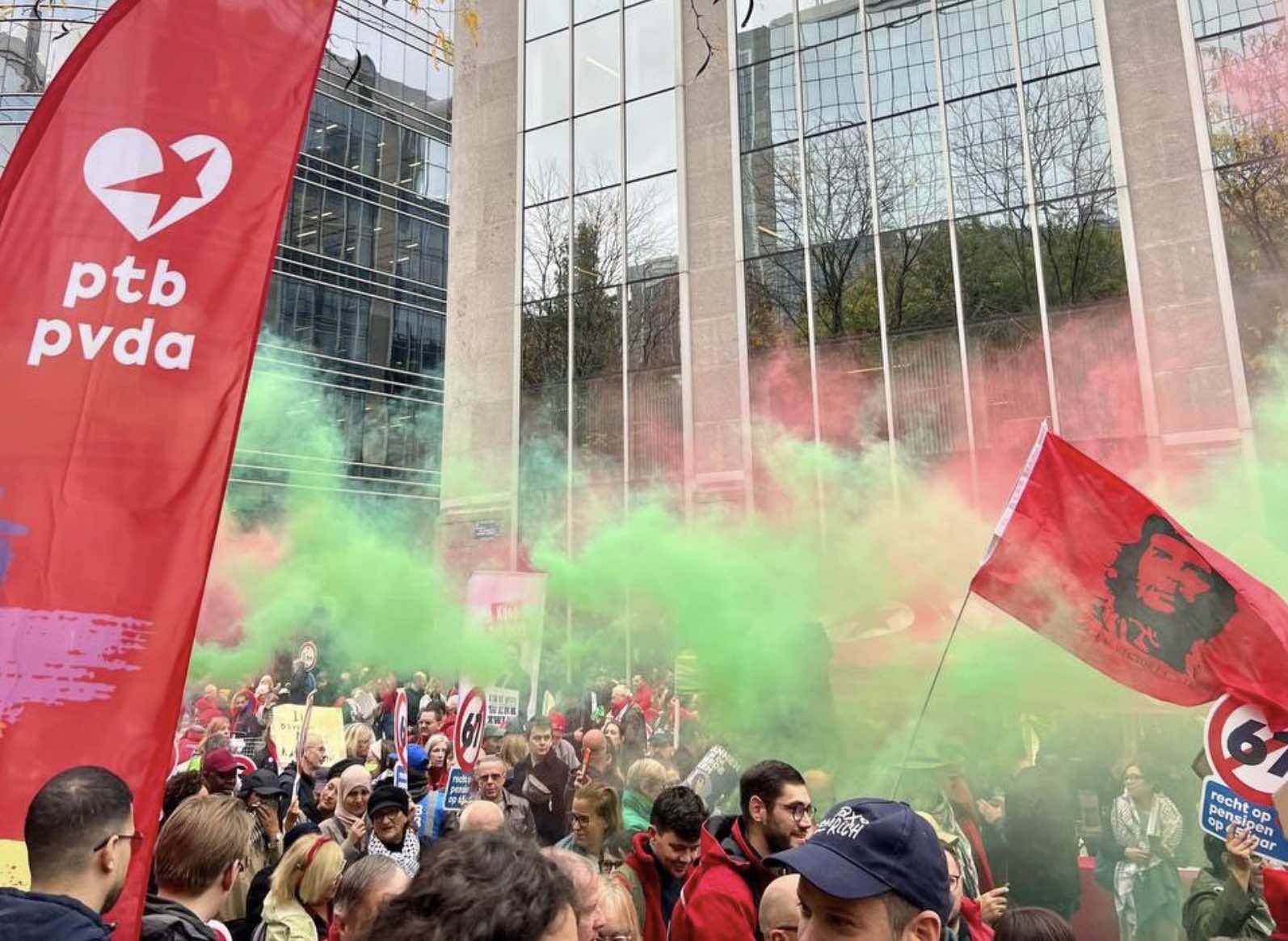
Belgium’s capital erupted in protest on Tuesday as tens of thousands of demonstrators—some say more than 150,000, police put the number closer to 80,000—flooded the streets of Brussels to decry the austerity measures proposed by Prime Minister Bart De Wever.
In the heart of Europe’s institutional capital, the message was unmistakable: people reject a budget driven by cuts to pensions, health care, and welfare. Yet what transpired on the ground—the teargas, the scuffles, the paralysis of transport—should pierce the political complacency often associated with Belgian politics.
At the heart of the crisis lies a government confronting an unenviable balancing act: Europe’s fiscal constraints, mounting debt pressures, and the political stakes of rewriting the social contract. But the scale and intensity of Tuesday’s protest suggest that even in Belgium—where general strikes are woven into political life—citizen rage is reaching a new pitch.
The protest was orchestrated by Belgium’s three main trade unions, which called for a nationwide strike in tandem with the mass demonstration in Brussels. The targets were clear: pension reforms that would tighten retirement benefits, cuts to healthcare funding, adjustments to wage indexation, and changes to unemployment support.
What turned a protest into a confrontation was the timing and the sheer force of disruption. Major roads were blocked, traffic in the city centre ground to a halt, and public transport—already strained—collapsed under strike pressure. Some participants lit flares or smoke bombs; police responded with tear gas in attempts to disperse crowds.
It was not merely a show of numbers. The unions intended to target the heart of De Wever’s fragile coalition by pushing his coalition partners—particularly centrist and centre-left parties—into a corner. The message: either reject the cuts or face political consequences.
Belgium’s fiscal predicament is real. The deficit is rising, and the government is under European and regional pressures to curb overspending. But the proposed cuts are also ideological. De Wever, a Flemish nationalist, has made clear that he sees structural reform—not tax increases—as the path forward. His coalition insists that reducing public expenditure is unavoidable if Belgium is to avoid fiscal collapse.
Yet this framework dismisses a critical counterargument: cuts to social protections do not merely trim fat—they often cut into the muscle of society. Retirees, low-income workers, public sector employees—these are the people who bear the burden when “efficiency” is translated into slashes. The outrage in Brussels was as much moral as it was economic: a demand that austerity not become an excuse for shifting burden onto those least able to bear it.
The unions have floated alternatives: wealth taxes, higher capital gains rates, digital levies, closing tax loopholes for the wealthy. In their view, the government should not have adopted an austerity path as the default.
Belgian politics are notoriously coalition driven. De Wever’s governing bloc depends on partners uneasy with radical social reforms. On Tuesday, those partners—Christian Democrats, socialists—were not just spectators; they were being pushed to take sides. A withdrawal of support, even quietly, could collapse consensus before a budget is even passed.
On the European level, Brussels is a symbolic stage. As the host city of the EU’s institutions, any major disruption is magnified. If Belgium enacts deep social cuts, it could echo across the EU, feeding narratives that austerity is failing or that democracy is indifferent to popular pain. In an era when the far right preys on frustration with elites, the optics of Brussels deploying tear gas against social protests might prove politically costly far beyond Belgian borders.
When governments answer protest with force—teargas, roadblocks, police mobilization—they risk inflaming, not containing, dissent. The scene in Brussels teetered on that edge. Minor scuffles broke out. A protest built on bread-and-butter issues can shift the narrative: from pensions to repression. Once the optics turn into a clash between citizens and state, the moral high ground flips.
Another hazard: disruption fatigue. Protests that block transport, shut down commerce, immobilize entire cities may provoke sympathy among bystanders initially—but over time, they can alienate those whose daily life is upended. The government may count on that shift. If citizens turn from solidarity to resentment, the protest’s political leverage shrinks.
Also, in a country where unions are institutionalised, repeated national strikes risk becoming normalized. If every budget cycle is met with shutdowns, protest loses its shock value; citizens and markets alike become jaded.
What’s next for De Wever?
The prime minister now faces a critical crossroad. He can double down—force through cuts, challenge his coalition partners, push ahead with structural reforms. Or he can retreat partially, proposing a hybrid alternative that protects core welfare elements.
But retreat carries risk too; it may be read as weakness, encouraging further mobilization. The unions, having shown their punch in Brussels, have now raised expectations. They will demand bargaining, concessions, and visibility. De Wever cannot quietly annul a measure without provoking backlash from both the street and hardliners in his ranks.
One possible path is negotiation under media glare: staged compromises that allow him to claim he “listened,” while preserving the spine of austerity. But that requires political dexterity and timing—and a coalition willing to swallow optics for strategic survival.
Tuesday’s protest was more than a moment of anger in Brussels; it was a political crossroad for Belgium. Austerity was never popular, but now it is under siege. De Wever’s government must decide whether it rules by decree or consensus, by pressure or persuasion.
If Brussels calms tomorrow, the protests will fade in public memory—but the deeper questions will persist. Who bears the burden in tight budgets? Who has a voice in shaping fiscal policy? And, ultimately, does democracy stop at deficit control?
The spotlight is on De Wever.
Click here for more News & Current Affairs at EU Today
______________________________________________________________________________________________________________________