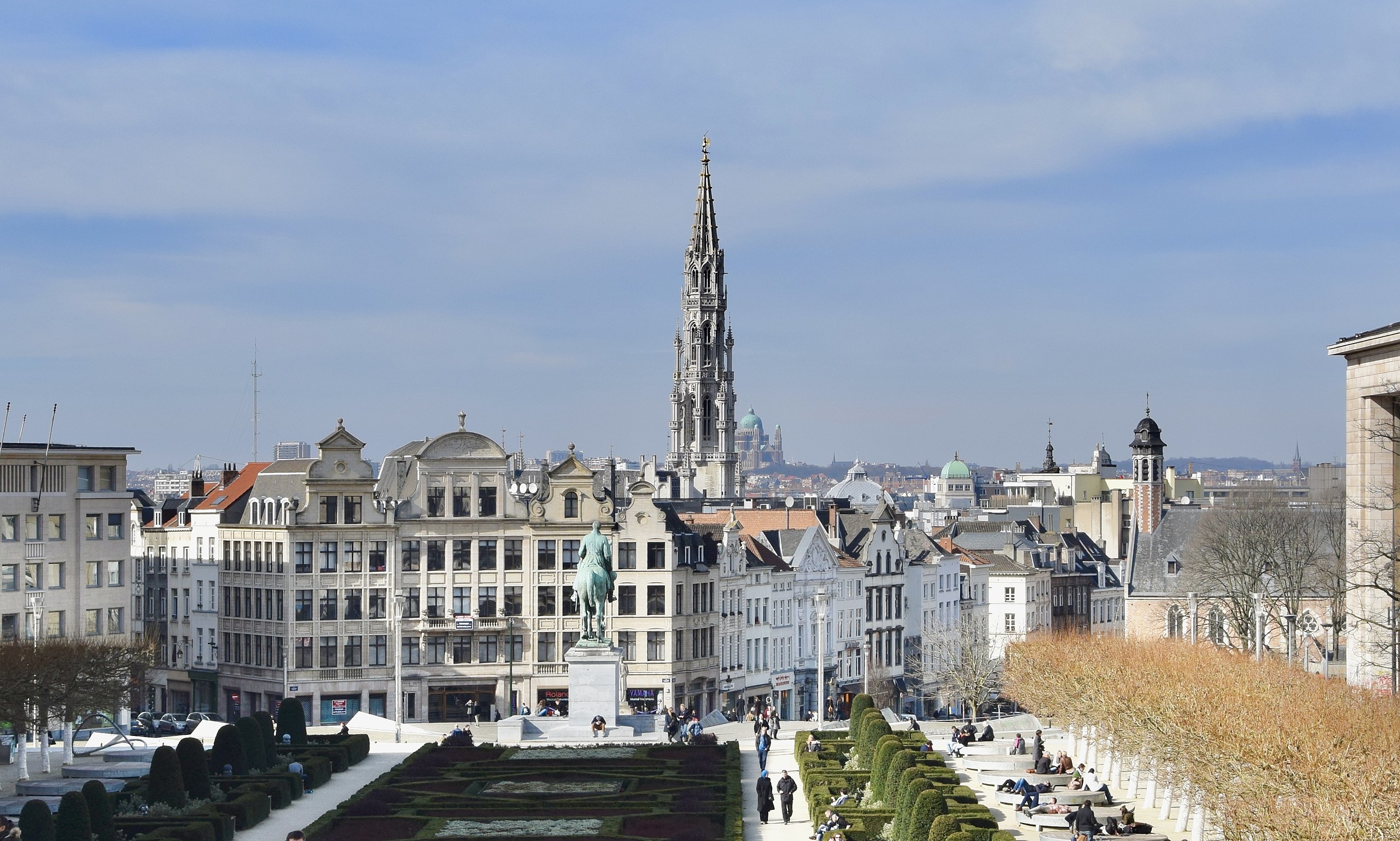
The majestic boulevards and stately façades of Brussels may still impress passing tourists, but behind the chocolate shop windows and neo-gothic splendour lies a city on the brink.
Once a proud symbol of European unity and bureaucracy, the de facto capital of the EU is now a case study in dysfunction—beset by spiralling debt, violent crime, and a paralysed political system incapable of even the most basic governance.
In just the first six weeks of this year, 11 shootings rocked the Belgian capital, leaving two dead and several others wounded. The violence—much of it linked to drug trafficking—has laid bare a grim reality: Brussels is not just in trouble. It is unravelling.
And yet, in the face of this crisis, Brussels remains leaderless. Nine months after regional elections, the city’s complex web of political parties and linguistic factions have failed to form a government. Amid the bickering, nothing gets done. Garbage piles up on street corners. Social housing projects stall. Subsidies for charities and cultural institutions are frozen. Even police budgets hang in limbo.
“It really is the survival of Brussels, as a city, that’s at stake,” Christophe De Beukelaer, a centrist MP and one of the few voices sounding the alarm with any urgency told Politico. “It’s just political posturing… It’s immature.”
At the heart of Brussels’ crisis is Belgium’s notoriously convoluted political architecture. The country is divided into three regions—Flanders, Wallonia, and Brussels—each with its own government. In Brussels, this tangle is intensified by a further division into 19 municipalities and six police zones. Each operates with a mayor and bureaucracy, none with centralised authority. When the system works, it’s a marvel of compromise. When it doesn’t—as now—it becomes a bureaucratic Bermuda Triangle.
The city’s financial woes match its political ones. With a debt of over €14 billion—projected to balloon by another €1.6 billion this year—Brussels is on an unsustainable trajectory. Belgian outlet Bruzz calculated that the region’s deficit is growing by a staggering €4 million every single day. Funding cuts loom, and the region’s credit rating could be downgraded by summer, making future borrowing more costly and painful.
That realisation has prompted increasingly desperate measures. The centrist Les Engagés party has proposed docking the pay of Brussels’ politicians—by 30 percent until they form a government, and by 40 percent if the impasse continues past June. A dramatic gesture, but perhaps the only language this class of elected officials understands.
So why the gridlock? The answer lies in Belgium’s linguistic divide.
In Brussels, where French-speakers are the majority, forming a government requires simultaneous coalitions among both French- and Dutch-speaking parties. The French-speaking side reached a deal quickly. But on the Flemish side, an agreement among the Greens, socialists, liberals and Flemish nationalists was torpedoed when French-speaking socialists refused to work with the latter.
The liberals, meanwhile, refuse to form a government without them. The result? Total paralysis.
As talks flounder, the federal government is growing restless. One contentious proposal from Prime Minister Bart De Wever’s party involves merging Brussels’ six separate police forces into a single, streamlined unit. Logical, perhaps, in a city overwhelmed by crime. But Brussels politicians, wary of ceding control to a federal structure they view as dominated by Flemish nationalists, are up in arms. They accuse the national government of pursuing a political takeover by stealth.
Some, like Georges-Louis Bouchez of the centre-right MR party, have floated the nuclear option: placing Brussels under federal control. Though widely seen as legally implausible, the threat underscores just how broken the region’s politics have become.
For now, the city limps on. Another shooting rattled the southwest of Brussels just days ago. The garbage bags continue to mount. And the budget hole deepens. While EU diplomats shuttle between commission buildings and embassies, their host city is quietly falling apart.
Brussels, once a beacon of European modernity, now serves as a cautionary tale. The capital of Europe has become a capital liability. And unless someone takes charge—and soon—its descent may become irreversible.
__________________________________________________________________________________________________________________

Read Also: Brussels Drugs Wars: Have the Police Lost Control of the Streets?
A fresh wave of deadly shootings in Brussels has sparked growing concerns over the ability of law enforcement to contain escalating drug-related violence.
In the early hours of Friday morning, a man was shot dead in the Peterbos district of Anderlecht, marking the latest in a series of violent incidents in the Belgian capital.
The attack follows multiple shootings in recent days, fuelling fears that criminal gangs are waging open warfare on the streets.
__________________________________________________________________________________________________________________