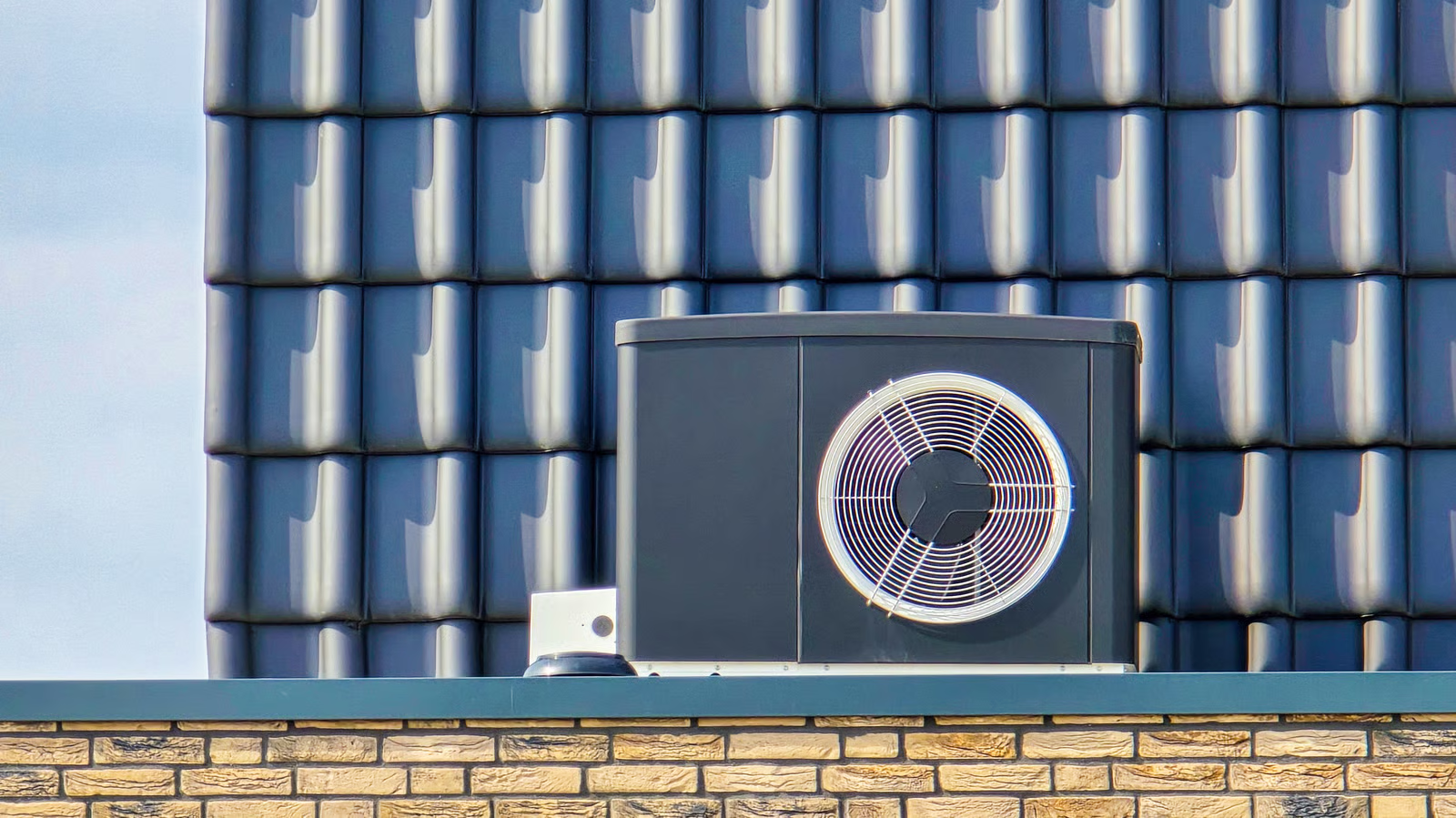
A draft EU electrification plan would use public purchasing power to cut oil and gas dependence, but mandatory heat pumps and electric-vehicle procurement targets could shift costs onto national and local budgets.
The European Commission is considering measures that would push public authorities to buy more electric vehicles and install heat pumps in public buildings as part of a wider effort to cut oil and gas use after renewed energy disruption linked to the Iran war.
The draft electrification plan, reported on 9 July, would use public procurement as a practical tool of energy security. Instead of relying only on targets and incentives, Brussels would use the purchasing power of governments, municipalities and public bodies to accelerate demand for electric technologies.
The policy logic fits the EU’s post-2022 energy-security agenda. The Commission’s REPowerEU plan was designed to reduce dependence on fossil-fuel imports, accelerate clean energy and improve resilience after Russia’s invasion of Ukraine. The Iran-related energy shock adds a new geopolitical reason to reduce exposure to oil and gas.
Public procurement as energy policy
The draft plan would reportedly consider requiring heat pumps in public buildings and strengthening procurement targets for electric vehicles. That would make public authorities early or guaranteed buyers of technologies Brussels wants to scale.
The approach is not new in principle. Governments have long used public procurement to shape markets. What is changing is the connection between procurement, electrification and energy security.
If public bodies electrify heating systems and vehicle fleets, they reduce demand for gas, diesel and petrol. They also create demand for European heat-pump, battery, charging and grid-service industries.
The cost problem
The difficulty is who pays. Public buildings are often old, inefficient and expensive to renovate. Installing heat pumps may require insulation, electrical upgrades, new distribution systems and maintenance training. Electric-vehicle fleets require charging infrastructure and grid capacity.
Local authorities may support the long-term goal but resist unfunded mandates. A city or region facing budget pressure may not be able to replace boilers or vehicle fleets on a Commission timetable without additional funding.
That makes the plan politically sensitive. Energy security is a shared EU objective, but implementation costs often land at national or local level.
A geopolitical energy lesson
The Iran war has shown again that Europe’s energy vulnerability does not only come from Russia. Oil and gas markets can be disrupted by Gulf conflict, shipping risk, sanctions, tanker movements and insurance costs.
Electrification is one way to reduce that vulnerability. A public bus fleet running on electricity is less exposed to diesel price shocks. A school heated by a heat pump is less exposed to gas disruption. But the transition requires investment before the savings arrive.
EU Today has recently covered how energy shocks are feeding into EU economic and fiscal debates. The electrification draft is a concrete policy response: use public purchasing to reduce fossil-fuel exposure over time.
Grid and supply-chain constraints
The plan would also need to confront practical constraints. Electrification increases electricity demand. Public buildings and vehicle depots may need grid upgrades. Heat pumps and EV chargers require skilled installers and supply chains.
There is also a China-dependence issue. Many clean-energy supply chains depend heavily on Chinese components. If Brussels simultaneously restricts Chinese content in renewable equipment and accelerates electrification, it must ensure alternative supply is available.
The Commission’s broader clean-industry agenda, including the Net-Zero Industry Act, is meant to build that capacity. But industrial scaling takes time.
A test of seriousness
The draft plan shows that Brussels is moving from broad climate language to purchasing decisions. That is a sign of seriousness. Targets are easier to announce than public-building renovations and fleet replacement schedules.
But seriousness also requires financing. If the EU wants public authorities to lead electrification, it will need funding tools, technical support and realistic timelines.
The plan could reduce Europe’s fossil-fuel vulnerability and support clean industry. Or it could become another mandate that local authorities struggle to implement.
The difference will depend on whether Brussels matches ambition with money, grid planning and supply-chain capacity.