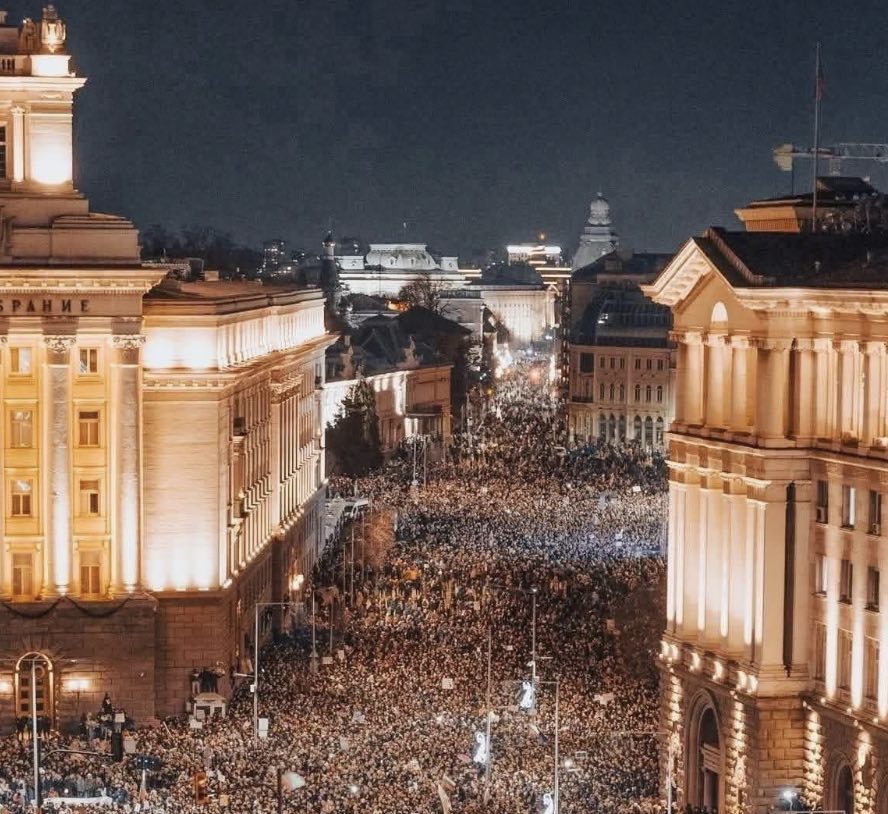
In the crisp chill of a December evening in Sofia, tens of thousands of Bulgarians spilled into the streets with a simple demand: Resignation.
It was not the outburst of a fringe protest, nor the isolated gesture of disgruntled youth. It was a powerful, unambiguous rupture in the fragile political equilibrium that has long defined Bulgaria’s modern democracy — one that culminated on December 11th with the resignation of Prime Minister Rosen Zhelyazkov and his government, just weeks before the country is due to adopt the euro.
Mr Zhelyazkov’s decision to step down — delivered in a televised statement moments before a parliamentary no-confidence vote — was at once a concession and a strategic retreat. It acknowledged the weeks of mounting pressure that have exposed more than just dissatisfaction with a single cabinet; they have revealed profound distrust in the political class and a deepening anxiety about corruption, economic mismanagement and democratic accountability.
At the heart of the protests were grievances that cut across age, region and political affiliation. What began as opposition to a draft budget — controversial proposals to raise social security contributions and increase taxes on dividends — quickly evolved into a broader indictment of governance. Thousands marched, not just against fiscal policies, but against what many see as endemic graft and the chronic failure of successive governments to deliver genuine reform. The government’s withdrawal of the budget did little to quell this ire.
This groundswell of discontent was not confined to Sofia. Protests erupted in towns and cities across the country, and even Bulgarians abroad rallied in capitals from Brussels to New York. Estimates based on drone footage suggested that crowds in the capital alone may have topped 100,000 — a remarkable number in a nation of 6.5 million.
What distinguishes these demonstrations from Bulgaria’s perennial political turmoil is not merely their size, but their targets. The anger was directed not only at the government but at the opaque networks of influence that many believe have skewed national policy. Central to this narrative is Delyan Peevski, a controversial figure sanctioned by both the United States and the United Kingdom for alleged corruption and influence-peddling. Although his party is not officially part of the government, its backing has been pivotal to the coalition’s parliamentary survival, feeding perceptions that the real power in Sofia lies not with elected ministers but with shadowy oligarchs.
These fears tapped into deeper anxieties about Bulgaria’s political identity. Over the past four years alone, the country has held seven national elections — a dizzying cycle emblematic of fragmentation and instability. The spectre of repeated contests erodes electoral legitimacy and fosters fatigue among voters who now see Brussels’ impending embrace of the euro as merely another layer of uncertainty atop domestic disquiet.
Yet Bulgaria’s euro adoption — scheduled for January 1st — proceeds undeterred. In a remarkable paradox, the nation’s transition into the eurozone now appears all the more discordant against the backdrop of domestic upheaval. For a government already struggling to convince large swathes of its populace of its economic stewardship, the march toward a single currency has become a symbol of elite consent divorced from public enthusiasm. Polling earlier this year showed a roughly even split in Bulgarian opinion on the euro, with many citizens uneasy about ceding monetary sovereignty at a time of widespread socioeconomic strain.
President Rumen Radev, a figure usually aligned with the country’s centre-left, lent moral weight to the demonstrators, urging lawmakers to “listen to the people”. His intervention underscored the unusual breadth of the movement, cutting across traditional party lines and challenging the notion that political allegiance alone could explain public outrage.
For Mr Zhelyazkov, the fall of his cabinet was a rebuke not only to his leadership but to an entire model of coalition politics that has bred compromise and calcified interests but produced little in the way of reform. In his resignation address, he framed the protests as a critique not of policy specifics but of “arrogance” and “attitude” — an implicit admission that the government misjudged the scale of public disaffection.
Opposition leaders, by contrast, heralded the resignation as a triumph of civic engagement and a necessary first step toward more accountable governance. Asen Vassilev, head of the We Continue the Change–Democratic Bulgariacoalition, declared the moment a victory for all Bulgarian citizens and urged new elections that might finally break the cycle of instability.
Yet the road ahead is far from clear. President Radev will now undertake consultations to see whether a new government can be formed — a prospect rendered unlikely by the deep fractures in parliament and the lingering spectre of oligarchic influence. If that effort fails, a caretaker administration will be appointed pending fresh elections — Bulgaria’s eighth since 2021.
In the meantime, ordinary Bulgarians find themselves at an inflection point. The resignation of a government so close to a historic economic milestone lays bare the contradictions of national progress: that structural reform and deep public dissatisfaction can, and often do, coexist. Whether the coming months will bring a fresh political consensus or further fragmentation remains to be seen. What is beyond doubt, however, is that the streets of Sofia have spoken — and the old certainties of Bulgarian politics have been shaken to their core.
Click here for more News & Current Affairs at EU Today
Click here to check out EU TODAY’S SPORTS PAGE!
_____________________________________________________________________________________________________________________________