
For more than a decade, Europe has been stuck in a cycle of hesitation when it comes to integrating its financial markets. As global challenges mount, the time for inaction has long passed.
If Europe is to meet the demands of the green and digital transitions, a fundamental shift is needed—one that unlocks private investment and builds robust European capital markets. The European Commission’s latest proposal for a Savings and Investment Union is a step in the right direction, but it will require decisive action from Member States to become a reality.
Markus Ferber MEP, the European People’s Party’s (EPP) Spokesperson in the Economic and Monetary Affairs Committee, has underlined the urgent need for reform. “The green and digital transitions will require us to spend hundreds of billions of euros annually, and this money cannot come from public coffers alone. The lion’s share must come from private investment, which requires robust European capital markets. A strong European economy needs strong financial markets,” Ferber states.
The challenge is stark. Every year, an estimated €300 billion of European savings flows to the United States for investment. This capital, instead of fuelling European innovation and economic growth, is financing American enterprises. Even amid strained transatlantic relations with President Donald Trump, Europe continues to neglect its own financial potential. If European policymakers are serious about long-term prosperity, this capital must be retained and channelled into European industries.
The hurdles to integrating European capital markets are well-documented, and the European Commission’s latest proposals acknowledge many of the longstanding issues. The plan largely repackages previous measures but remains crucial if meaningful progress is to be made. “If we succeed in implementing these proposals, significant progress can be made. We cannot afford another five years of stagnation on capital market integration,” Ferber warns.
One of the primary obstacles to integration has been the reluctance of Member States to cede control over financial regulations. National interests have repeatedly blocked efforts to create a truly unified financial market. Ferber is unequivocal: “We will only make progress if Member States play their part. Over the last number of years, Member States have hindered the better integration of European financial markets.
“If we want to make real progress on the Savings and Investment Union, we need the Council to be much bolder. That means tackling the big issues such as insolvency law, taxation and a more harmonised approach to supervision.”
This is the crux of the matter. Without harmonisation in key areas such as insolvency procedures, tax regimes, and financial supervision, capital market integration will remain a pipe dream. Investors require certainty, efficiency, and a level playing field. Divergent national rules create fragmentation, discourage cross-border investment, and leave European businesses at a disadvantage compared to their American and Asian counterparts.
The Savings and Investment Union is not merely a bureaucratic exercise; it is an economic necessity. A well-functioning European capital market would provide businesses with greater access to financing, reduce reliance on banks, and foster a more dynamic investment environment. Given the fiscal constraints facing many EU governments, private investment must take centre stage in financing the continent’s future.
The Commission has put forward a realistic set of measures, but they will mean little without political will. The ball is now in the court of national governments. Will they rise to the occasion and drive forward the necessary reforms, or will Europe endure another lost decade of financial stagnation?
The stakes could not be higher. For Europe to remain competitive, it must act now.
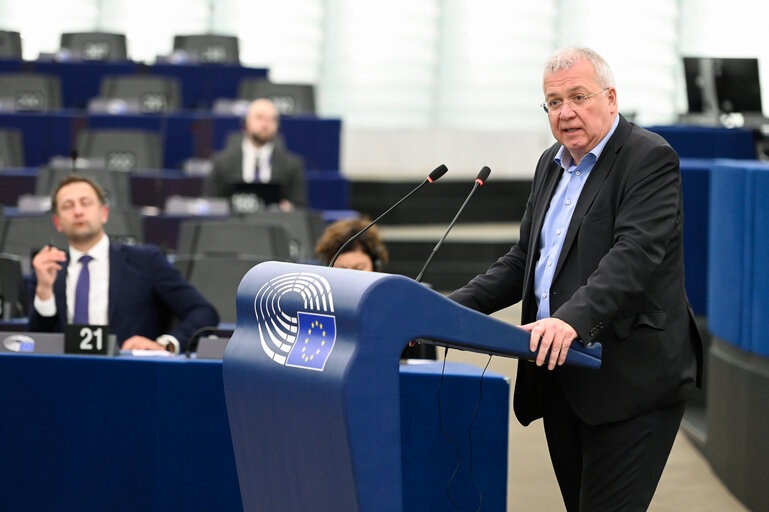
Main Image: Photographer: Michel CHRISTEN © European Union 2025 – Source : EP

