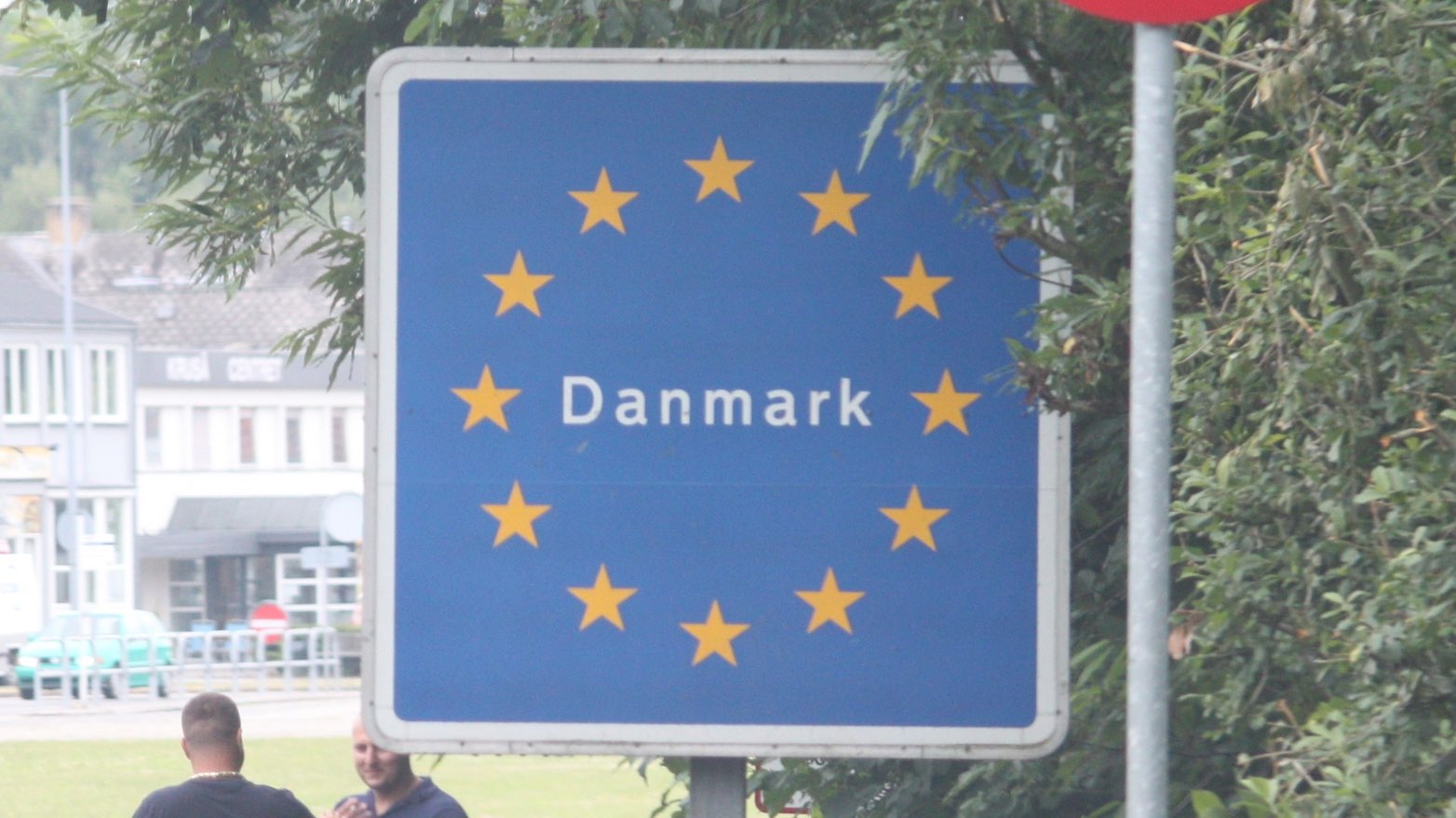
A political earthquake is rippling across the European Union as Denmark unveils sweeping migration restrictions under the guise of progressive reform, triggering a wave of similar initiatives by member states increasingly unwilling to wait for Brussels to act.
The Danish government, led by Prime Minister Mette Frederiksen, has announced what it calls a “realistic and humane” overhaul of its asylum policy, including a near-total halt to spontaneous asylum claims on Danish soil, mandatory processing in third countries, and a greater focus on integration for those already in the country.
The policy, unveiled last week, has electrified policymakers from Paris to Prague, while further exposing the European Commission’s chronic inability to broker a common-sense response to the migration crisis.
“Denmark is doing what Brussels will not: defending its borders, its people, and its sovereignty,” said an official from the Austrian interior ministry, which has praised Copenhagen’s lead and indicated its own policy shift could follow within weeks.
At the heart of Denmark’s reset is a desire to regain control of a system many across Europe now consider irreparably broken. EU migration policy, theoretically governed by the Dublin Regulation and bolstered by various Commission-led agreements, has in practice become an incoherent patchwork of national exceptions and political paralysis.
Despite years of promises, the European Commission has failed to create a functioning mechanism for asylum distribution, enforce external border controls effectively, or reform the incentives that fuel illegal crossings. Instead, it has clung to ideological prescriptions—solidarity quotas, pan-European resettlement schemes, and endless summit communiqués—which have proven either unenforceable or politically toxic.
Denmark’s move is significant not merely for its substance, but for its symbolism. It signals that EU member states are no longer content to remain shackled to an unworkable consensus. They are, increasingly, charting their own course—and unapologetically so.
“We’re doing what is necessary to preserve social cohesion and public trust in our institutions,” said Danish Immigration Minister Kaare Dybvad. “We cannot build a successful welfare society if we lose control of who enters it.”
Such statements have long been taboo in Commission circles, where migration is framed primarily as a humanitarian obligation rather than a political or cultural challenge. Yet public opinion across Europe is shifting sharply, with polls in Germany, France, Italy, and the Netherlands showing majority support for tighter border controls and national-level authority over asylum decisions.
In Berlin, senior figures in the opposition Christian Democrats are now openly calling for a “Danish model” in Germany, particularly in light of recent reports that over 70% of failed asylum seekers remain in the country indefinitely. “The system is being gamed, and ordinary citizens are paying the price,” said CDU MP Jens Spahn.
France, too, has taken note. President Éric Ciotti, whose hardline rhetoric on immigration helped propel him to the Elysée Palace last year, is reportedly reviewing Denmark’s framework for possible application in France’s overseas processing ambitions.
What distinguishes Denmark’s approach is its blend of firmness and progressive language. The government has framed its overhaul as a necessary evolution of social democracy—not its repudiation. “True solidarity,” said Frederiksen, “means being honest with voters and fair to those who genuinely need protection, not enabling criminal networks to dictate who reaches our borders.”
This rhetorical pivot has made it harder for EU federalists to mount their usual critiques. Attempts by Brussels officials to cast Denmark’s policies as legally dubious or morally retrograde have failed to gain traction.
Indeed, the Commission that increasingly looks isolated, trapped in a Brussels bubble while national leaders grapple with the on-the-ground realities of overstretched services, volatile public sentiment, and growing security concerns.
A confidential memo leaked from the EU’s External Action Service warned of a fresh surge in migration from North Africa this summer, spurred by worsening economic conditions and regional instability. Already, crossings in the Central Mediterranean are up 40% compared to last year.
In response, Italy has begun reinforcing maritime patrols and establishing new “safe third country” partnerships for offshore processing, following Denmark’s lead. Greece, too, has expanded its border wall with Turkey, while Poland and Hungary have reaffirmed their refusal to accept any Commission-imposed relocation quotas.
The result is a profound shift in the European migration landscape: from top-down imposition to bottom-up pragmatism.
Critics will decry this as a collapse of European unity. In truth, it may be the only viable path forward. A continent of sovereign nations, cooperating where possible but retaining ultimate control over who enters their territory, is not the death of Europe—it is the only way to preserve it.
The European Commission faces a moment of reckoning. Its failure to reconcile idealism with realism has created a vacuum that national governments are now filling, one by one. Denmark’s decision may prove to be a watershed: not merely a policy change, but the beginning of a long-overdue rebalancing between Brussels and the nation-states it purports to serve.
Main Image: By ChrGermany – Own work, Public Domain, https://commons.wikimedia.org/w/index.php?curid=15786515