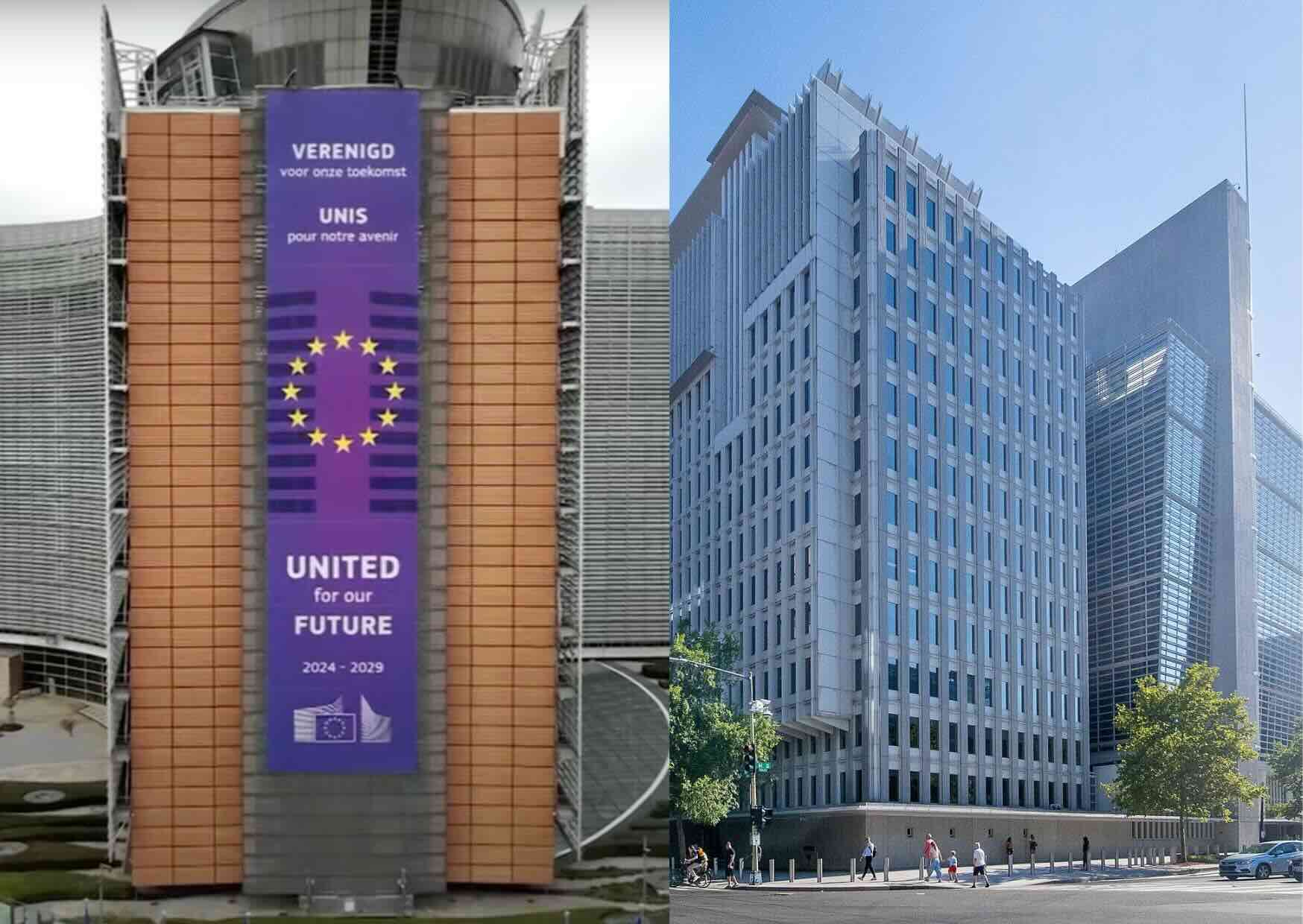
The European Union plans to intensify support for reforms to multilateral development banks (MDBs) that expand climate-related lending and align portfolios with the Paris Agreement, according to draft conclusions for this week’s meeting of EU finance ministers.
The stance sets up a clear divergence with Washington ahead of the International Monetary Fund (IMF) and World Bank Group Annual Meetings in Washington, D.C., from 13–18 October 2025.
EU countries will back measures to “strengthen” MDBs so they can “deliver at scale” on climate objectives. It calls for reforms to de-risk projects, expand provision of local-currency financing, and improve transparency of credit-risk data to mobilise larger volumes of private capital. It also says MDBs should phase out financing of fossil fuels and report comprehensively on progress.
The position contrasts with that of the United States, the largest shareholder in the World Bank and IMF. In April, US Treasury Secretary Scott Bessent argued the institutions had strayed from their core mandates and were devoting excessive resources to climate and other non-core themes. He urged a “refocus” on macroeconomic stability and development and advocated energy “technology neutrality”, including scope for gas financing. Those remarks framed a broader administration view that Bretton Woods institutions should avoid “mission creep”.
EU backing for a climate-centred reform track reflects several strands of recent MDB work. The World Bank and regional peers have been adjusting capital adequacy frameworks, exploring expanded guarantees, and piloting risk-sharing tools to free headroom for climate and resilience operations. Vulnerable economies have pressed for faster progress to address debt distress and climate shocks. The EU draft adds political support from a major shareholder bloc for measures that lower the cost of capital in developing markets, where currency risk and opaque credit data continue to deter private investment.
Europe’s own public lender, the European Investment Bank (EIB), has set a reference point for the approach Brussels wants MDBs to adopt. Under its Climate Bank Roadmap Phase 2, the EIB Group will double climate-adaptation finance to €30 billion for 2026–2030, compared with the previous five-year period. Recent statements from EIB leadership have reiterated that climate remains the bank’s core focus.
The timing is deliberate. Ministers are due to adopt the EU stance on Friday, days before the IMF and World Bank meetings open on Monday, 13 October. The agenda in Washington will include the Development Committee and the International Monetary and Financial Committee, where shareholders typically signal priorities for the institutions’ work programmes. With the US favouring a narrower remit and the EU urging climate-aligned expansion, negotiations over language on MDB mandates, capital use, and energy financing criteria could be closely watched.
Operationally, the EU’s draft points to three levers for crowding in private finance: first, instruments that de-risk early-stage and frontier projects; second, wider access to local-currency lending to reduce exchange-rate exposure; and third, more transparent and standardised credit-risk data to facilitate portfolio aggregation. Each of these has featured in recent World Bank and regional development bank pilots, but scale remains limited without shareholder backing and clearer reporting obligations. The call to phase out fossil-fuel lending, paired with mandatory progress reports, is intended to tighten accountability across MDBs with differing energy policies.