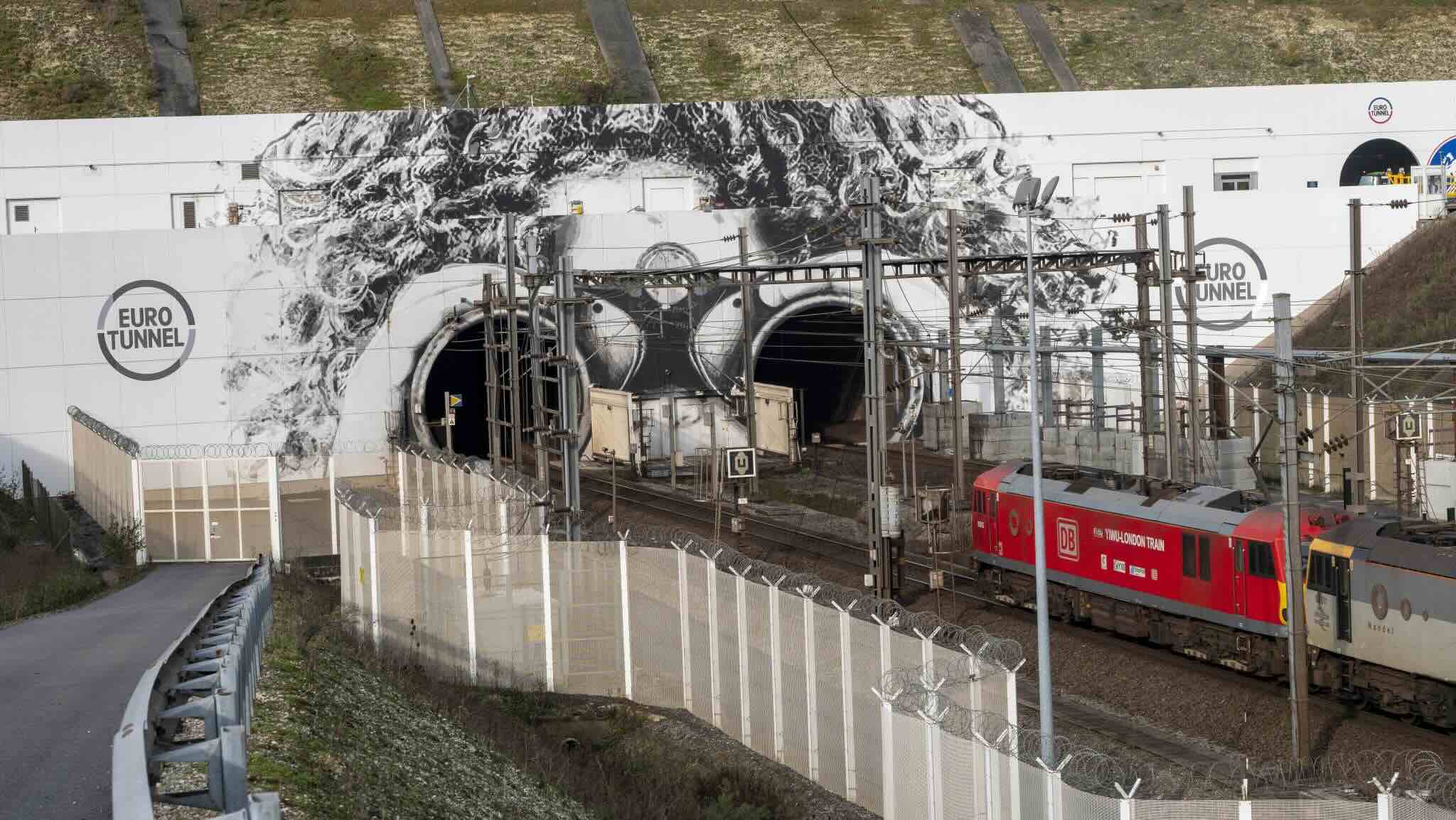
The European Union’s digital Entry/Exit System (EES) will begin on 12 October with a phased introduction intended to limit queues at the UK’s juxtaposed controls in Folkestone, Dover and London St Pancras, according to Eurotunnel operator Getlink.
The EU-wide rollout replaces manual passport stamping for non-EU nationals with biometric registration, recording fingerprints and a facial image alongside passport data. Officials expect full enforcement by April 2026.
Yann Leriche, Getlink’s chief executive, said the step-by-step approach would avoid the bottlenecks feared when the long-delayed system was first proposed. “You will not see any delays because it will be a gradual introduction,” he told Reuters, adding that French border officers could pause checks temporarily if processing times lengthened.
Under EES, travellers who are not citizens of EU or Schengen countries must register on first entry by scanning their passport and providing four fingerprints and a photograph. The record replaces the current ink stamp and is intended to enforce the bloc’s 90-day visa-free limit and strengthen external border management. Registration will occur at the point of EU border control, which—at the “juxtaposed” UK terminals used for cross-Channel travel—means completion before departure from Britain.
Implementation will vary by location during the initial months. At both the Eurotunnel terminal in Folkestone and the Port of Dover, EES checks will begin with freight and coach passengers from 12 October. Private car traffic will follow later—Dover from November and Eurotunnel by year-end—before a wider steady-state applies across modes. Eurostar has prepared facilities at St Pancras for passenger enrolment at the French controls there.
Operators and authorities have invested in infrastructure to support the change. Eurotunnel has installed banks of self-service kiosks to capture enrolment data and route passengers towards French Police aux frontières booths for verification. Dover has created an off-site processing area to keep vehicle lanes moving, and Eurostar has built a dedicated zone at St Pancras for first-time registrations. These measures are designed to separate initial enrolments—which take longer—from subsequent crossings, when the system reuses stored biometrics.
Border managers retain flexibility during the transition. French officers at the UK-based Schengen controls may relax checks briefly if queues grow, with the intention of avoiding gridlock at peak times. The European Commission has also signalled a controlled period of introduction to allow operators to adjust workflows and passengers to become familiar with the process.
The system’s reach extends beyond EU member states. EES will apply at external borders of Schengen-area countries, including non-EU members Iceland, Liechtenstein, Norway and Switzerland. It does not apply to Ireland or Cyprus, which are outside Schengen. Air passengers subject to EES will register on arrival in the Schengen area, while sea and rail passengers using juxtaposed controls will complete formalities before boarding in the UK.
EES precedes the European Travel Information and Authorisation System (ETIAS), a separate pre-travel requirement for non-EU, non-Schengen nationals that will introduce an online authorisation and fee. ETIAS has been delayed several times; EES is a prerequisite for its introduction. Officials expect ETIAS to follow after EES is fully operational.
Eurotunnel argues that the sequencing—freight and coaches first, private vehicles later—will help maintain traffic flow while staff and travellers adapt to the kiosks and new routines. Industry sources note that coach groups can be processed together, while hauliers are used to documentary checks, reducing early-phase complexity at the juxtaposed sites. Subsequent waves will bring a larger volume of first-time private motorists through the system, but by then operators expect the kiosks and staffing plans to be settled.
Concerns remain over variability between ports and airports during the six-month bedding-in period, when different sites may apply EES at different stages. Travel bodies have urged consistent passenger communications and clear signposting at terminals, particularly for peak holiday departures. Infrastructure upgrades at Folkestone, Dover and St Pancras are intended to mitigate those pressures, but performance will depend on real-time demand and traveller familiarity with the process.
For UK travellers, the practical advice is to allow additional time for the first EES registration and to follow operator guidance on lane routing and kiosk use. Children under 12 are exempt from fingerprinting; subsequent crossings should be faster once the biometric file is on record. The European Commission and operators advise that most first-time enrolments should add only a few minutes per person once the system is bedded in, though timings will vary by site and load.
With the launch date approaching, Getlink maintains that Channel routes are prepared. Leriche said operators had “many months” of planning and trials and expected “no issue” from mid-October, with authorities ready to slow the rollout if needed. The first weeks will provide the clearest indication of throughput across the juxtaposed controls and whether the phased plan delivers the intended stability.