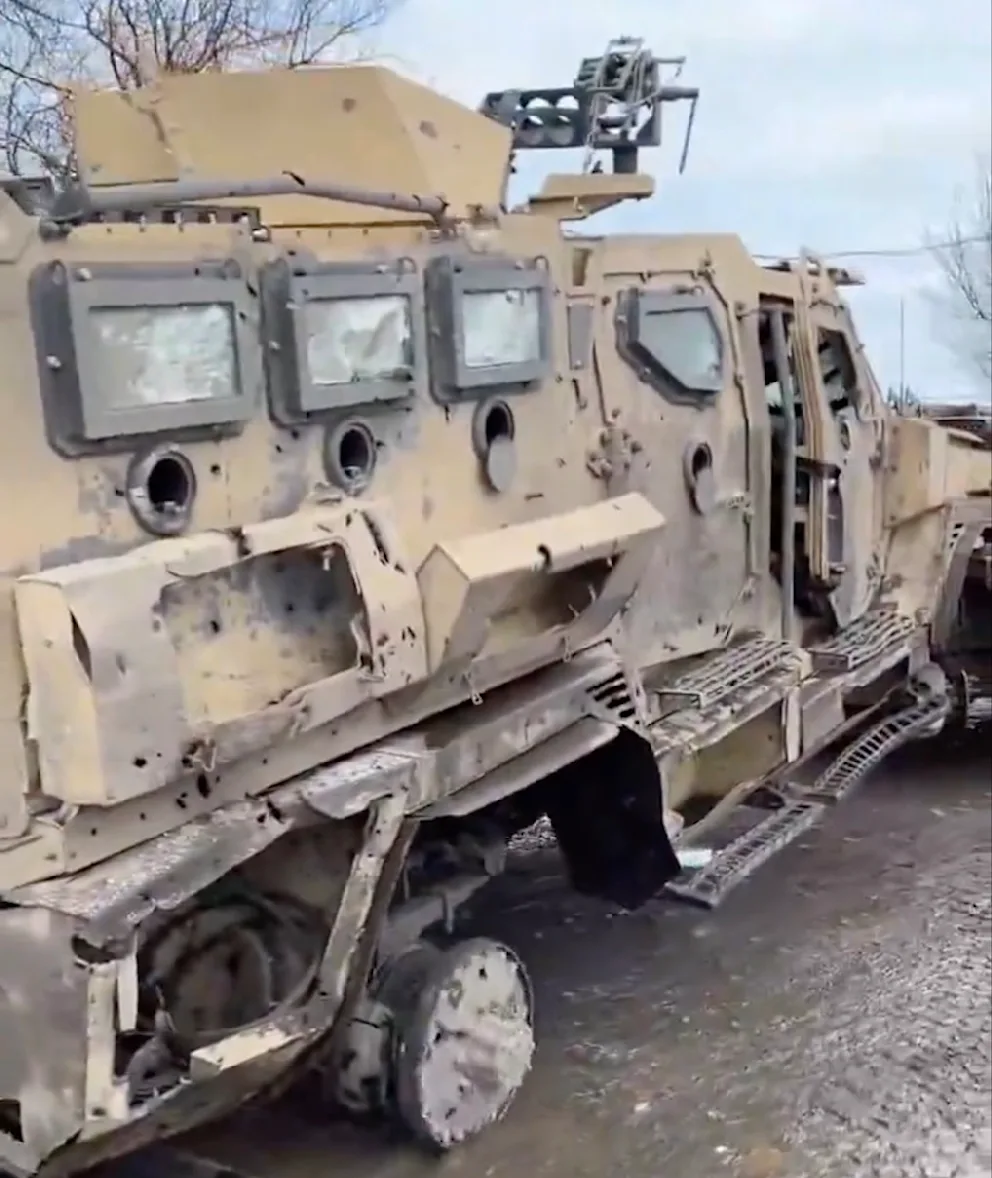
A controversial arms deal has sparked criticism against the German Defence Ministry (BMVg) led by Boris Pistorius of the Social Democratic Party (SPD).
According to investigations by BILD, conducted in the summer of 2023, there were significant irregularities in a deal between the Ministry of Defence and the Flensburg-based arms manufacturer FFG.
Key questions arising from the investigation include:
- Did Germany purchase the vehicles at significantly inflated prices?
- Were the vehicles not manufactured in Germany as promised?
- Do the vehicles provide the promised level of military protection?
The Deal
On June 2nd, 2023, the BMVg confirmed that Germany would deliver 66 “protected infantry fighting vehicles” to Ukraine. Both the German weapons manufacturer Rheinmetall and its competitor FFG, according to BILD sources, vied for the contract.
The BMVg statement declared, “After evaluating the available offers, the choice fell on the product of the company FFG as the most economical solution, which is also quickly available.”
The product in question was named “FFG Armoured Personnel Carrier (FFG APC).”
As of October 2023, Ukraine had received 48 of the promised 66 armoured vehicles, according to the German government.
The Armour
Investigations by BILD suggest that the vehicles are unsuitable for frontline use in Ukraine or combat scenarios, as implied by the term “infantry fighting vehicle” used by the BMVg. The primary reason is their inadequate armour.
Contrary to standard infantry fighting vehicles used by the German Bundeswehr, the vehicles supplied to Ukraine lack mine and fragmentation protection against artillery, rocket, and mortar attacks (STANAG Level II a+b or higher).
Instead, the “German” vehicles are only equipped with “protection against firearms” (Protection Class B6, comparable to STANAG Level II), confirmed by a Ministry of Defence spokesperson.
Military expert Carlo Masala, a professor at the Bundeswehr University Munich, expressed shock, stating that the lightly armoured variant provides minimal protection against the heavy fire these vehicles are exposed to on the front lines.
The Manufacturing Location
In June of the previous year, the BMVg stated to BILD that “the contractor, the company FFG, equips the 66 vehicles agreed upon in the contract as its own contribution in Germany as a licensed build.” However, documents and statements from arms industry insiders indicate otherwise.
FFG subcontracted the order to the German branch of the US defence company “The Armoured Group” named “TAG Germany.”
Through several intermediaries in the United States, the order ultimately reached “TAG Middle East,” a weapons company in the United Arab Emirates.
According to BILD information, the vehicles, officially named “BATT UMG,” were built and delivered to Ukraine from the Middle East. No vehicles were manufactured in Germany, as per documents and insider information obtained by BILD.
The Price
According to a customer’s purchase contract for the BATT UMG, the vehicles delivered from Germany to Ukraine have individual prices ranging from €185,000 to €208,000.
However, secret documents from the Ministry of Defence reveal that the BMVg paid FFG a “unit price of €600,000 per vehicle,” totaling around €40 million.
This stark difference in pricing has raised concerns among defence experts and politicians like Roderich Kiesewetter from the Christian Democratic Union (CDU).
Kiesewetter emphasised the need for internal and external investigations to elucidate the €25 million-plus difference between market price and the amount paid, as well as the decision to supply less protected vehicles instead of available FUCHS transport tanks.
Despite BILD’s attempts to reach out to FFG and other companies involved, there has been no response to the investigative findings.
The BMVg, when questioned, declined to confirm the €600,000 unit price but asserted that the price-performance ratio was justified through a plausibility assessment.
____________________________________________________________________________________________________________________________
Read also: Ukraine’s Air Defence Success: Six Russian Fighter Jets Downed in Three Days
Ukraine’s Air Defence forces have declared that they have shot down two additional Russian fighter jets on Monday morning, further extending its claimed tally to six jets destroyed within a mere three-day span.
____________________________________________________________________________________________________________________________

Follow EU Today on social media:
Twitter: @EU_today
Facebook: https://www.facebook.com/EUtoday.net/
https://www.facebook.com/groups/968799359934046
YouTube: https://www.youtube.com/@eutoday1049