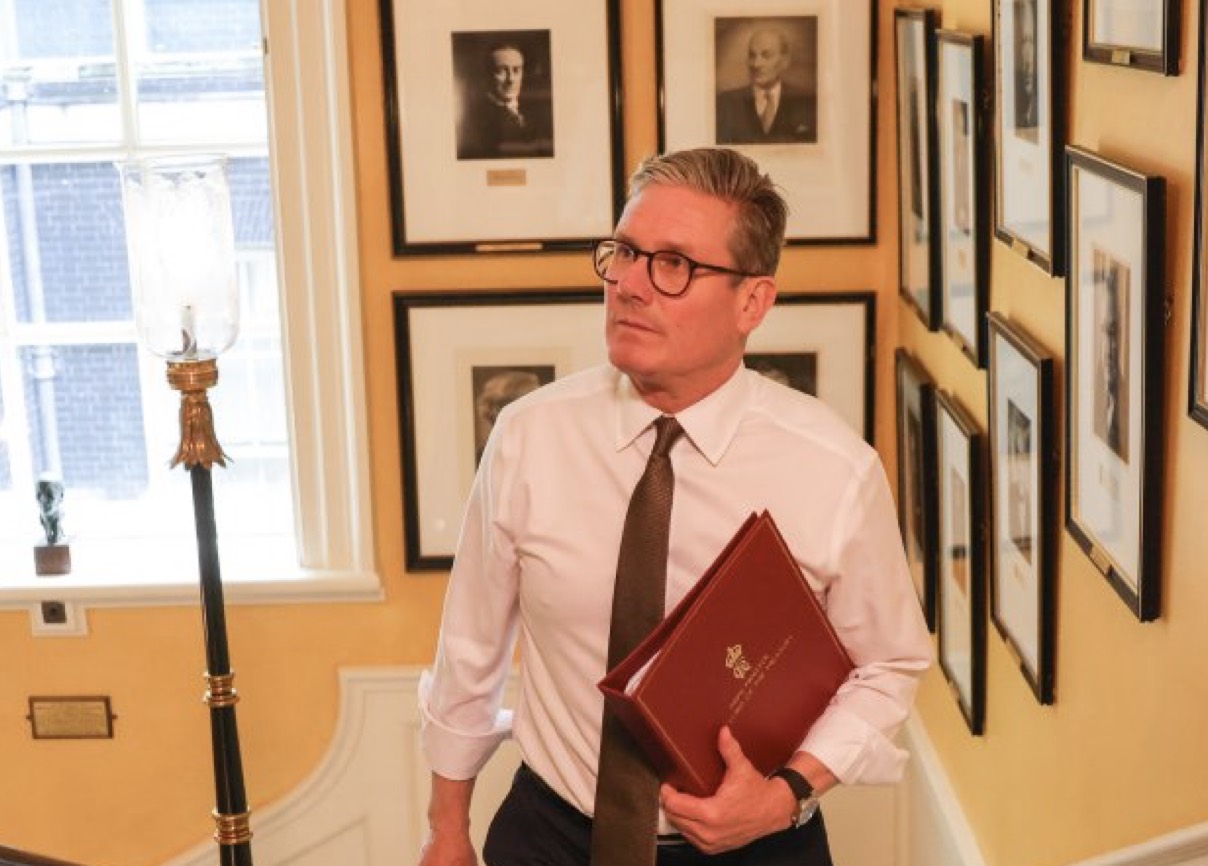
Keir Starmer once sold himself as the antidote to cynicism in politics: the forensic lawyer, the man of probity, the grown-up who would restore seriousness to public life. Yet it is precisely on questions of integrity, judgement and leadership that his premiership is now unravelling.
The admission that he knew of concerns surrounding Peter Mandelson’s integrity before appointing him as Britain’s ambassador to Washington is not a minor footnote. It goes to the heart of Starmer’s political character. Either he believed the concerns were serious—in which case appointing Mandelson was reckless—or he did not, in which case his later acknowledgements ring hollow. There is no third option that reflects well on him.
For a Prime Minister who built his reputation on ethical rectitude, this was not merely an error of judgement but a profound act of self-contradiction. Starmer did not inherit Mandelson as a legacy problem; he chose him. He did so in full knowledge that Mandelson remains one of the most controversial figures of the New Labour era, a man whose career has been dogged by questions of propriety, access and influence. To proceed regardless suggests not pragmatism, but moral convenience.
The deeper issue is not Mandelson himself, but Starmer’s apparent willingness to suspend his own standards when power is at stake. This is the same leader who once insisted that even the perception of impropriety was intolerable. Now he asks the public to accept that what once disqualified others somehow does not apply when geopolitical expediency beckons. It is hard to escape the conclusion that integrity, under Starmer, has become situational.
This would be troubling enough in isolation. But it comes amid a broader sense of drift, fragility and incoherence at the top of government. Starmer has struggled to impose authority on his own party, let alone project stability to the country. Cabinet discipline appears episodic. Policy announcements are frequently followed by hurried clarifications or quiet retreats. A government elected on the promise of competence now looks curiously unsure of itself.
Much of this stems from the Prime Minister’s leadership style—or lack of one. Starmer governs as he campaigned: cautiously, defensively, always triangulating, rarely inspiring. That approach may win elections, but it is ill-suited to governing in an era that demands clarity and resolve. Faced with pressure, he hesitates. Faced with controversy, he obfuscates. Faced with difficult choices, he seeks refuge in process.
Worse still is the poverty of talent on his front bench. It is a brutal truth, but an unavoidable one: there is not a single senior figure in Starmer’s Cabinet who looks remotely capable of leading the country. This is not a question of charisma alone. It is about intellectual heft, strategic vision, and the authority that comes from commanding respect beyond one’s own faction.
The Chancellor lacks conviction. The Foreign Secretary lacks gravitas. The Home Secretary lacks credibility. Others scarcely register at all. Taken together, they form a government that feels provisional, one feels that a leafy hamlet in the Home Counties is missing its parish council. When a Prime Minister cannot point to a single plausible successor, it is often because he has surrounded himself with subordinates rather than statesmen.
It is therefore no longer fanciful to speculate about Starmer’s own future. Westminster is already alive with rumours that his position is more precarious than Downing Street admits. A leader who disappoints his supporters, alienates his critics, and fails to command his party rarely survives for long. The Mandelson affair may yet prove the moment when the carefully constructed image finally collapsed under the weight of its own contradictions.
If Starmer does choose—or is forced—to resign in the coming days or weeks, he will have only himself to blame. He promised a clean break from the politics of expediency and delivered a familiar blend of compromise and calculation. He promised stability and produced uncertainty. He promised integrity and practised expedience.
In such circumstances, the case for a snap general election becomes compelling. This government no longer appears to possess a clear mandate for the direction it is taking, nor the authority to see it through. The public was not asked whether it wished to be governed by a Labour administration that so readily rehabilitates the architects of past controversies while preaching moral renewal.
An election would at least offer clarity. It would allow voters to judge whether Starmer’s compromises are acceptable, whether his government deserves more time, and whether his party has anything better to offer. To limp on, hoping that the storm will pass, would only deepen the sense that Britain is being governed by a leadership class that has lost confidence in itself.
The tragedy of Keir Starmer is not that he failed to live up to impossible expectations, but that he failed to live up to his own. In abandoning the principles that once defined him, he has forfeited the very authority that justified his rise. Politics, as he once knew better than most, is ultimately a test of character. On that test, his government is now perilously close to failure.
Main Image: Keir Starmer, via X.
Peter Mandelson’s Epstein Defence Insults the Intelligence of the Public – and the Victims
Click here for more News & Current Affairs at EU Today
Click here to check out EU TODAY’S SPORTS PAGE!
_____________________________________________________________________________________________________________________________