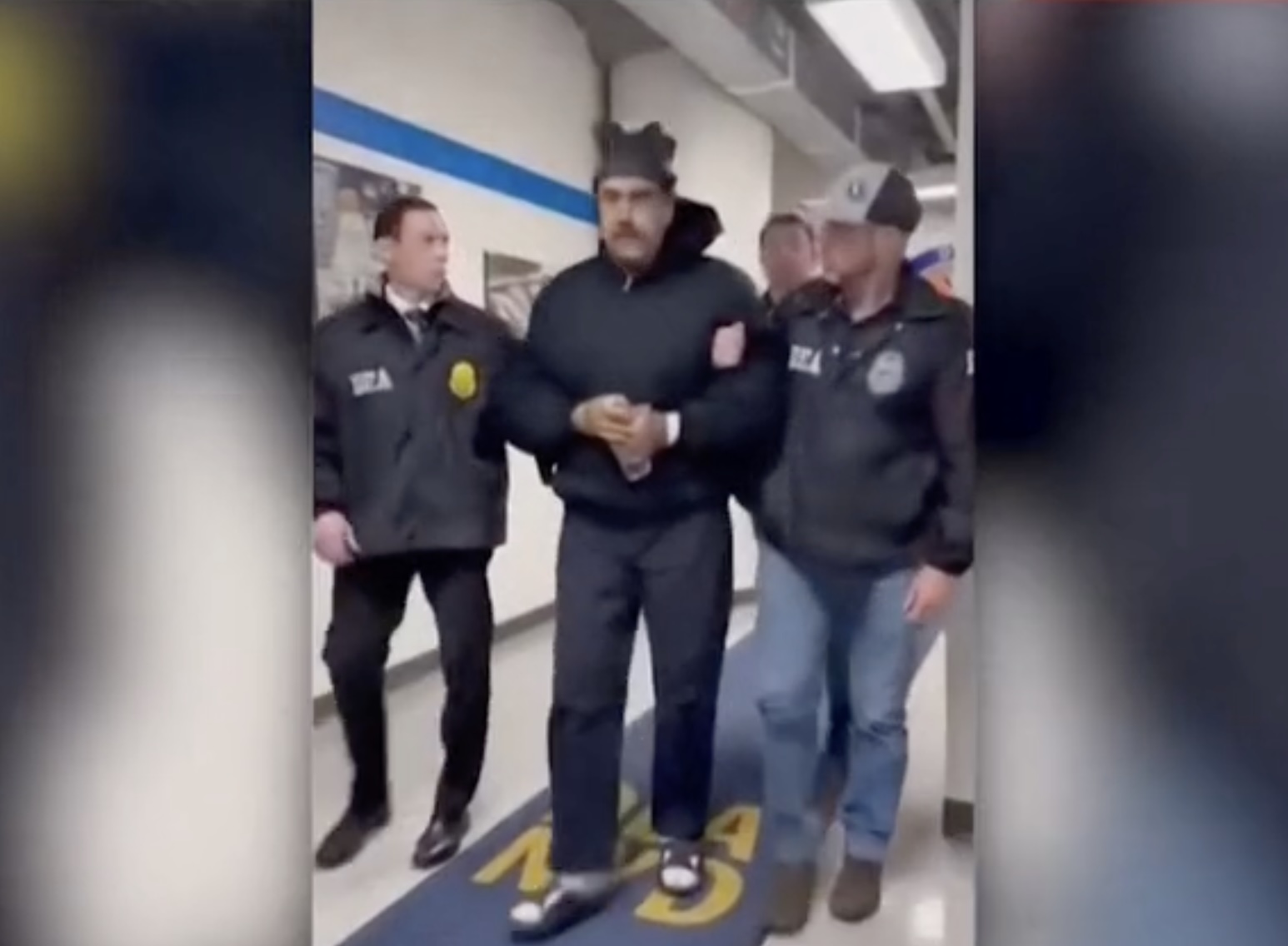
Emmanuel Macron and Friedrich Merz have set out contrasting emphases after Donald Trump ordered a US military operation in Venezuela that ended with President Nicolás Maduro and his wife, Cilia Flores, in American custody.
In posts on X, the French President welcomed what he described as the end of Mr Maduro’s rule and urged a rapid, peaceful transfer of power.
The Venezuelan people are today rid of Nicolás Maduro’s dictatorship and can only rejoice.
By seizing power and trampling on fundamental freedoms, Nicolás Maduro gravely undermined the dignity of his own people.
The upcoming transition…
— Emmanuel Macron (@EmmanuelMacron) January 3, 2026
The German Chancellor also portrayed Mr Maduro’s departure as positive for Venezuela but said the legality of the US action required careful examination and warned against further instability.
Nicolás Maduro has led his country into ruin. The most recent election was rigged. Like many other countries, we have therefore not recognized his presidency. Maduro has played a problematic role in the region.
— Bundeskanzler Friedrich Merz (@bundeskanzler) January 3, 2026
Mr Maduro was taken during an early-morning operation on Saturday that included strikes on military installations and contributed to electricity outages in parts of Caracas. US Special Forces seized Mr Maduro and Ms Flores and transported them by helicopter to a US Navy ship offshore before flying them to the United States.
Mr Maduro is being held at a New York detention centre ahead of his first appearance at Manhattan federal court on Monday, where he faces federal charges including narco-terrorism conspiracy.
At a press conference at Mar-a-Lago, Mr Trump said: “We will run the country until such time as we can do a safe, proper and judicious transition.” He also spoke about Venezuela’s oil reserves and said major US oil companies would return to refurbish degraded infrastructure.
Mr Macron’s statement focused on what happens next. He said Venezuelans had rid themselves of Mr Maduro’s “dictatorship” and argued that the transition must be “peaceful, democratic” and respectful of the Venezuelan people’s will. He added that France wanted Edmundo González Urrutia — whom he described as elected in 2024 — to be able to deliver that transition as soon as possible.
Mr Merz struck a more cautious note on the international legal dimension while making similar political claims about Venezuela’s recent vote. In a post on X he said the last election had been falsified and that Germany, like other countries, had not recognised Mr Maduro’s presidency. He added that a legal assessment of the US action was “complex” and required thorough consideration, insisting that international law remained the guiding framework.
The Chancellor also warned that political instability should be avoided and said the objective should be an orderly transition to a government chosen through elections.
The diverging emphases highlight an immediate European dilemma: how to support a political change in Caracas without endorsing a precedent of cross-border force and the seizure of a sitting head of state. The question is sharpened by Washington’s dual framing of the operation as both a law-enforcement action and a move linked to political control.
In a separate analysis, Reuters reported that the Trump administration justified the mission by pointing to US indictments and the claim that the Justice Department sought military assistance to apprehend Mr Maduro and other defendants. Legal experts told Reuters that a criminal indictment does not, by itself, provide authority under international law to use military force against a foreign government, absent recognised exceptions such as self-defence or UN Security Council authorisation.
Reuters also said Secretary of State Marco Rubio confirmed that Congress was not notified before the operation.
On the Venezuelan side, Delcy Rodríguez, the vice president, appeared on television with senior officials to denounce what she called a kidnapping and demanded Mr Maduro’s release. A Venezuelan court ordered Ms Rodríguez to assume the role of interim president.
The immediate balance of power inside Venezuela remained unclear. The US forces do not control the country and the remaining Maduro-aligned authorities show no sign of co-operating with Washington.
The prospect of a political vacuum also complicates European policy. Mr Macron’s call for Mr González Urrutia to take the lead indicates Paris is looking towards a swift handover to an opposition figure presented as holding an electoral mandate. Berlin, while pointing in the same direction on legitimacy, is signalling that any European response will need to account for legal scrutiny and the risk of further disorder.
A further test will come at the United Nations, where the Security Council is due to meet on Monday. The Secretary-General has described the US action as a “dangerous precedent”.