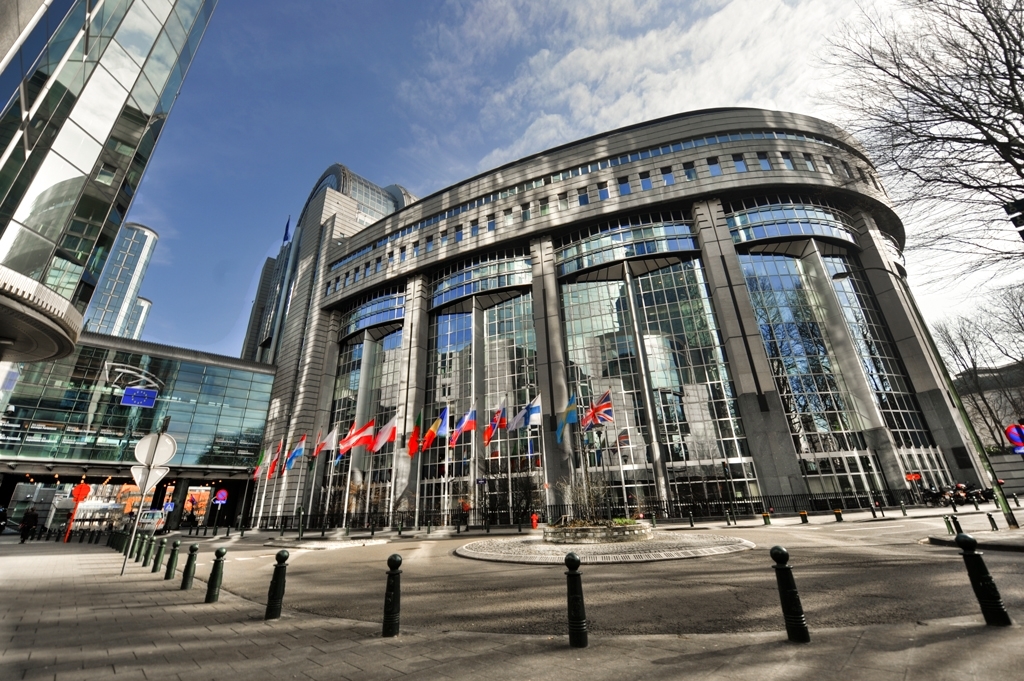
The so-called “Qatargate” scandal has become the most high-profile corruption probe in the history of the European Parliament, yet two years after Belgian police seized suitcases of cash and arrested sitting MEPs, the investigation remains mired in delay and controversy.
Supporters of the judicial process insist that the case is still alive, pointing to fresh immunity-lifting requests and new charges as proof of life. Skeptics argue that its slow-motion pace has less to do with methodical thoroughness than with the uncomfortable fact that the network under scrutiny appears to touch sensitive parts of Belgium’s own political establishment.
The tension between these two narratives — diligent judicial process versus quiet political suffocation — is the essence of the Qatargate dilemma.
A Case of Exceptional Sensitivity
From the outset, Qatargate was unlike the European Parliament’s routine corruption cases. This was not a technical expenses fraud or an employment scam. Belgian prosecutors alleged that Qatar and Morocco funnelled money and gifts to MEPs and associates to shape EU policy, particularly on human rights resolutions. The sums involved were large — hundreds of thousands of euros in cash — and the alleged beneficiaries were not obscure backbenchers but high-ranking Parliamentarians, including then-Vice President Eva Kaili.
Belgium’s federal prosecutor’s office framed it as an organised criminal conspiracy, with Italian former MEP Pier Antonio Panzeri portrayed as a key broker between foreign interests and the Parliament. His confession under a plea deal in early 2023 gave the appearance of prosecutorial momentum. But as the investigation deepened, it began to tangle with the domestic political fabric of Belgium itself.
The Judge Who Stepped Away
The pivotal moment came in June 2023, when the lead investigating judge, Michel Claise, recused himself due to a conflict of interest: his son had business links to the son of MEP Marie Arena, a Belgian Socialist politician whose name had been connected to the case. Claise’s recusal was procedurally necessary — the appearance of bias would have undermined any eventual trial — but the optics were disastrous.
Claise had been the public face of the investigation, and his sudden exit fuelled speculation that powerful actors inside Belgium were uncomfortably close to the matter. Arena herself has since been charged, in January 2025, with participation in a criminal organisation. But the delay between the judge’s recusal and subsequent prosecutorial action invited suspicion: had the case been allowed to lose momentum precisely because it was now politically explosive in the Belgian context?
Delays, Reviews, and Defence Victories
The procedural record since mid-2023 reads like a catalogue of pauses. Defence teams have used every available instrument to slow the pace: challenges to the legality of evidence gathering, demands for immunity reviews, and appeals for judicial oversight of Belgian intelligence methods.
One line of attack concerned how the State Security Service (VSSE) obtained key evidence. Defence lawyers claimed improper surveillance and argued that it violated parliamentary immunity. This triggered reviews by Belgium’s intelligence oversight body, Committee R, and later a formal court-ordered assessment in September 2024. Committee R eventually ruled that the VSSE acted lawfully, but these reviews chewed up months of calendar time.
Meanwhile, Eva Kaili’s legal team fought a rear-guard action over her immunity, delaying proceedings into 2024. In the process, the narrative shifted: instead of public attention on the substance of the bribery allegations, media headlines became dominated by procedural skirmishes. For the casual observer, the case appeared to have stalled.
“Stalled” — or Still Moving?
By late 2023, outlets like Euractiv described Qatargate as “going nowhere.” This assessment reflected the visible lack of court hearings or dramatic arrests. However, it underestimated the continuing activity behind the scenes. In March 2025, Belgian prosecutors asked the European Parliament to lift immunity for two more MEPs, Elisabetta Gualmini and Alessandra Moretti — both from Italy’s Democratic Party.
This step suggests that the investigation has broadened, not shrunk. It also rebuts the notion that Belgian authorities have abandoned the case. Yet, the timing — over two years after the original raids — underscores the glacial pace at which cross-border political corruption cases move, especially when the accused are protected by parliamentary privilege and backed by well-resourced legal teams.
The Shadow of Political Interference
The speculation that Qatargate has been slowed due to the implication of a senior Belgian politician rests more on circumstantial inference than documented proof. The key ingredients are:
The conflict-of-interest recusal of Judge Claise, a respected figure in Belgian judicial circles.
The Belgian nationality and political profile of MEP Marie Arena, later charged in the case.
The sudden loss of visible momentum after these developments.
In the abstract, these could be explained by procedural caution. When a national figure of political significance is implicated, prosecutors must tread with extra care to avoid claims of political persecution or bias. But the optics — a judge stepping aside, a politically sensitive defendant, months of procedural delay — create fertile ground for suspicion.
Belgium has an unenviable reputation for slow-moving, politically awkward cases. The country’s fractured political system, with its linguistic and regional divides, has sometimes made the pursuit of cases involving high-profile figures a delicate balancing act. The suspicion in the Qatargate context is that these dynamics are in play, consciously or unconsciously, in the cautious prosecutorial approach.
Institutional Vulnerabilities
Regardless of whether political interference is real or merely perceived, the Qatargate saga has already exposed structural weaknesses in both the European Parliament and Belgium’s judicial architecture.
For the Parliament, the scandal has reinforced the view that its ethics and transparency rules are insufficient. Until late 2022, gift declarations, travel disclosures, and lobbying registers were minimal. The Parliament has since tightened these, but enforcement remains patchy, and MEPs continue to enjoy significant immunity from national legal processes.
For Belgium, the case has been a stress test of its capacity to investigate sensitive EU-level political corruption. The reliance on national judicial systems to handle EU-wide scandals is a reminder that the EU still lacks a truly centralised anti-corruption enforcement mechanism. The European Public Prosecutor’s Office (EPPO) can handle fraud against the EU budget, but influence-peddling and bribery of MEPs remain largely within national jurisdictions. That means that political will in the seat-country — Belgium — is a critical variable.
Public Perception and the Risk of Cynicism
The drawn-out procedural fights, combined with the absence of rapid convictions, risk fuelling public cynicism about the EU’s capacity to police itself. For Eurosceptics, Qatargate is a gift: a symbol of an unaccountable elite taking foreign cash to shape policy, then hiding behind immunity and procedural delay. For pro-EU reformers, it is a frustrating reminder that institutional change lags far behind the reality of modern influence operations.
The risk is that the eventual outcome — whether it involves convictions, acquittals, or plea deals — will arrive so late and with such diminished public attention that it fails to deliver either deterrence or reassurance. If the perception sets in that justice is negotiable when political stakes are high, the reputational damage to the Parliament will far outlast the legal case.
Conclusion: Still Alive, but at a Cost
On the facts available, it is inaccurate to say the Qatargate investigation has “ground to a halt,” as such. New immunity requests, fresh charges, and the continued cooperation of multiple national authorities indicate that the case is active. However, it has unquestionably lost the public sense of momentum that characterised its first months.
The reason for this loss of momentum is partly structural — complex international investigations involving parliamentary immunity inevitably move slowly — and partly political, in that the involvement of (at least one) senior Belgian figure introduced new sensitivities. Whether these sensitivities have translated into active political interference is unproven, but the suspicion alone has been corrosive.
In the end, Qatargate may produce convictions. But the damage it has done to the perception of the European Parliament’s probity, and to the idea that EU political corruption can be tackled swiftly and impartially, is already profound. The scandal is no longer just about Qatar or Morocco’s alleged influence. It is about the fragility of institutional accountability when political embarrassment is at stake — and on that score, the verdict is already in.
__________________________________________________________________________________________________________________________

The Qatargate scandal that recently rocked Brussels and saw the incarceration of European Parliament vice-President Eva Kaili, currently facing charges related to her alleged relationships with third-countries (and somewhat large amounts of cash), has raised serious questions over lobbying practices inside the institution.
__________________________________________________________________________________________________________________________