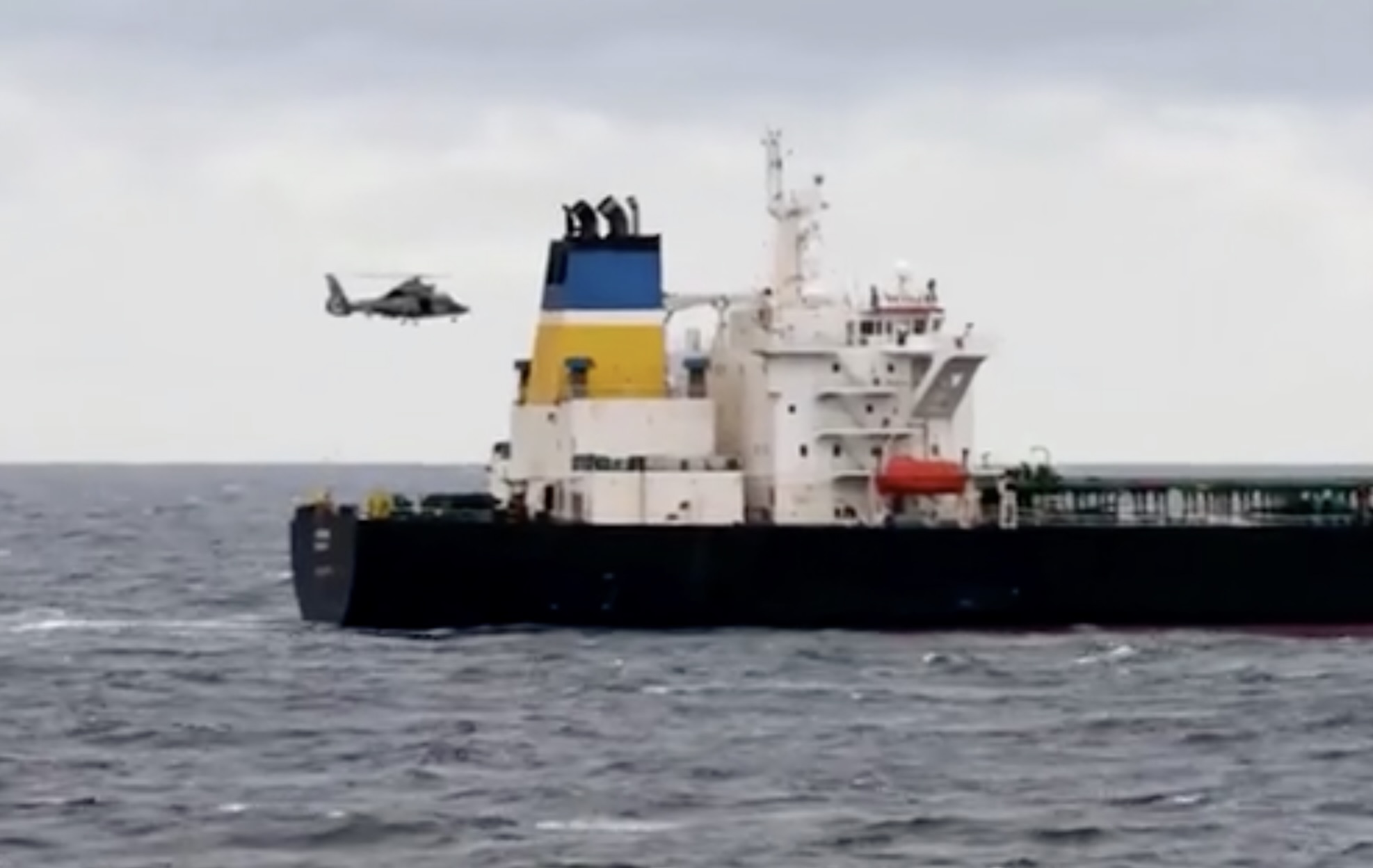
A tanker identified by the French authorities as a suspected part of Russia’s so-called shadow fleet arrived off Marseille-Fos on Monday after being intercepted in the western Mediterranean and diverted to the French coast for judicial examination.
French officials said the vessel, the Deyna, would be placed at anchor and kept at the disposal of the Marseille public prosecutor as part of a preliminary investigation.
The case is the latest in a series of French actions targeting vessels suspected of helping Moscow move oil outside the formal sanctions regime imposed after Russia’s full-scale invasion of Ukraine. The Deyna had been intercepted on Friday in the western Mediterranean and escorted towards the Gulf of Fos by assets of the French navy. The tanker have been sailing from Murmansk under the flag of Mozambique and was suspected of using a false flag.
France intercepts suspected Russian shadow fleet tanker in Mediterranean
The French maritime prefecture said the ship would be anchored in the Gulf of Fos and maintained under the authority of prosecutors while investigators examined the case. Reporting from Marseille on Monday said the vessel was still under naval escort on arrival. French authorities also imposed air and maritime exclusion zones around the anchorage, underlining the operational sensitivity of the detention.
The original interception took place south of the Balearic Islands. French officials said the operation was carried out to verify the regularity of the tanker’s flag and documentation. The French action was conducted with British support, and French military personnel were put on board the vessel by helicopter. French and allied authorities are reported to be examining the ship’s registration, insurance and related documentation.
President Emmanuel Macron publicly endorsed the interception on Friday, describing such ships as vehicles for sanctions evasion and a source of funding for Russia’s war effort. Macron said vessels that circumvent international sanctions and violate the law of the sea are helping to finance the Russian war effort. His intervention placed the case in a broader political context, linking the Deyna not simply to a maritime irregularity but to the enforcement of the wider sanctions regime built by the EU and its partners.
The term “shadow fleet” is widely used by European governments, regulators and the shipping industry to describe tankers operating through opaque ownership structures, changing flags, uncertain insurance cover and complex corporate arrangements that can obscure the origin of cargoes and the identity of operators. Such vessels are often older ships sailing without top-tier Western insurance or certification, creating not only sanctions-enforcement problems but also environmental and safety concerns.
Risk in European Waters: The Shadow Fleet, Sanctions Evasion and Safety Gaps
French officials have presented the Deyna case as part of a broader enforcement effort. This was the second such interception by France in recent months, a part of a pattern of increasingly assertive action by Paris and its partners against suspected shadow fleet traffic. The official French communiqué issued ahead of the vessel’s arrival in the Gulf of Fos confirms that the ship was deliberately rerouted and placed under judicial authority rather than being allowed to continue its voyage.
The wider EU sanctions framework is also expanding. In January, the Council of the European Union said a further 41 vessels had been added to the list of ships banned from entering member states’ ports and locks or receiving a broad range of maritime services because of their role in Russia’s energy revenues or shadow fleet operations. Separate reporting in 2026 has put the total number of EU-listed shadow fleet vessels at 598, a figure also repeated in current coverage of the French operation.
For France, the arrival of the Deyna off Marseille turns a naval interception into a judicial test case. Prosecutors will now determine whether the ship’s flag, ownership, insurance or cargo arrangements breached applicable law. For the EU, the case illustrates the practical problem of enforcing sanctions at sea: identifying vessels, establishing documentation irregularities, and converting intelligence or suspicion into legally sustainable action. Whatever the outcome of the Marseille investigation, the detention of the Deyna shows that France is prepared to move beyond rhetoric and use both naval and judicial tools against shipping suspected of sustaining Russian oil exports.