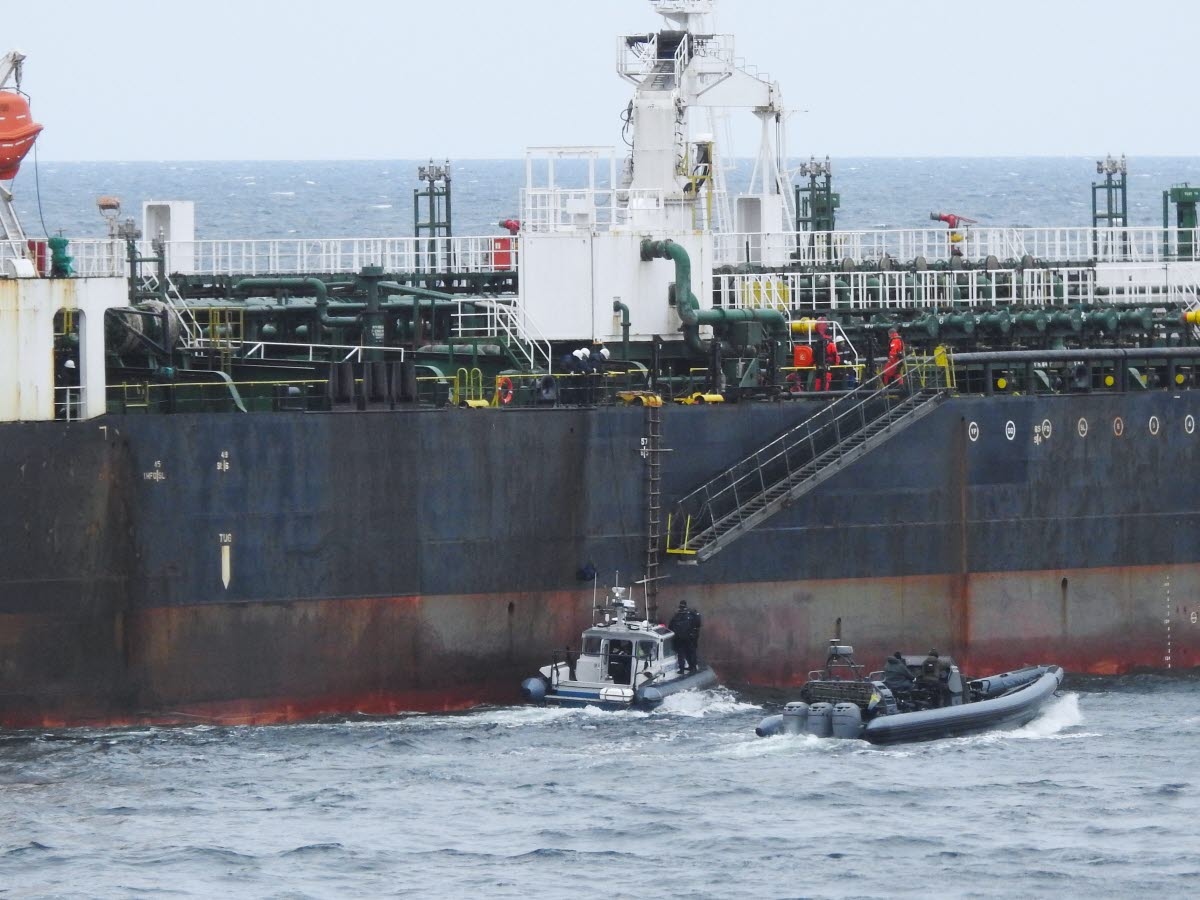
Sweden’s Coast Guard boarded and detained the tanker Flora 1 early on Friday after linking the vessel to an oil spill discovered east of Gotland in Sweden’s economic zone, in a case now being investigated as a suspected environmental offence. The vessel was taken to anchorage south of Ystad in an operation carried out with the Swedish Police Authority.
According to the Swedish Coast Guard, its maritime surveillance aircraft detected the discharge of mineral oil early on Thursday. At the time of discovery, the slick was reported to be more than 12 kilometres long. Investigators quickly identified Flora 1 as a vessel of interest and moved to intercept it the following morning. Prosecutors are now leading a preliminary investigation, while the Coast Guard continues investigative measures on board under prosecutorial direction.
The case has drawn wider attention because Flora 1 is listed under European Union sanctions. Swedish authorities have also said there are unclear circumstances surrounding the ship, including questions over its flag status. The Coast Guard stated that the vessel was travelling from a port in the Gulf of Finland with an unclear destination, and said the combination of a suspected oil discharge, sanctions status and uncertain registration details made the case particularly significant.
Daniel Stenling, deputy chief of operations at the Swedish Coast Guard, said the boarding reflected heightened surveillance in the Baltic Sea region in response to the deteriorating security situation. He said Swedish authorities act whenever they detect pollution at sea and that vessels suspected of unlawful discharge are investigated. He also noted that the wider circumstances surrounding Flora 1 may prove relevant to the inquiry, although any further criminal suspicions would depend on the findings of the investigation.
The Coast Guard said the tanker is carrying oil and has a crew of 24 on board. Swedish media reports, citing prosecutors, said two foreign nationals have been notified of suspicion of offences under Swedish rules on measures against pollution from ships. Senior prosecutor Frida Molander said interviews considered necessary had been carried out, but that no coercive measures would be taken at this stage in relation to the criminal suspicion.
The size of the spill remains under assessment. Official Swedish reporting has described the slick as more than 12 kilometres long when first detected. Other reports, citing Swedish officials, said the amount released could range up to 18 cubic metres, while Swedish broadcaster SVT reported that at least 2,000 litres of oil had entered the sea. Authorities said the pollution could not be recovered and had already dispersed into the marine environment. They added that there was no immediate indication that the oil would reach land.
The incident is likely to sharpen scrutiny of vessels linked to Russia’s so-called shadow fleet, a network of often ageing tankers used to move Russian oil outside normal Western insurance and compliance structures. The EU has sanctioned such ships for what it describes as irregular and high-risk shipping practices. AP reported that Flora 1 had left Primorsk, one of Russia’s main Baltic oil export terminals, before the spill was detected.
Risk in European Waters: The Shadow Fleet, Sanctions Evasion and Safety Gaps
Sweden’s Coast Guard said this is, to its knowledge, the first time an oil discharge has been traced to a vessel subject to sanctions and then investigated as a suspected environmental crime. That point alone makes the case more than a routine pollution incident. It places environmental enforcement, maritime security and sanctions compliance in the same frame at a time when Baltic governments are paying closer attention to opaque shipping movements in the region.
For Stockholm, the immediate issue is environmental accountability in one of Europe’s most fragile marine ecosystems. But the detention of Flora 1 also highlights a broader concern: that sanction-evasion shipping practices, unclear ownership structures and uncertain flag arrangements may create not only legal and geopolitical complications, but direct risks to the Baltic Sea itself. As the Swedish investigation proceeds, the case is likely to be watched closely well beyond Sweden’s coast.