
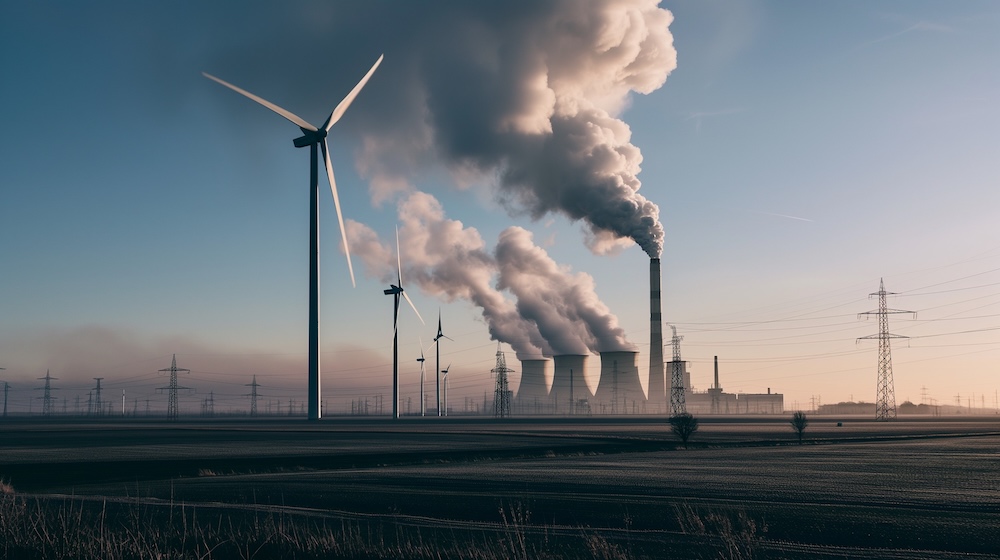
The Commission is preparing extra free CO₂ permits for heavy industry after pressure from member states concerned that Europe’s climate rules are adding to the bloc’s competitiveness problem.
The European Union is preparing to give parts of heavy industry additional free carbon permits this year, in a move that signals growing pressure on Brussels to soften the cost of climate regulation for manufacturers exposed to global competition.
The proposal concerns the EU Emissions Trading System, the bloc’s main carbon-pricing mechanism. Under the ETS, companies in covered sectors must hold allowances for each tonne of carbon dioxide they emit. A share of those allowances is auctioned, while some are allocated free of charge to sectors considered at risk of carbon leakage, where production could move outside Europe to jurisdictions with lower climate costs.
The Commission is preparing a separate proposal to increase the free allocation of allowances calculated through so-called fall-back benchmarks, which are based on heat and fuel use. Although the measure is being prepared now, it would apply retroactively from 1 January 2026, allowing sectors such as chemicals, refineries and other large emitters to benefit for the current year.
The measure follows pressure from member states including Italy, Poland and the Czech Republic, which have argued that energy-intensive industries face rising carbon costs at a time of weak growth, high energy prices and stronger competition from non-EU producers. According to current reporting on the planned adjustment, the proposal would be separate from the broader ETS review expected later this year.
The decision is politically sensitive because it touches one of the central tensions in EU policy: whether the bloc can maintain its climate targets while preserving manufacturing capacity in sectors that remain difficult and expensive to decarbonise.
For industrial companies, the argument is straightforward. They say European producers face carbon costs that many foreign competitors do not, while the infrastructure needed to decarbonise — including affordable low-carbon power, hydrogen, carbon capture and storage, and grid capacity — is still insufficient. If compliance costs rise faster than the availability of practical decarbonisation tools, they argue, investment may move elsewhere.
For climate-policy advocates and some member states, the concern is different. Increasing free allowances may reduce the pressure on companies to cut emissions. It could also weaken the price signal that the ETS is designed to create. The ETS has been presented for years as the EU’s main market-based mechanism for reducing industrial emissions. Any relaxation of its impact therefore raises questions about consistency and credibility.
The Commission’s task is to manage these competing pressures without appearing to abandon the principle of carbon pricing. It has not proposed dismantling the ETS. Instead, it is looking at technical changes within the free-allocation system. That distinction matters, but it does not remove the political significance of the move.
The broader context is Europe’s competitiveness debate. EU leaders and national governments have become more vocal about the risk of deindustrialisation, particularly in energy-intensive sectors. Steel, chemicals, cement, refining, fertilisers, glass and ceramics all face high energy requirements, global competition and major capital costs if they are to reduce emissions at scale.
The issue has become more urgent as Europe seeks to rebuild industrial capacity in strategic sectors while also reducing dependence on external suppliers. A policy designed primarily to cut emissions is now being judged against additional tests: whether it supports domestic production, whether it can coexist with defence and infrastructure priorities, and whether it leaves European companies able to compete.
The Commission is also preparing a broader ETS review, expected in July. That review is intended to address carbon price volatility and the future design of the system. The separate free-allocation proposal would move faster, giving industry relief before the longer legislative discussion is completed.
The timing is important. The Carbon Border Adjustment Mechanism is designed to impose a carbon cost on imports in selected sectors, reducing the competitive gap between European producers and foreign rivals. But CBAM is still moving towards full implementation, and companies argue that it does not yet provide adequate protection. Free allowances remain a major buffer for industry until the new border mechanism is fully operational.
The risk for Brussels is that temporary concessions can become politically difficult to reverse. Once companies and member states receive additional flexibility, future attempts to tighten the system may meet stronger resistance. That could complicate the EU’s longer-term emissions targets and reopen divisions between member states that prioritise climate-policy integrity and those that prioritise industrial cost relief.
The risk on the other side is that maintaining a strict carbon-price path without sufficient industrial support may accelerate plant closures, reduce investment and increase dependence on imports. In that scenario, the EU could cut territorial emissions while losing production capacity and importing more carbon-intensive goods from elsewhere.
This is why the free-permits proposal matters. It is not a technical adjustment of emissions accounting. It is a sign that Europe’s climate framework is being recalibrated under pressure from industry, energy prices and global competition.
The coming ETS review will show whether Brussels can define a stable compromise: one that keeps emissions reduction on course while giving energy-intensive industry a realistic route to remain in Europe. The immediate proposal suggests that, for now, competitiveness concerns have gained ground inside the EU’s climate-policy debate.

