
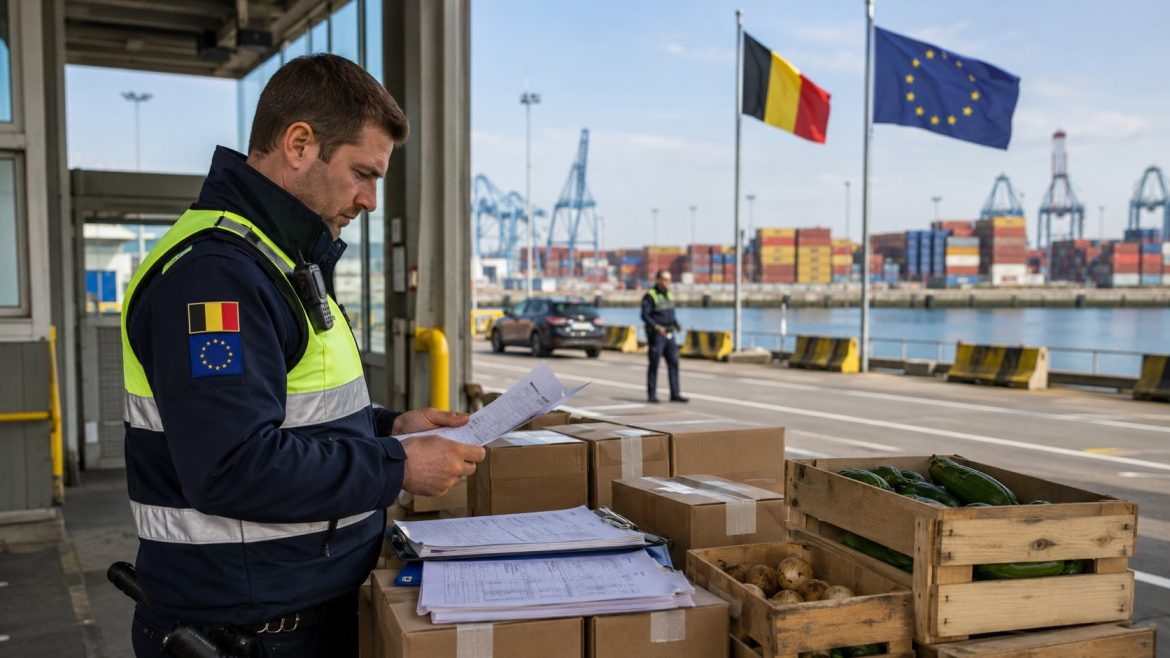
Belgium’s cabinet has chosen a licensing route for settlement-origin goods, creating a national test case while the wider EU argument over trade restrictions remains unresolved.
Belgium’s federal cabinet has approved a draft royal decree that would place goods from Israeli settlements in occupied Palestinian territory under a specific prior-authorisation regime. The decision, announced by the Belgian government in Dutch and French on 18 July, marks a practical national step in a debate that has remained politically divided at EU level.
The measure should not be described simply as a blanket ban. The official Belgian release says the draft decree would use the existing system of prior authorisation for imports, exports and transit. Where documentation shows, or where it can reasonably be suspected, that goods originate from Israeli settlements in the occupied Palestinian territory, authorisation would be systematically refused. The territory specified in the release includes the West Bank, including East Jerusalem, and the Gaza Strip.
That mechanism matters because it frames the policy as a licensing and control measure rather than a standalone sanctions package. It also gives customs and licensing authorities an administrative route for examining origin evidence. The Belgian government says the draft includes a 120-day transition period and provides specific exceptions for Palestinian economic operators and humanitarian activity. The text will be submitted to the Council of State for advice before it can take final legal form.
The broader legal dispute over settlement trade restrictions has already moved through EU-level arguments over competence and enforcement. Belgium’s move now shifts part of that debate from legal theory to implementation. The key question is whether a member state can design a national import-control mechanism that is robust enough to satisfy domestic political demands while still operating within the EU’s common commercial policy and customs framework.
The issue is sensitive because trade policy in the EU is normally handled collectively. Individual member states have limited room to impose unilateral restrictions where common rules apply. At the same time, governments retain responsibilities in areas such as public order, compliance checks, licensing and the enforcement of existing obligations. Belgium appears to be trying to locate its measure inside that administrative space.
The practical test will be origin determination. Settlement-linked supply chains are often difficult to identify from a product label alone. Importers may need to provide documentation showing where goods were produced, processed or substantially transformed. Authorities will then need a consistent method for distinguishing goods from settlements from goods produced by Palestinian operators or within Israel’s internationally recognised territory. Errors could create both legal challenges and diplomatic friction.
For businesses, the immediate effect is uncertainty. Importers dealing with goods from the region may have to review contracts, supplier declarations and customs documentation. Companies that cannot establish origin clearly may face delays or refusal. Retailers and distributors may also need to assess reputational risk, especially in sectors where consumer campaigns already scrutinise settlement-linked products.
For Belgian politics, the decree gives the government a visible answer to pressure for action over the occupied Palestinian territory without waiting for unanimity or broad agreement among EU partners. That can be attractive domestically. It also carries risk. If the measure is challenged, Belgium may become the legal test case for how far national authorities can go before they are seen as intruding into EU-level commercial policy.
Other governments will watch the details. A narrowly designed prior-authorisation model may be easier to replicate than a politically declared import ban. It gives officials a procedure, a documentary standard and a decision point. It also creates a record of refused authorisations, which could be used to demonstrate enforcement rather than only political intent.
Israel is likely to treat the policy as hostile, even if Belgium presents it as an origin-control measure. The diplomatic argument will probably focus on whether settlement-origin goods are being singled out for political reasons and whether the policy affects broader bilateral trade. Belgium will point to the specific territorial scope and the exceptions built into the draft.
The EU-level implication is more important than the Belgian market alone. If Belgium’s approach survives administrative and legal scrutiny, it may encourage other states to move through licensing systems rather than wait for a common EU sanctions decision. If it fails, it will strengthen the argument that settlement-goods restrictions must be handled collectively in Brussels.
The cabinet decision therefore opens a new phase. The political argument over settlement trade has been familiar for years. Belgium has now placed an operational model on the table: prior authorisation, systematic refusal where settlement origin is established or reasonably suspected, exceptions for Palestinian and humanitarian activity, and a transition period. The next question is whether that model can be enforced in practice.

