
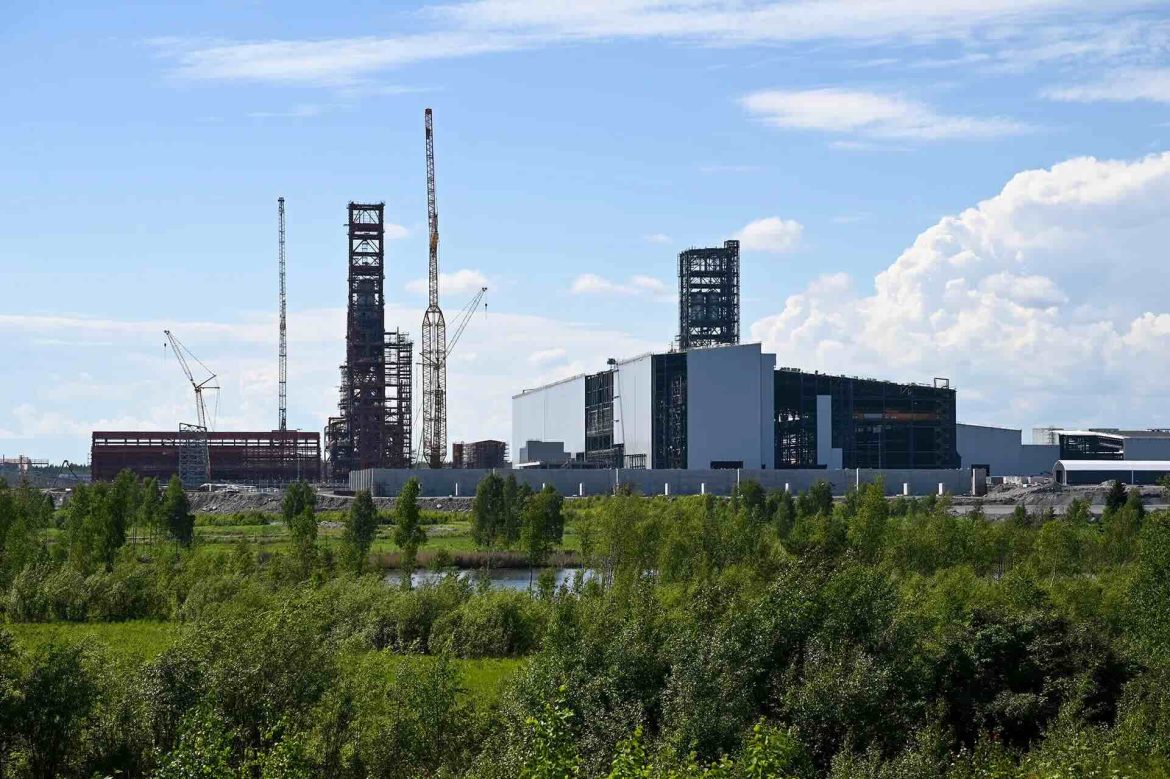
Stegra’s €1.4 billion financing round keeps Europe’s first large hydrogen-based steel plant moving, but also shows how difficult industrial decarbonisation remains when capital markets turn selective.
Swedish green steel company Stegra has closed a €1.4 billion financing round, keeping alive one of Europe’s most closely watched industrial decarbonisation projects at a moment when investor confidence in hydrogen-linked heavy industry remains fragile.
Reuters reported on 24 June that the financing allows Stegra to continue building its hydrogen-based steel plant in Boden, northern Sweden. The project is intended to become one of Europe’s flagship examples of low-carbon steel production, using green hydrogen instead of coal-based blast furnace methods.
The funding matters because steel sits at the centre of Europe’s industrial and climate challenge. The sector is essential for construction, cars, machinery, defence and infrastructure, but it is also one of the hardest industries to decarbonise.
A Flagship Project Survives
Stegra, previously known as H2 Green Steel, has become a test case for whether private capital can finance the transformation of heavy industry. The project promises lower-emission steel using fossil-free electricity and hydrogen, but it has also faced delays, cost pressure and comparisons with failed or struggling European green-industrial bets.
The Financial Times reported in April that Wallenberg Investments, Singapore’s Temasek and an Ikea-linked investment vehicle were backing a €1.4 billion rescue package to complete the Boden plant. Swedish reports now say the financing has closed, strengthening Wallenberg influence over the company.
That makes the story stronger than a simple fundraising announcement. Stegra’s survival is a signal about the kind of industrial projects investors are still willing to support after the collapse of Northvolt damaged confidence in Europe’s green-manufacturing story.
Hydrogen Steel as Industrial Policy
Europe’s steel sector faces a triple challenge: cutting emissions, competing with lower-cost producers and preserving strategic industrial capacity. Hydrogen-based production is one answer, but it requires cheap clean power, reliable hydrogen supply, infrastructure, skilled labour and patient capital.
That is why Stegra matters to EU industrial policy. If the project succeeds, it gives Europe a model for decarbonising a core industrial material without surrendering production to imports. If it struggles, it will reinforce doubts about whether Europe can finance green heavy industry at scale.
The EU has built much of its competitiveness debate around precisely this problem. Climate targets require industrial transformation, but companies warn that energy costs, permitting delays and financing conditions can make Europe a difficult place to build.
Stegra’s financing therefore tests more than one company. It tests whether private investors still believe Europe’s green-industry pipeline can produce commercially viable assets.
Capital Has Become Selective
The timing is important. Investors are no longer funding green-industrial projects on ambition alone. Higher interest rates, construction overruns and supply-chain difficulties have forced a more disciplined approach. Capital is still available, but it is asking harder questions about execution risk.
That is why the Wallenberg role is significant. The Swedish industrial family brings financial weight, political credibility and governance discipline. Its involvement suggests that investors see Stegra as recoverable, but not risk-free.
The Swedish outlet Omni reported that the financing round gives Wallenberg Investments a major voting position in Stegra’s ownership structure. That points to a broader lesson: Europe’s green-industrial projects may survive, but often with stronger control from strategic investors.
Why Europe Should Care
For EU policymakers, Stegra is a useful case because it connects climate policy to industrial resilience. Green steel is not only about emissions. It is about whether Europe can produce the materials needed for cars, wind turbines, rail, defence equipment and construction without becoming more dependent on imported industrial inputs.
The project also matters for northern Sweden, which has been positioned as a hub for fossil-free industrial investment thanks to access to clean power. Northvolt’s problems damaged that narrative. Stegra’s financing helps prevent a wider loss of confidence, but it does not remove the execution challenge.
The next test will be delivery. Financing keeps the project alive; it does not guarantee production at competitive cost. Europe will need infrastructure, customers willing to pay a premium, and policy that supports decarbonised materials without sheltering projects from commercial discipline.
Stegra’s funding round is therefore good news for Europe’s hydrogen steel ambitions, but it is not a victory lap. It is evidence that the industrial transition can still attract capital when the asset is considered strategic, the backers are credible and the business case is made more tightly.
Europe’s green steel bet is still alive. Now it has to prove it can work.

