
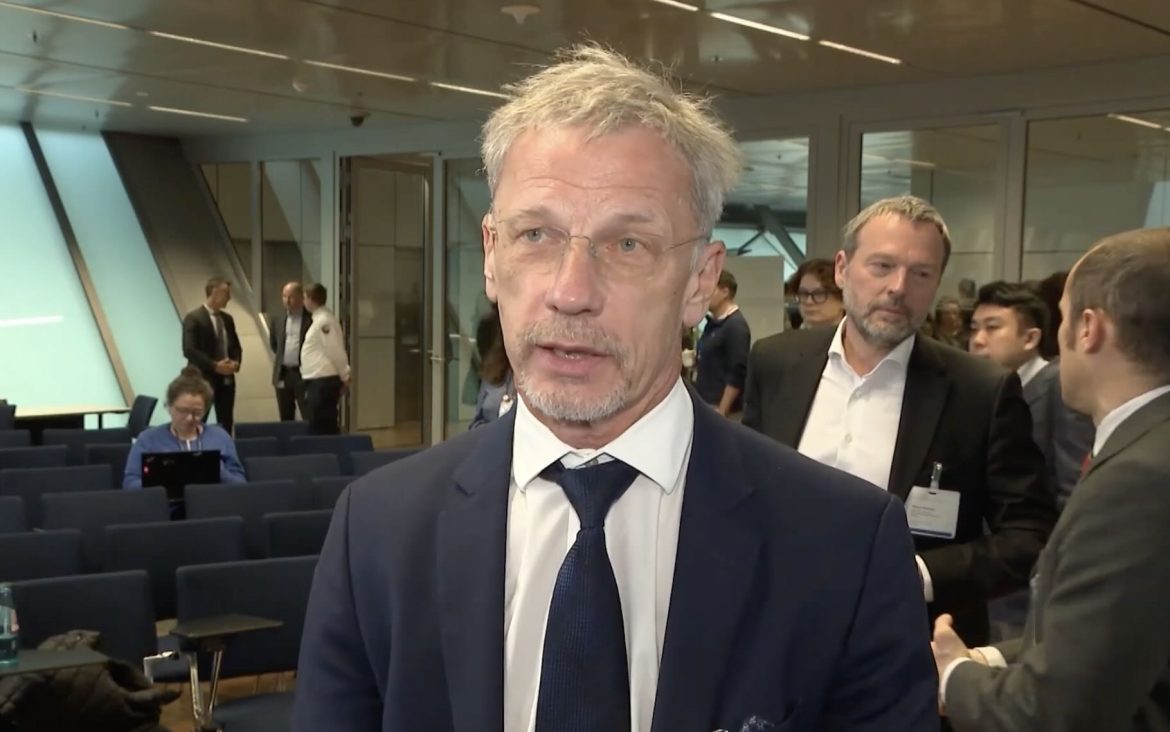
Euro area finance ministers have nominated Boris Vujčić, the governor of the Croatian National Bank, to become the next Vice-President of the European Central Bank, with the appointment expected to take effect on 1 June 2026.
The nomination was agreed by ministers meeting in the Eurogroup format, which brings together the finance ministers of the euro area’s 21 member states. The Vice-President post will become vacant when the current office-holder, Luis de Guindos, completes his non-renewable eight-year term at the end of May 2026.
If confirmed through the EU’s formal procedure, Mr Vujčić would become the first Croatian to join the ECB’s six-member Executive Board. Croatia adopted the euro in January 2023, and Mr Vujčić was one of the central figures in the technical and policy preparations for the changeover.
The appointment is not final at the nomination stage. Under Article 283(2) of the Treaty on the Functioning of the European Union, the European Council makes the appointment, acting by qualified majority, on a recommendation from the Council of the EU after consulting the European Parliament and the ECB’s Governing Council. EU institutions describe the process in stages: euro area states propose candidates, the Eurogroup discusses them, the Council agrees on a recommendation, then the European Council consults Parliament and the ECB before making the formal appointment.
The candidacy process began in December 2025, with a call for candidates that closed on 9 January. The Eurogroup President said he had received six candidacies: Mário Centeno (Portugal), Mārtiņš Kazāks (Latvia), Madis Müller (Estonia), Olli Rehn (Finland), Rimantas Šadžius (Lithuania) and Boris Vujčić (Croatia).
According to reporting on the selection, Mr Vujčić prevailed after competition that included Mr Rehn, the Finnish central bank governor and former European Commissioner, who had been viewed in some capitals as a leading contender. The ministers’ agreement on Mr Vujčić was described as unanimous in accounts of the meeting.
Mr Vujčić, 61, has led the Croatian National Bank since 2012 and is serving his third term. His official biography lists an academic background in economics at the University of Zagreb, including a doctorate, as well as a period of doctoral study in the United States as a Fulbright fellow. He previously held senior roles inside the Croatian central bank before becoming governor.
The ECB Vice-President is the President’s deputy and sits on the Executive Board, which manages the ECB’s day-to-day business and implements monetary policy decisions set by the Governing Council. ECB institutional provisions state that the Vice-President chairs the Governing Council and the Executive Board in the President’s absence, and the Vice-President typically appears alongside the President at the ECB’s press conference following monetary policy meetings.
The nomination comes at a point when the euro area is watching the direction of monetary policy as inflation recedes from post-pandemic peaks and markets assess the pace of any further easing. Reuters described Mr Vujčić as a “moderate hawk” who has argued for caution to avoid a renewed inflation surge, a profile that is likely to be examined during the parliamentary hearing and the ECB consultation.
The vice-presidency is also the first of several senior ECB posts due to change hands over the next two years. The Executive Board has six members in total, and reporting has highlighted that a wider reshuffle is expected in 2027, when the ECB will face further vacancies, including the presidency when Christine Lagarde’s term ends in October 2027.
Alongside the institutional timetable, the nomination is set against ongoing debate about representation within the ECB’s top leadership. Recent coverage of the selection noted that women have held a minority of Executive Board posts since the ECB’s creation, and that the candidate field for this vice-presidency included several contenders from newer euro area members in central and eastern Europe. Those themes may feature in the European Parliament’s scrutiny even though Parliament cannot veto the appointment.

