
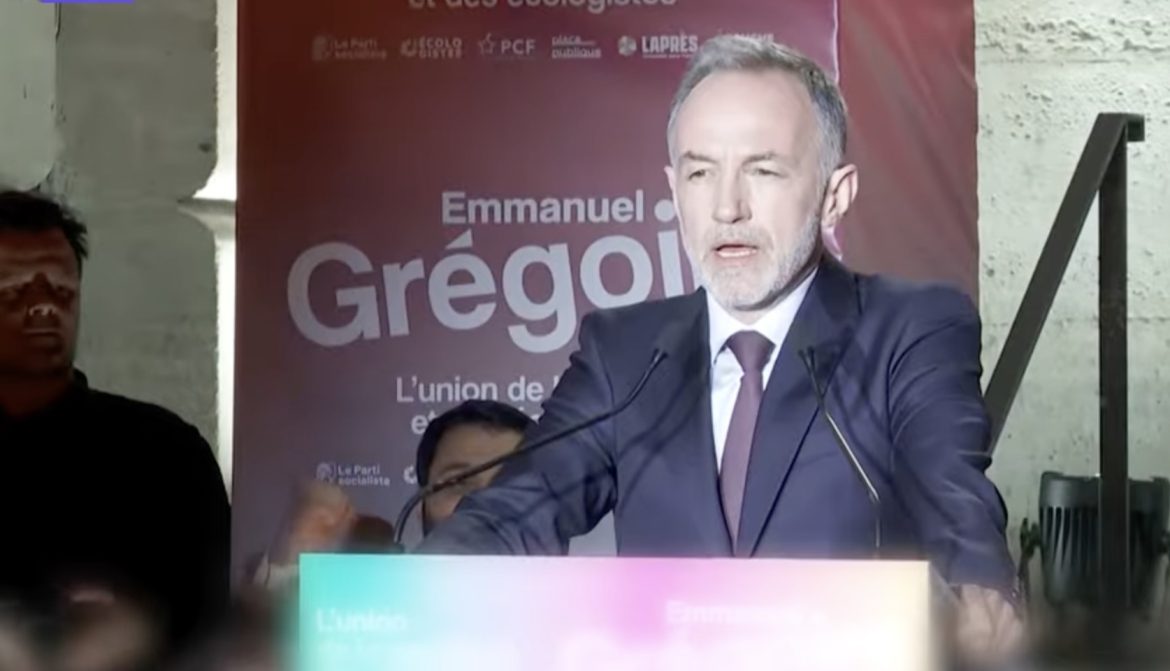
The second round of France’s municipal elections left Paris, Marseille and Toulon in mainstream hands on Sunday, while an ally of the far right secured victory in Nice in a mixed set of results with clear implications for the political positioning ahead of the 2027 presidential race.
France’s second-round municipal election results delivered a mixed but broadly sobering outcome for the far right on Sunday, with the National Rally and its allies failing to capture several of the major cities they had targeted, even as an ally of the movement won in Nice and the party retained influence in parts of the south.
In Paris, Socialist Emmanuel Grégoire was elected mayor, succeeding fellow Socialist Anne Hidalgo and preserving left-wing control of the capital. Grégoire defeated conservative rival Rachida Dati, who conceded after preliminary results showed the Socialist candidate clearly ahead.
In Marseille, Socialist incumbent Benoît Payan was re-elected with 56.3 per cent of the vote, blocking an important advance by the far right in France’s second-largest city. In Toulon, conservative candidate Josée Massi defeated the National Rally with 53.5 per cent, another result that denied the far right a symbolic and strategic gain in a city where it had hoped to translate national momentum into local executive power.
The clearest success for the far-right camp came in Nice, where Éric Ciotti, now allied with National Rally, won the mayoralty. That victory gives the broader far-right camp a prominent urban prize, but it was offset by failure in Marseille and Toulon and by the fact that major cities remained difficult terrain for National Rally itself.
The elections were held in more than 1,500 communes that required a second round after the first vote on 15 March. These run-offs included most of the major urban contests and followed first-round results that had already revealed a fragmented political field.
Turnout remained modest, with participation reaching 48.1 per cent by 5 p.m., down slightly from 48.9 per cent in the first round and well below the 52.36 per cent recorded in 2014, though still above the unusually low level seen during the Covid-affected 2020 elections. The continued weakness in turnout is politically significant, as municipal elections have traditionally been seen as one of the more locally grounded and civic-minded elements of French democratic life.
The results will now be read less as a verdict on local administration alone than as an early indicator of where the main political families stand before the 2027 presidential contest begins in earnest. The vote was widely viewed as a test of the balance of power on France’s local political map before the presidential field takes shape. The run-offs were being watched for signs of the far right’s capacity to break through in major cities and of the resilience of mainstream forces.
For the French left, holding Paris and Marseille matters both symbolically and organisationally. For the mainstream right, Toulon offered evidence that it can still serve as an effective barrier against National Rally in direct local competition. For the far right, the result in Nice provides a notable success, but not the broader urban breakthrough it had sought across the south. Those conclusions are grounded in the city-level outcomes reported on Sunday; the longer-term national meaning will depend on whether parties can turn municipal footholds into wider alliances and momentum over the coming year.
There was also a notable result in Le Havre, where former prime minister Édouard Philippe secured re-election, strengthening his standing ahead of the expected repositioning for 2027. That underlines the broader significance of the municipal cycle: local office in France still serves as an important base for national political credibility.
Sunday’s results therefore point to a fragmented but legible picture. The left retained major bastions, the mainstream right held key ground, and the far right showed continuing strength without securing the broad metropolitan advances some of its supporters had hoped for. In political terms, the municipal map now offers each camp evidence for its preferred narrative, but the clearest immediate fact is that the biggest urban prizes did not produce a decisive breakthrough for National Rally.

