
France, Germany and other member states are discussing whether the EU’s diplomatic service should be reorganised, amid concerns over coordination, institutional rivalry and the bloc’s ability to respond to external crises.
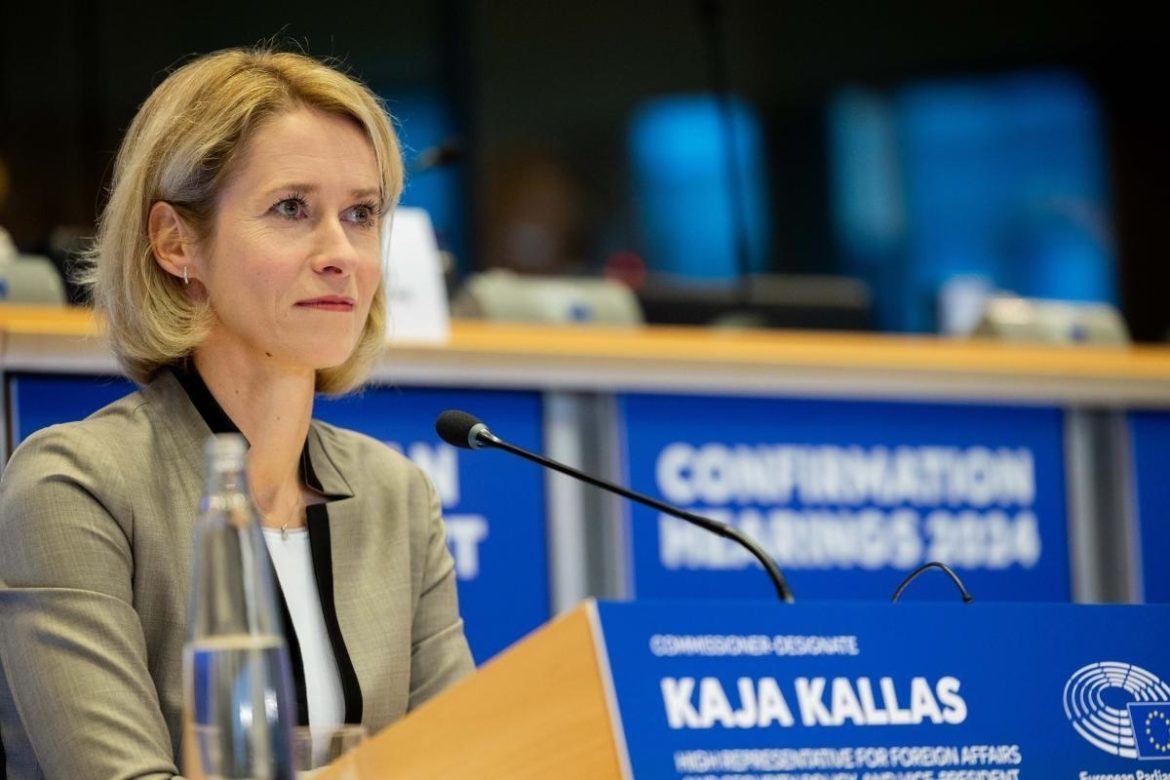
France and Germany are discussing proposals for a substantial reorganisation of the European Union’s diplomatic service, in a move that could reduce the autonomy of EU foreign policy chief Kaja Kallas and shift parts of Brussels’ external policy machinery back towards the European Commission and national capitals.
The discussions, reported on 11 June, centre on the future of the European External Action Service, the body created after the Lisbon Treaty to support the High Representative for Foreign Affairs and Security Policy. The service was established by a Council decision in July 2010 and formally launched in January 2011, with the aim of giving the EU a more coherent diplomatic presence abroad.
Fifteen years later, several governments are questioning whether that model still works. According to officials familiar with the talks, Paris, Berlin and other capitals are considering options that would limit the authority of the High Representative over the EEAS and weaken its control over the EU’s global diplomatic network. That network now includes 145 EU delegations, which act as the Union’s representation abroad and are central to the projection of EU foreign and security policy.
The criticism is not only directed at individual leadership. It reflects a wider institutional concern that the EEAS, the Commission, the Council and national foreign ministries often operate with overlapping responsibilities and insufficient coordination. In practice, EU external policy now covers diplomacy, sanctions, trade, enlargement, defence industrial policy, crisis management, intelligence assessment and development funding. These areas are divided across several Brussels structures, while member states retain decisive authority over foreign and security policy.
Supporters of reform argue that this has produced duplication and slow decision-making at a time when the EU faces simultaneous pressure from Russia’s war against Ukraine, instability in the Middle East, strategic competition with China, irregular migration, economic coercion and uncertainty over transatlantic relations under President Donald Trump. For them, the question is whether the EU can continue to operate through a diplomatic structure designed for a less confrontational period.
One proposal under discussion would transfer some EEAS functions to the Council and the Commission. The preparation of sanctions lists and proposals for military missions could move closer to the Council, where member states control politically sensitive decisions. Routine diplomatic activity and management of external programmes could be placed more firmly under Commission supervision. Such changes would be presented as a way to clarify authority, reduce duplication and align external policy with the EU’s wider economic and security agenda.
The legal path is complex but not necessarily blocked by treaty constraints. The EEAS was created to assist the High Representative under arrangements agreed by the member states. Those arrangements can, in principle, be revised without reopening the EU treaties. However, any substantial change to the organisation and functioning of the service would require unanimity among the EU’s 27 governments. That gives every member state a veto and makes any radical restructuring politically difficult.
The debate is sharpened by the position of Kallas herself. The former Estonian prime minister has taken a firm line on Russia and European security, reflecting the threat perceptions of the Baltic states and other countries on the EU’s eastern flank. Some capitals have criticised her for advancing positions on sensitive questions before a full consensus has been reached. Others see her approach as a necessary correction to years in which EU foreign policy was often constrained by the search for unanimity.
The institutional rivalry with Commission President Ursula von der Leyen is also relevant. The Commission has expanded its role in areas once treated as foreign policy in the narrow sense, including sanctions enforcement, economic security, defence industry support and strategic partnerships. The Commission’s 2026 work programme frames security, resilience and strategic independence as central priorities for the current mandate. That inevitably brings the Commission deeper into external affairs.
The reported idea of creating a Commission-linked intelligence-sharing structure has added to tensions, since the EEAS already has internal capacity for intelligence analysis and situational assessment. For Kallas and her allies, further duplication inside the Commission would weaken the diplomatic service rather than solve its coordination problems. For critics of the EEAS, it may demonstrate why a clearer division of labour is needed.
Plan for Commission intelligence unit raises questions over Intcen’s role
Budget pressure is another factor. The EU is entering negotiations over its next long-term budget, with several governments calling for savings, administrative streamlining and tighter control over Brussels expenditure. A reorganisation of the EEAS could therefore be framed not only as a foreign policy reform but also as a cost-saving exercise. Reducing senior posts, merging functions and transferring responsibilities to existing directorates would fit the broader demand for efficiency.
The timing is significant. Brussels is also preparing a new European security strategy, expected to define how the Union intends to respond to a more hostile international environment. The question of who controls the EU’s diplomatic apparatus therefore overlaps with a larger question: whether the Union’s external action should be led primarily by member states, the Commission, or a more autonomous diplomatic service under the High Representative.
The dispute exposes a tension that has existed since the EEAS was created. Member states wanted a stronger EU voice abroad, but not a foreign ministry independent of their control. The Commission wanted coherence between external policy and EU instruments such as trade, development, enlargement and sanctions. The High Representative was expected to bridge these worlds, but the role has often depended less on formal powers than on political authority and the willingness of institutions to cooperate.
The proposed reform is unlikely to amount to the immediate dismantling of EU diplomacy. It may instead become a negotiation over control, hierarchy and resources. Yet the fact that Paris, Berlin and other capitals are discussing such changes suggests that patience with the current structure is weakening. The original Lisbon settlement was built around institutional compromise. The next phase may be defined by whether the EU can turn that compromise into a more effective foreign policy machine.

