
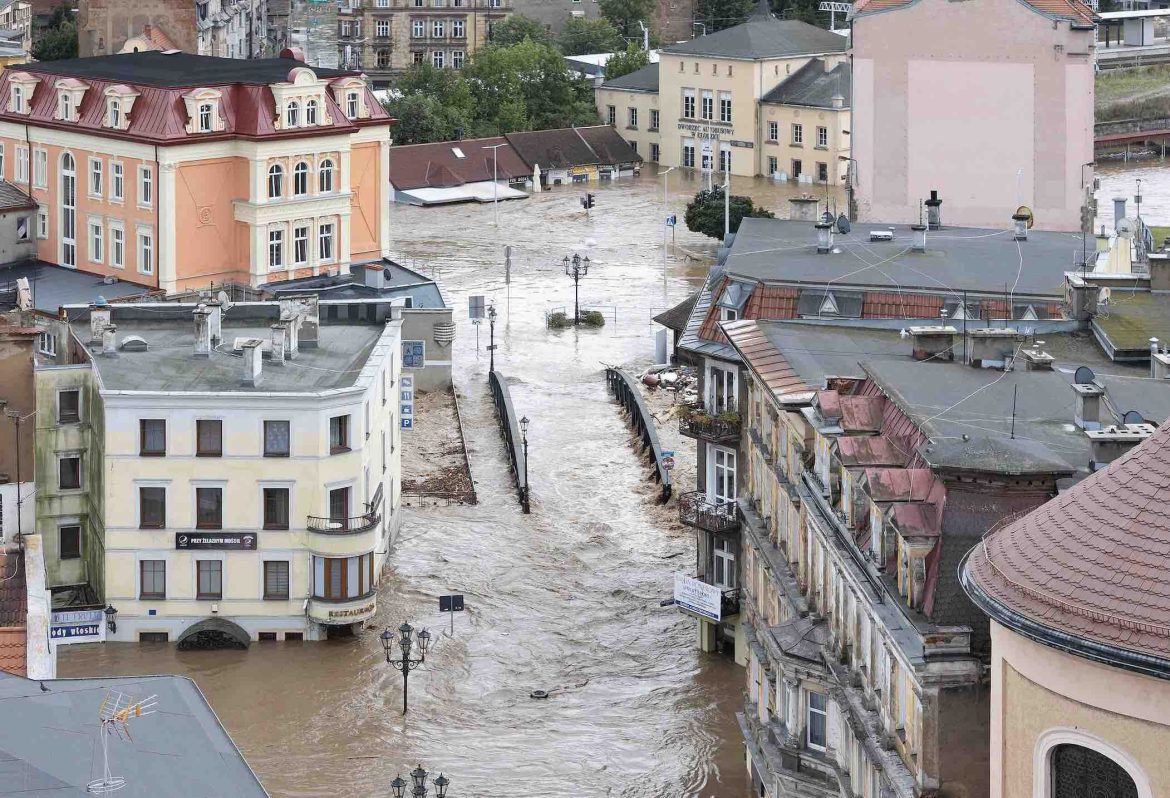
Europe is still reeling from the aftermath of the most widespread flooding in over a decade, as newly released scientific reports reveal the devastating scale of the 2024 deluge.
Triggered by a toxic cocktail of intense rainfall, swollen rivers, and overwhelmed infrastructure, the floods wrought havoc across the continent, with Western Europe bearing the brunt of nature’s fury.
According to data compiled by the European Environment Agency (EEA), a staggering 30 percent of the continent’s river systems were affected in some capacity. In a year marred by relentless downpours and turbulent weather patterns, at least 335 lives were lost, and over 410,000 individuals were directly impacted through displacement, injury, or property loss.
From the lowlands of the Netherlands to the valleys of Bavaria, rivers burst their banks with little warning, inundating towns, destroying transport networks, and crippling local economies. Entire communities were submerged within hours, with rescue teams stretched to their limits and emergency services in countries like France, Germany, and Belgium forced to call in military assistance.
Economic analysts estimate the cost of the damage at a staggering €18.2 billion—making it one of the most expensive natural disasters in European history. For many, the floodwaters have long since receded, but the scars remain: damaged homes, shuttered businesses, and an uneasy recognition that this may no longer be a once-in-a-generation event, but the new normal.
Western Europe: The Epicentre of Chaos
While the floods reached as far as the Danube in Eastern Europe and the Thames in the UK, it was Western Europe that endured the most catastrophic consequences. Germany’s Rhineland-Palatinate and North Rhine-Westphalia regions were among the hardest hit, with entire villages such as Schuld and Ahrweiler left unrecognisable. In Belgium, the Meuse river swallowed swathes of Liège, while parts of northern France suffered damages unseen since World War II.
“Climate change is no longer a distant threat; it’s unfolding before our eyes,” remarked Dr. Elise Monnet, a hydrologist at the University of Strasbourg. “What we observed in 2024 was not simply heavy rain. It was the culmination of years of environmental neglect, poor urban planning, and warmer air that holds more moisture, resulting in unrelenting rainfall.”
Indeed, meteorological records confirm that several regions saw more than double their monthly average precipitation in just a matter of days. The ground, already saturated by a wet spring, had nowhere to channel the excess water.
A Climate Reckoning
Scientists and policymakers alike are drawing an unequivocal link between the floods and climate change. The latest EEA analysis warns that, without sweeping environmental reform, such extreme events could become more frequent and more severe in the decades to come.
“The science is conclusive,” said Professor Lars Ekelund, a climate systems researcher at the Swedish Meteorological Institute. “Higher global temperatures are intensifying the water cycle. This means heavier rains, faster snowmelts, and more violent flood events. Europe must adapt, or we risk further tragedy.”
Despite the overwhelming evidence, calls for a cohesive continental response have so far resulted in slow progress. While some nations, such as the Netherlands, have long invested in sophisticated flood defence mechanisms—such as the Delta Works—many others remain dangerously exposed.
The European Commission has proposed a €25 billion climate resilience fund to bolster infrastructure and disaster preparedness across member states. However, implementation has been sluggish, and critics argue that political will is lacking in key member states where short-term economic interests often eclipse environmental foresight.
Lives Displaced, Futures Uncertain
For those affected by last year’s floods, the disaster was not just an environmental or economic event—it was deeply personal.
“My family has lived in this house for three generations,” said Marie-José Lemaire, a resident of Namur, Belgium, who was evacuated by boat in the early hours of a July morning. “We lost everything—furniture, photographs, memories. I don’t think we’ll ever feel truly safe here again.”
In Germany, nearly 50,000 people remain in temporary housing, and insurance claims continue to mount. A growing number of citizens are calling for greater accountability from both national governments and EU institutions.
A Watershed Moment
The floods of 2024 have served as a grim reminder of the vulnerabilities in Europe’s environmental infrastructure—and the steep price of inaction. As reconstruction efforts continue and the political debate intensifies, one thing is certain: Europe stands at a crossroads.
Will this be a turning point that galvanises bold environmental reform and meaningful investment in resilience? Or will it become another cautionary tale, filed away in the archives of avoidable disasters?
As policymakers prepare for the next round of climate talks in Brussels this summer, the question looms large—can Europe weather the storms ahead?

