
Kazakhstan’s appeal to the United States and Europe for help in securing Black Sea oil transport follows drone strikes that exposed how narrow its export options remain, despite years of talk in Astana about diversification.
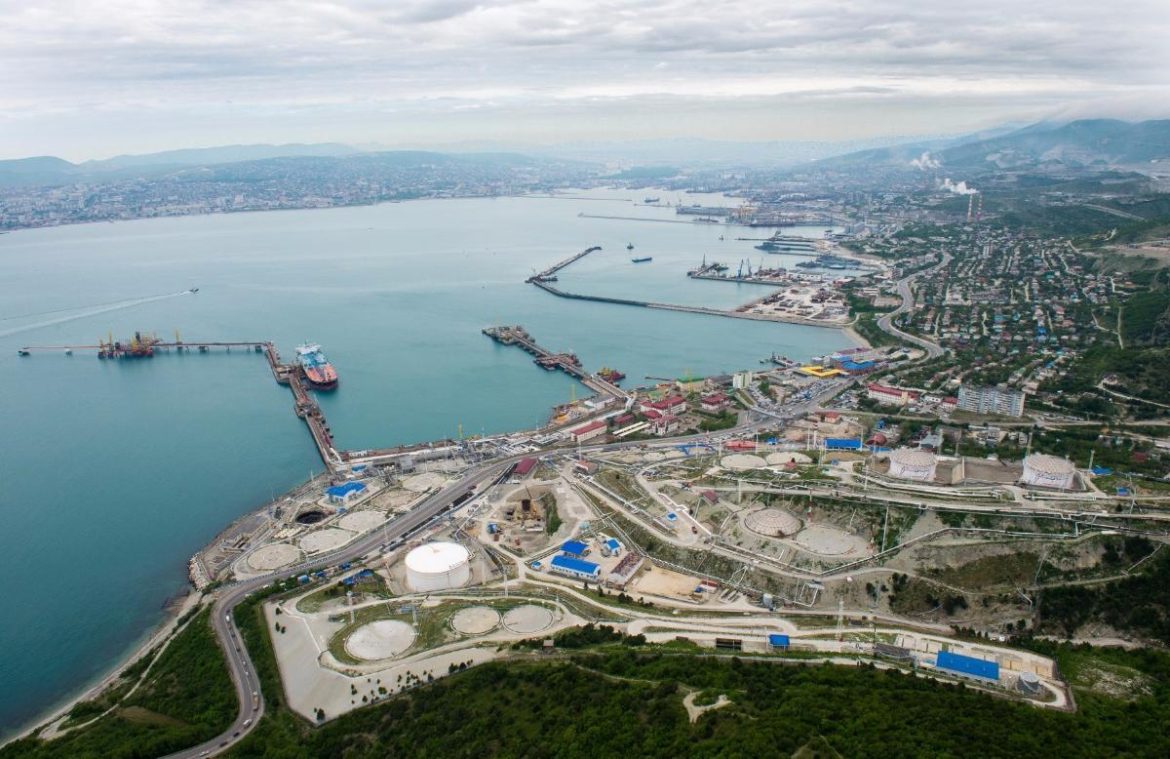
Unidentified drones struck at least two tankers as they approached the Caspian Pipeline Consortium (CPC) terminal on Russia’s Black Sea coast to load Kazakh crude, including a vessel chartered by Chevron. Kazakhstan’s foreign ministry said three tankers were hit en route to the terminal, which handles about one per cent of global oil supply and accounts for roughly 80 per cent of Kazakhstan’s oil exports. Russia’s defence ministry blamed Ukraine for attacking the Maltese-flagged tanker Matilda with two strike drones about 100 kilometres from Anapa; Ukraine did not comment and Reuters said it could not independently verify the account.
The immediate market consequence is higher risk pricing on the route. But the larger question is why Kazakhstan is now calling publicly for Western involvement. The answer lies in the structure of its export system: it is not merely exposed to the war at sea, but also to administrative choke points and technical disruptions on the few alternative corridors it can use.
The CPC line is a consortium asset with Western shareholders, including units of Chevron and Exxon Mobil alongside Kazakhstan’s KazMunayGas and Russia’s Lukoil. It is therefore simultaneously a Kazakh state-revenue conduit and a commercial lifeline for international oil majors. When the route is disrupted, the strain is not confined to Astana’s budget; it reaches corporate export schedules, tanker availability and refinery feedstock planning.
That vulnerability was underlined in late 2025, when Ukrainian drone strikes damaged CPC loading infrastructure and cut December exports to a 14-month low, with two of the terminal’s three jetties reported out of service and operations restricted to a single mooring point. Kazakhstan can redirect some crude via pipelines to China or through the Baku–Tbilisi–Ceyhan (BTC) system, but those routes do not match CPC capacity and are sensitive to their own constraints.
This is where the “oil game” described by the analyst Mykhailo Gonchar becomes relevant to the current tanker attacks. In a July 2025 article, Gonchar argued that Moscow has sought to “squeeze competitors” by combining disruption to non-Russian supply chains with tighter port controls that give Russian security services more discretion over maritime traffic. His thesis is contested by the absence of official attribution for several incidents, but the enabling mechanisms he points to are real and documented.
One of them is the Russian presidential decree of 21 July 2025 changing the rules for entry of foreign vessels into Russian seaports, requiring port clearance decisions to be coordinated with the Federal Security Service (FSB). For shipowners and charterers, this matters because it creates a formal, security-based layer in the port entry process, with the potential to delay or complicate calls at Russian terminals, including Novorossiysk, depending on implementation.
The second mechanism is “quality risk” on alternative routes. In July 2025, organic chloride contamination was detected in Azeri BTC crude at the Turkish Ceyhan terminal, prompting additional testing, loading delays and sharp price moves, while BP and Azerbaijan’s SOCAR worked to isolate off-specification oil. Kazakhstan has been using BTC as a supplementary outlet to reduce reliance on CPC, and Reuters reported later that Tengiz-related shipments via BTC had been affected by the contamination episode before resuming. The episode did not remove BTC from the map, but it demonstrated how quickly a diversification route can become operationally constrained.
Set alongside the January 2026 drone strikes, the pattern is not that Kazakhstan lacks routes, but that each route carries a different category of vulnerability: kinetic risk at sea, administrative friction at Russian ports, and technical disruptions on the Mediterranean corridor. In this context, Kazakhstan’s request for US and European cooperation looks less like a plea for naval protection and more like an attempt to internationalise the political cost of disruption to a supply chain that feeds European refiners and involves major Western investors.
This also intersects with a recurring sanctions question: can Russian crude be sold as “Kazakh” through these systems? The issue is often framed as a binary choice, but regulators treat it as a compliance problem rooted in origin documentation and segregation practices. The EU’s own sanctions guidance states that oil of Kazakh origin may be imported even if it contains unavoidable Russian residue due to infrastructural constraints, provided the non-Russian share can be demonstrated through documentation such as a certificate of origin. US Treasury guidance similarly notes that Russian-origin crude in the CPC context is marketed and loaded separately and certified as Russian origin, and says US persons may reasonably rely on certificates of origin for CPC crude, while exercising caution if there is reason to believe documentation has been falsified.
Those official positions do not establish that Kazakhstan is helping Russia re-label crude. They do, however, define the seam where abuse could occur: if paperwork is falsified or if buyers accept weak provenance. The more robust analytical case is that Kazakhstan’s dependence on Russia-facing infrastructure increases reputational and compliance risk for its exports, even when the barrels are predominantly Kazakh and the paperwork is in order.
Astana’s dilemma is therefore structural. It sells into markets that want Kazakh supply, but it delivers much of that supply through a coastline controlled by Russia and across a sea where attacks can be attributed, denied or left unresolved. The request to Washington and European capitals is an acknowledgement that this is no longer a purely commercial logistics problem.

