
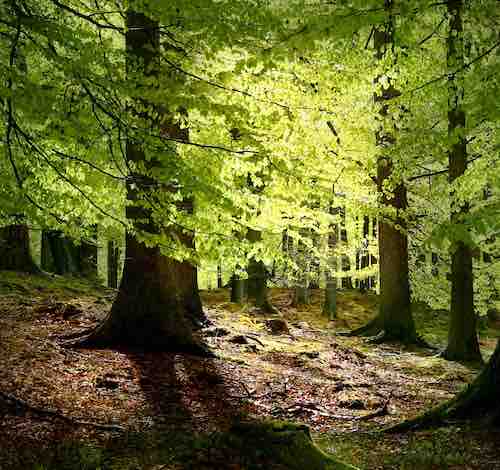
When the European Commission announced its approval of Denmark’s €626 million afforestation scheme this week, the decision was celebrated in Brussels as a decisive step in Europe’s fight against climate change and biodiversity loss.
Yet beneath the surface of what appears to be a simple investment in trees lies a complex, urgent story about the challenges of environmental policy, economic incentives, and the race to make Europe resilient to the climate crises already unfolding.
The scheme, which relies on Danish state aid under EU rules, will fund the planting of hundreds of thousands of hectares of new forest. The government’s stated objectives are clear: increase carbon sequestration, improve soil health, expand habitats for endangered species, and strengthen rural economies. But the implications go far beyond Denmark’s borders, touching on the European Union’s broader climate strategy, the future of rural communities, and the politics of environmental finance.
The Green Logic
Forests are, in many ways, Europe’s natural carbon bank. Each hectare of mature woodland absorbs several tons of CO₂ annually, while providing water retention, flood mitigation, and biodiversity benefits. In Denmark, where intensive agriculture dominates the landscape, tree cover is comparatively low—about 14% of the land area, versus an EU average of 42%. Expanding forests, therefore, offers an immediate opportunity to offset emissions while safeguarding ecosystems that have been steadily shrinking.
The approval also underlines a fundamental principle of EU environmental governance: that member states may use public funds to support projects of “common European interest,” provided they are proportionate and do not distort the internal market. In this case, the Commission judged that Denmark’s plan meets these conditions.
Economic and Political Dimensions
While the environmental rationale is straightforward, the economic logic is more nuanced. The scheme is designed not only to plant trees but to stimulate rural development. Landowners will receive payments for converting farmland into forests, while forestry management and timber production will create jobs. Yet critics warn that artificially inflating forest subsidies can have unintended consequences. For example, farmers might abandon productive agricultural land in favor of guaranteed state payments, potentially affecting food security or regional economies if not carefully managed.
Politically, the scheme signals a willingness to use public funds proactively to meet climate targets—an approach that is not universally embraced. In many EU capitals, environmental spending remains highly contested, subject to pressures from both industrial lobbies and fiscal hawks. Denmark, with its tradition of progressive climate policy, may find it easier to navigate these challenges than some of its neighbors, but the €626 million commitment remains politically significant, especially as the bloc grapples with inflation and public debt concerns.
Scaling Up and Replication
Perhaps the most important question is whether Denmark’s initiative can serve as a model for other EU states. Afforestation has long been promoted in principle, yet implementation has lagged due to financial constraints, land use conflicts, and bureaucratic hurdles. By linking state aid with environmental outcomes, Denmark’s plan demonstrates a pathway for large-scale, government-supported reforestation that is consistent with EU regulations.
Yet scaling such projects requires more than funding. Effective afforestation demands careful species selection, long-term management plans, and integration with existing ecosystems. Poorly planned plantings risk becoming monocultures that are vulnerable to disease or fail to support biodiversity. Danish authorities insist that the project will prioritize native species and maintain ecological diversity—a point that will be scrutinized closely by environmental NGOs and the Commission alike.
Environmental and Climate Impacts
The stakes are high. Europe faces a series of environmental crises: rising temperatures, increasing wildfire risks, shrinking wetlands, and biodiversity collapse. Forests act as both a carbon sink and a buffer against some of these shocks, but they cannot compensate for the structural changes needed in energy, transport, and agriculture. Denmark’s afforestation project is therefore a piece of a much larger puzzle—a tangible, measurable contribution, but not a silver bullet.
Scientific analyses suggest that ambitious reforestation could absorb hundreds of millions of tons of CO₂ annually across the EU. For Denmark, even modest gains are significant: the nation emits around 40 million tons of CO₂ per year, and a well-managed forest expansion could offset a noticeable portion of that. Beyond climate, the project will create corridors for wildlife, enhance soil stability, and potentially reduce flood risk in vulnerable areas. These co-benefits are part of what makes afforestation politically and socially palatable.
Broader Implications for EU Climate Policy
The approval of Denmark’s scheme highlights a recurring tension in European climate strategy: balancing national discretion with collective objectives. EU state aid rules are meant to prevent distortion of competition, yet they also provide flexibility for environmental leadership. Denmark is seizing that flexibility, demonstrating that well-designed policy can marry environmental ambition with economic pragmatism.
As the EU seeks to implement the Green Deal and meet its climate neutrality targets by 2050, initiatives like Denmark’s will be watched closely. If successful, they could inspire replication in nations from Poland to Spain, creating a network of newly afforested landscapes that reinforce the bloc’s carbon and biodiversity goals.
Denmark’s €626 million afforestation scheme is emblematic of Europe’s current climate challenge: the need to act decisively, creatively, and collaboratively. It shows that ambitious environmental policy is possible within the framework of EU law, but it also highlights the complexities—economic, political, and ecological—of translating lofty climate targets into practical, tangible outcomes.
Europe’s forests may be the continent’s quiet allies in the climate battle. With careful planning, adequate investment, and political courage, Denmark’s initiative could not only green its own lands but also set a precedent that reverberates across the EU. If there is a lesson in the Commission’s approval, it is this: when climate action meets financial support and regulatory clarity, the results can be substantial. And in a world increasingly defined by environmental risk, substantial is exactly what is needed.
Main Image: By Malene Thyssen – Own work, CC BY-SA 3.0, https://commons.wikimedia.org/w/index.php?curid=752225

