
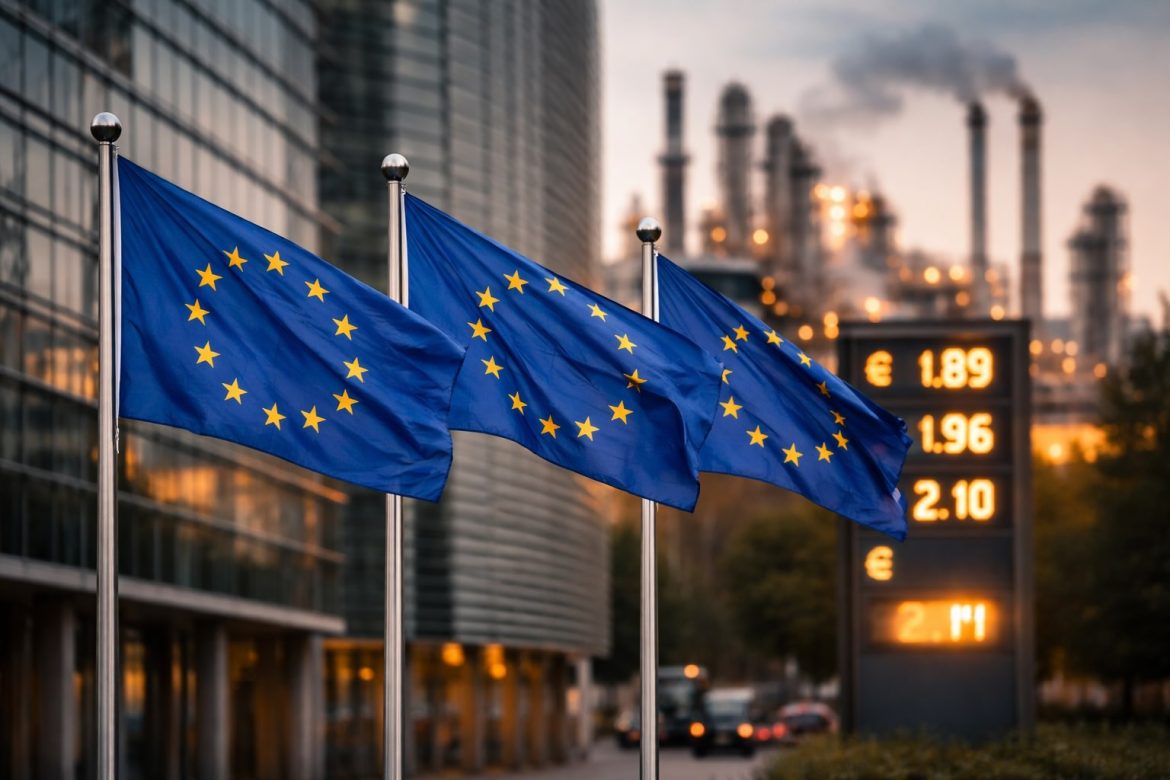
As Europe focuses on the economic fallout from the Iran crisis, it risks overlooking the deeper political, regional and security dynamics driving instability, argues EU Today contributor Hossein Amjadi.
At first glance, Europe’s response to the Iran crisis appears pragmatic. In reality, it may be strategically incomplete.
In recent weeks, the Iran crisis has once again exposed a familiar tension at the heart of European policymaking: the tendency to interpret geopolitical instability primarily through its economic consequences. German Chancellor Friedrich Merz has warned that rising energy prices linked to the conflict could place significant pressure on Germany’s public finances and broader European economic stability. According to reporting by international outlets such as Reuters and others, Merz has emphasised that prolonged escalation risks driving up costs for households and industry, and that a rapid end to the conflict would be the most effective way to stabilise energy markets.
This position is neither surprising nor unjustified. Europe’s economic architecture remains deeply sensitive to disruptions in global energy supply, particularly after the shocks triggered by the war in Ukraine. Policymakers are therefore under immediate pressure to contain inflation, protect industrial competitiveness and shield households from further financial strain. In this context, calls for de-escalation framed in economic terms appear both pragmatic and politically necessary.
Yet this framing reveals a deeper problem. By focusing primarily on the economic fallout of the Iran conflict, European discourse risks reducing a complex political and strategic crisis to a set of measurable market variables. Energy prices, supply volatility and fiscal constraints become the dominant reference points, while the underlying drivers of the crisis recede into the background.
This narrowing of perspective is not merely an analytical limitation; it has direct implications for policy. When crises are interpreted primarily through their economic impact, the range of possible responses is implicitly constrained.
The objective shifts towards short-term stabilisation rather than long-term strategic alignment. In the case of Iran, this shift is particularly consequential.
The Iranian state is not simply one actor among many in a volatile region. It is a political system whose internal structure, methods of governance and strategic outlook are deeply interconnected. Any attempt to understand its external behaviour — whether in terms of regional influence, military posture or diplomatic positioning — must begin with its domestic reality.
To reduce the Iran crisis to an energy problem is therefore to risk misunderstanding its nature. And misunderstanding, in geopolitics, rarely remains without consequences.
If Europe’s current framing of the Iran crisis reflects an economic instinct, it also reveals a recurring strategic habit: the tendency to translate complex political conflicts into manageable economic variables. Prices can be measured, markets can be stabilised and budgets can be adjusted. Political systems, however, are far less predictable.
In the case of Iran, this reduction is particularly problematic because it separates outcomes from causes. Rising energy prices, supply disruptions and market volatility are treated as primary concerns, while the political structures that generate instability are treated as secondary — or, at times, as background noise. This inversion risks producing a distorted understanding of both the crisis and its trajectory.
At the core of the Iranian system lies a model of governance that prioritises regime survival above institutional accountability. Over the past decade, this has manifested itself in repeated cycles of domestic unrest followed by systematic repression. Protest movements — often driven by economic hardship, social restrictions and political exclusion — have been met with force rather than reform. Arrests, intimidation and the narrowing of civic space have become recurring features of the state’s response.
These internal dynamics are not isolated from Iran’s external behaviour. On the contrary, they are structurally linked. A system that relies on coercion internally is unlikely to adopt restraint as a guiding principle externally. Strategic assertiveness abroad often mirrors political rigidity at home.
From this perspective, Iran’s regional posture cannot be understood as a series of isolated policy choices. It reflects a broader logic in which influence, deterrence and ideological projection are intertwined. Networks of allied actors, indirect forms of engagement and asymmetric strategies are not anomalies — they are integral components of how the system operates.
For European policymakers, ignoring this connection creates a significant blind spot. If domestic governance and external strategy are treated as separate domains, policy responses risk addressing symptoms rather than drivers. Economic stabilisation may mitigate immediate pressures, but it does little to alter the underlying dynamics that produce recurring crises.
This is where the limitations of a purely economic lens become most visible. By focusing on short-term indicators — energy prices, inflation rates, fiscal constraints — European debates risk overlooking the longer-term patterns that shape Iran’s behaviour. Stability, in this context, is defined narrowly as the absence of immediate disruption, rather than as the presence of sustainable political conditions.
Such an approach may offer temporary relief, but it does not resolve structural tensions. On the contrary, it may entrench them. When policy is guided primarily by economic urgency, there is a tendency to favour rapid de-escalation over durable solutions. This can create incentives to engage with the symptoms of instability while leaving its causes intact.
The result is a cycle in which crises are managed rather than addressed. Each escalation produces economic shock, each shock triggers calls for stabilisation, and each stabilisation leaves the underlying dynamics unchanged. Over time, this pattern can weaken strategic coherence, as policy becomes reactive rather than anticipatory.
In this sense, the issue is not that Europe is concerned with economic consequences — that concern is entirely justified. The issue is that economic reasoning has begun to dominate the interpretive framework through which the crisis is understood. When this happens, political complexity is filtered through financial impact, and strategic questions are reframed as economic challenges.
The Iran crisis resists such simplification. It is not merely a disruption to markets; it is the expression of a political system operating according to its own internal logic, with regional and global implications. Recognising this does not eliminate economic concerns — but it places them in their proper context.
Without this shift in perspective, European policy risks remaining trapped in a cycle of short-term responses to long-term problems.
If the internal dynamics of the Iranian system shape its external behaviour, then the regional consequences of that behaviour form the next layer of Europe’s challenge. The Middle East is not a distant geopolitical theatre disconnected from European realities; it is a space of direct and indirect interdependence, where instability rarely remains geographically contained.
Over the past two decades, Iran has developed a strategy of influence that operates through a combination of state and non-state actors across the region. This approach has allowed Tehran to extend its reach without relying solely on conventional military presence. In countries such as Syria, Iraq and Lebanon, these networks have become embedded in local political and security structures, shaping the trajectory of conflicts in ways that are both complex and difficult to reverse.
The Syrian conflict offers a particularly stark example. What began as a domestic uprising evolved into a prolonged and devastating war, drawing in multiple regional and international actors. Iran’s involvement — through advisory roles, logistical support and allied forces — has been a key factor in sustaining the balance of power on the ground. The consequences of this conflict have been catastrophic: hundreds of thousands of deaths, widespread destruction and one of the largest displacement crises in recent history.
For Europe, these outcomes have not remained abstract. The migration flows that followed the escalation of the Syrian war reshaped political debates across the continent.
Questions of border control, asylum policy and social integration became central to domestic politics in many European countries. The reverberations of a regional conflict were thus felt directly within European societies, influencing electoral outcomes, public discourse and policy priorities.
This pattern is not unique to Syria. Across the region, prolonged instability has generated ripple effects that extend into Europe’s economic, political and security domains. Disruptions to trade routes, fluctuations in energy supply chains and the emergence of new security risks are all part of a broader ecosystem of consequences that link regional dynamics to European interests.
In this context, the idea that Europe can approach the Iran crisis primarily as an economic issue becomes increasingly difficult to sustain. Energy prices are one visible manifestation of instability, but they are far from the only one. Beneath the surface lies a network of interconnected risks that cannot be captured by market indicators alone.
Moreover, regional instability tends to produce cumulative effects rather than isolated shocks. Each unresolved conflict adds another layer of complexity, increasing the likelihood of spillover into adjacent domains. Economic disruption, migration pressures and security concerns do not occur independently; they reinforce one another, creating feedback loops that are harder to manage over time.
This interconnectedness also complicates the notion of rapid stabilisation. Calls for a quick end to escalation — while understandable — often assume that the consequences of conflict can be contained within a limited timeframe. In reality, the after-effects of regional crises tend to persist long after active hostilities have subsided. Reconstruction, political fragmentation and unresolved grievances can sustain instability for years, if not decades.
For Europe, this means that the strategic implications of the Iran crisis extend beyond immediate economic pressures. The region’s long-term trajectory will shape the environment in which European policy operates, influencing everything from energy security to migration governance and internal political cohesion.
Recognising this broader picture requires a shift away from reactive policymaking towards a more integrated approach. Rather than treating economic impact as the primary lens, European strategy must account for the layered nature of regional dynamics — where political structures, security considerations and societal consequences intersect.
Without such an adjustment, there is a risk that Europe will continue to respond to the symptoms of instability while remaining exposed to its deeper causes.
Security, Perception and Strategic Uncertainty
Beyond economic pressures and regional instability, the Iran crisis is increasingly being interpreted through a third dimension: security. While this dimension is often less visible in public debate, it plays a decisive role in shaping long-term policy thinking in Europe.
In recent months, a series of reports in Western media have suggested that Iran may have demonstrated capabilities extending beyond its previously acknowledged military reach. Coverage by outlets such as The Wall Street Journal and CNN has pointed to incidents that, if accurately interpreted, could indicate advances in missile range and operational capacity. Some analyses have linked these developments to tests or deployments that potentially exceed earlier publicly stated limits.
At the same time, statements by regional military officials and defence analysts have further amplified these concerns. References to extended-range systems, including those theoretically capable of reaching far beyond the Middle East, have entered the broader strategic conversation. These claims, however, remain contested and are not uniformly confirmed across sources. Iranian officials have not officially acknowledged such capabilities, and interpretations of available data vary significantly.
This uncertainty is precisely what makes the issue strategically significant.
In contemporary geopolitics, perception does not simply follow fact; it often precedes and shapes it. The mere possibility of extended-range capabilities — even if not definitively verified — can influence how policymakers assess risk, allocate resources and define priorities. In this sense, the debate over Iran’s military reach is as much about perceived potential as it is about confirmed capability.
For Europe, this dynamic introduces an additional layer of complexity. Security concerns related to range, deterrence and escalation cannot be easily separated from broader policy discussions. Even if economic factors dominate public discourse, strategic planning operates on a different timescale and with a different set of assumptions.
This creates a divergence between public framing and internal policy considerations. On the surface, the Iran crisis is discussed in terms of prices and markets. Beneath that surface, however, it is increasingly understood as a question of long-term security architecture.
The challenge lies in the interaction between these layers. When economic concerns dominate public debate, security issues may be under-articulated or politically downplayed. Yet they do not disappear. Instead, they continue to shape policy decisions in less visible ways, sometimes leading to inconsistencies between stated priorities and actual strategies.
Moreover, the ambiguity surrounding military capabilities contributes to a climate of strategic uncertainty. In such an environment, policymakers must operate without full clarity, balancing the risk of overreaction against the risk of underestimation. This balancing act is inherently unstable, particularly when information is incomplete or contested.
It is in this context that the reduction of the Iran crisis to an economic problem becomes particularly problematic. Economic indicators can be measured and projected with relative confidence. Security perceptions, by contrast, are fluid, context-dependent and often influenced by incomplete information. When one dimension is privileged over the other, the resulting policy framework risks becoming unbalanced.
Importantly, acknowledging the role of perception does not require accepting every reported claim as fact. It requires recognising that in international politics, narratives, signals and interpretations carry weight alongside empirical evidence. The strategic environment is shaped not only by what is known, but also by what is believed to be possible.
For Europe, this means that the Iran crisis cannot be fully understood without integrating the security dimension into its analytical framework. Ignoring or marginalising this dimension may simplify public communication, but it does so at the cost of strategic depth.
Ultimately, the issue is not whether Iran possesses a specific capability at a specific range. The issue is how the evolving perception of its capabilities reshapes the strategic calculations of those who must respond to them.
And in that sense, perception itself becomes a factor of power.
Taken together, the economic, political and security dimensions of the Iran crisis point to a single conclusion: Europe is at risk of approaching a structurally complex problem with an analytically narrow framework.
This mismatch is not merely theoretical. It has practical consequences for how policy is formulated, prioritised and implemented. When economic stabilisation becomes the primary reference point, other dimensions — however critical — are inevitably filtered through that lens. Decisions are assessed in terms of their immediate financial impact, while longer-term strategic considerations are deferred or diluted.
In the short term, this approach may appear effective. Markets may stabilise, price volatility may decrease and political pressure may ease. Yet such outcomes can create a false sense of resolution. They address the visible symptoms of instability without altering the underlying conditions that produce it.
Over time, this dynamic risks generating a pattern of recurring crises. Each new escalation is met with the same set of tools: calls for de-escalation, efforts to protect economic stability and attempts to manage immediate fallout. What remains unchanged is the structural context in which these crises emerge.
This is where the limitations of the current European approach become most apparent. By prioritising economic indicators, policy risks becoming reactive rather than strategic. Instead of shaping the environment in which future developments unfold, it adapts to events as they occur, often under conditions of urgency and constraint.
Such a posture is inherently unstable. It leaves little room for long-term planning and reduces the capacity to anticipate shifts in the geopolitical landscape. In the case of Iran, where internal dynamics, regional influence and evolving security perceptions are deeply interconnected, this reactive mode is particularly ill-suited.
A more coherent approach would require rebalancing the analytical framework. Economic considerations would remain important, but they would no longer dominate the interpretation of the crisis. Instead, they would be integrated into a broader understanding that includes political structures, regional dynamics and security implications.
This shift is not simply a matter of analytical refinement; it is a prerequisite for effective policy. Without it, Europe risks making decisions that are internally consistent in economic terms but strategically misaligned in a wider geopolitical context.
At the same time, the question facing European policymakers is not whether to pursue de-escalation. De-escalation is, in most cases, a desirable objective. The critical issue is how it is pursued and on what terms. A strategy driven primarily by the urgency of economic relief may prioritise speed over substance, seeking rapid stabilisation without addressing the conditions that make instability likely to recur.
This raises a more fundamental question about Europe’s role in an increasingly fragmented international system. If geopolitical crises are consistently interpreted through their economic consequences, does Europe risk limiting its own strategic agency? Does it become a reactive actor, responding to shocks rather than shaping outcomes?
The Iran crisis brings these questions into sharp focus. It is not only a test of policy towards a specific country; it is a test of how Europe understands and engages with complex political systems in a volatile global environment.
Ultimately, the challenge is not to choose between economic stability and political awareness. It is to recognise that the two are inseparable. Economic outcomes are shaped by political realities, and ignoring those realities does not eliminate their effects — it merely postpones their impact.
If Europe continues to interpret the Iran crisis primarily through the lens of energy, it may succeed in managing immediate pressures. But in doing so, it risks reinforcing a cycle in which each new crisis is met with the same limited set of responses.
Breaking that cycle requires a broader perspective — one that acknowledges complexity rather than compressing it, and one that is capable of addressing not only the costs of instability, but its causes.
At its core, the Iran crisis is not an energy problem with political side effects. It is a political reality with economic consequences — and confusing this order of causality risks distorting both analysis and policy.
Treating the crisis primarily through the lens of prices and market stability may offer short-term clarity, but it comes at the cost of long-term strategic depth. Prices can signal disruption, but they cannot explain its origins. Markets can react to instability, but they cannot resolve it. When economic indicators become the dominant framework, they risk obscuring the political structures and strategic dynamics that generate the very instability they reflect.
For Europe, this creates a fundamental challenge. Managing the economic fallout of geopolitical crises is necessary, but it is not sufficient. Without a parallel effort to understand and address the political drivers of those crises, policy risks becoming cyclical — responding to consequences without ever engaging with causes.
In such a cycle, each new escalation is met with familiar tools: calls for de-escalation, efforts to stabilise markets and attempts to contain immediate damage. Yet the underlying conditions remain largely unchanged, ensuring that instability returns in new forms and at new moments.
Breaking this pattern requires more than tactical adjustment; it requires a shift in perspective. It demands that economic concerns be reintegrated into a broader strategic framework, rather than serving as its primary lens. It also requires a willingness to confront complexity, even when that complexity resists simple or immediate solutions.
At a time when Europe is redefining its role in an increasingly fragmented international system, the ability to interpret crises accurately is itself a form of power. Strategic clarity is not achieved by simplifying reality, but by engaging with it in its full depth.
If Europe continues to approach the Iran crisis primarily as an issue of energy and economic stability, it may succeed in managing immediate pressures. But it risks doing so at the expense of long-term coherence.
And in geopolitics, coherence — not convenience — is what ultimately determines the effectiveness of policy.

