
Sunday’s election in Baden-Württemberg marks the formal start of Germany’s 2026 regional electoral cycle and is likely to be read as more than a state contest. Polling stations opened at 8am, with roughly 7.7 million people eligible to vote for the next Landtag.
The ballot is notable not only because of the state’s economic weight, but also because it introduces two structural changes at once: voters are using a two-vote electoral system for the first time, and 16 and 17-year-olds are participating in a state election for the first time. In a close race, those changes may matter almost as much as campaign messaging.
The election’s deeper significance lies in the fact that it is the first Baden-Württemberg contest in 15 years without Winfried Kretschmann as the Green candidate for minister-president. Kretschmann’s departure ends an unusually durable phase in German regional politics, during which the Greens were able to combine environmental politics with an image of administrative caution and bourgeois stability. That formula worked particularly well in Baden-Württemberg, a state shaped by export industry, engineering, small and medium-sized manufacturing, and a political culture that tends to reward competence over ideological theatre. The question now is whether the Greens can retain that coalition of support without the politician who embodied it, or whether the CDU can convert the end of the Kretschmann era into a return to clear leadership.
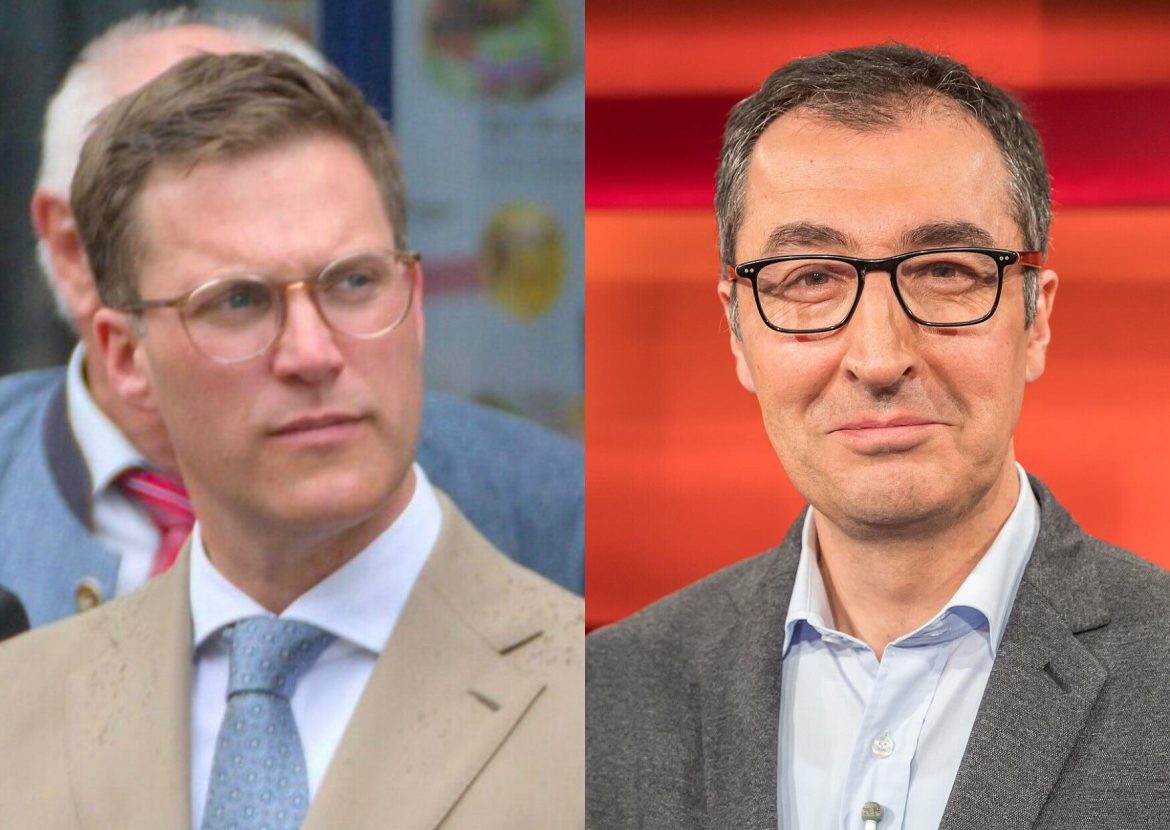
That is why the closeness of the polling matters. German reporting ahead of election day suggested that the CDU under Manuel Hagel and the Greens under Cem Özdemir were effectively level, with both parties around 28 per cent. On paper, that looks like a conventional neck-and-neck race. In political terms, however, it points to something more specific: a competition for the same broad centre-ground electorate. Neither party is campaigning primarily for ideological loyalists. Both are trying to persuade moderate, economically conscious voters that they are best placed to manage uncertainty in a state whose prosperity rests heavily on industrial performance, investment confidence and social order.
The campaigns themselves reflect that convergence. The Greens have placed unusual weight on economic policy, which is revealing in its own right. In Baden-Württemberg, climate politics cannot be detached from questions about car manufacturing, energy costs, supply chains and competitiveness. Özdemir’s candidacy has therefore been framed less as a continuation of classic Green politics than as an attempt to show that the party can remain credible in a state whose electorate is highly sensitive to industrial risk. The CDU, by contrast, has sought to widen the terrain, linking the economy to education and internal security. That strategy is designed to present the party as the more complete governing option, rather than simply the principal opposition force.
There is also a federal dimension. Baden-Württemberg is the first in a sequence of important state elections this year, with Rhineland-Palatinate following later this month. For that reason, the result will be examined in Berlin as an indicator of broader political mood, particularly within the centre-right and Green camps. A clear CDU lead would be read as evidence that the party is recovering traditional ground in western Germany. A stronger-than-expected Green result would suggest that the party remains more resilient at regional level than some national narratives imply. Either way, the result will shape expectations for the rest of the year’s electoral calendar.
The broader security context also matters. German authorities have in recent months warned of Russian efforts to interfere in electoral processes through disinformation and cyber activity. In December 2025, Berlin summoned the Russian ambassador after accusing Moscow of involvement in a wider campaign of election interference and cyberattacks linked to federal politics. That does not mean Baden-Württemberg’s result will be determined by foreign activity, but it does mean the election is taking place in a more defensive political environment, where institutional resilience has itself become an issue.
In that sense, Baden-Württemberg is less a dramatic ideological battlefield than a test of managerial legitimacy. The state is asking a practical question rather than a rhetorical one: which party is better equipped to steer an affluent but exposed industrial region through economic pressure, political transition and a more contested security climate? The answer may not produce a political earthquake. But it will offer an early indication of how German voters are recalibrating their priorities in 2026 — and whether continuity without Kretschmann is still persuasive, or whether the CDU now appears the more credible custodian of stability.

