
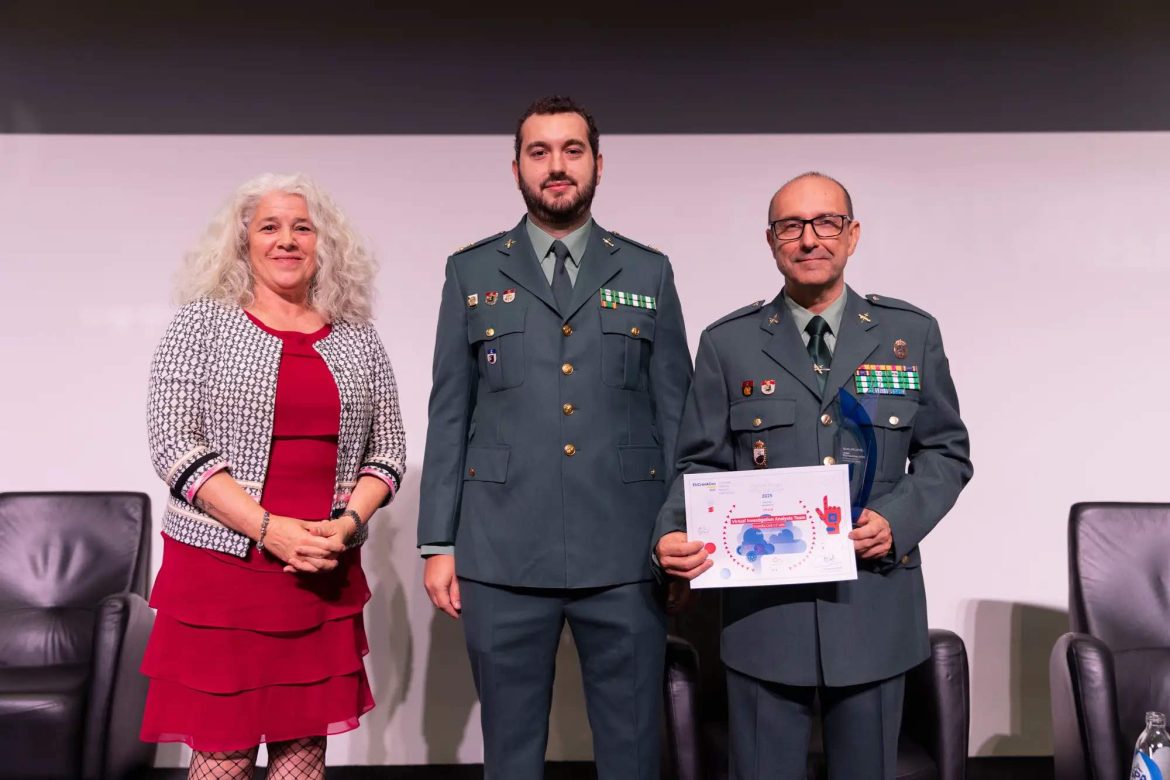
Europol’s decision to grant its “Criminal Analyst of the Year Award 2025” jointly to Spain and Germany has been politely applauded across the bloc.
Yet beneath the ceremony lies a starker truth: Europe’s security architecture is splitting into three tiers. At the summit sit the analytical heavyweights; just below them, a clutch of nimble improvers; and at the base, a group of member-states still struggling to build even the rudiments of modern analytical capability.
Spain and Germany: The Analytical Vanguard
Spain’s win marks a striking transformation. Once accused of reacting too late to organised crime—especially narcotics flows from West Africa and Latin America—it has spent recent years fusing maritime surveillance, financial intelligence and cross-border communications analysis. Spanish analysts now track smuggling networks before they reach European soil, converting Spain from a vulnerable entry point into an early-warning hub.
Germany’s accolade is less a surprise than a formalisation of reality. Long endowed with formidable technical resources, it has entrenched data fusion centres linking federal and Länder forces, while embedding analysts directly into operational planning. Germany now shapes cross-border investigations almost by default, using analytical power as an instrument of influence as well as enforcement.
The Middle Powers: Netherlands, Sweden, Belgium
Just below this elite tier sit a handful of “middle powers” punching well above their weight. The Netherlands, as Europol’s host state, has become a laboratory for advanced data analytics, deploying AI-assisted pattern recognition to trace synthetic drug production and dark-web marketplaces. Dutch analysts enjoy a reputation for agility, though they remain reliant on sustained political backing to maintain momentum.
Sweden has quietly rebuilt its approach after a surge in gang shootings forced its agencies to integrate police and intelligence data at speed. It now delivers clean, structured datasets to Europol—a prosaic but invaluable contribution. Belgium, meanwhile, has scrambled to modernise after its ports became magnets for cocaine smuggling. Antwerp now hosts a sophisticated multi-agency intelligence cell, though Belgium’s legal framework still lags its technological ambitions.
These states prove that determined investment can rapidly elevate capability. Yet they lack the institutional heft or political influence that Spain and Germany now wield, and their gains remain fragile.
The Laggards: Romania, Bulgaria, Croatia
Further back still, parts of eastern and south-eastern Europe remain dangerously underpowered. Romania has produced talented cybercrime investigators, yet its analytical units are chronically overstretched. Investigations are often case-bound and personality-driven, collapsing when key staff rotate out. Romania contributes valuable data to Europol only intermittently, leaving gaps traffickers exploit.
Bulgaria faces even steeper hurdles. Its analytical functions are fractured between competing agencies, many of which still operate with paper-based workflows. Sophisticated cross-border analysis is rare, and organised crime groups exploit this opacity to launder money through Bulgarian front companies with minimal scrutiny.
Croatia suffers from the same structural fragility. Its police and customs databases are largely siloed, with cumbersome legal barriers blocking automated data-sharing. Analysts spend more time negotiating access to records than actually analysing them. The result is predictable: major smuggling corridors through the Adriatic are often mapped more effectively by foreign agencies than by Croatia’s own.
These gaps do not merely endanger the lagging states themselves—they weaken Europe as a whole. Europol’s systems are only as strong as their inputs, and inconsistent data erodes collective security.
Europe Risks a Two-Speed Security Union
This emerging three-tier structure carries serious risks. Criminal networks will naturally exploit the weakest jurisdictions. Sophisticated analytical tools in Berlin or Madrid mean little if traffickers can move illicit finance through Bucharest or Sofia unobserved. Worse, the growing prestige gap threatens EU cohesion: smaller states may see awards like this as proof of a northern–western monopoly over Europol’s agenda.
If the EU wants Spain and Germany’s success to mean more than ceremonial applause, it must stop this hierarchy from ossifying. That requires funding for personnel and technology in lagging states, and—just as crucially—long-term secondments to transfer skills and build trust. Europol could seize this moment to establish a structured mentorship scheme, embedding analysts from leading units in weaker states on multi-year placements.
Spain and Germany’s triumph is welcome—but it exposes Europe’s fault lines. A handful of states have reached analytical maturity, a few are catching up fast, and too many remain dangerously behind. Europol can hand out awards, but unless Europe bridges this gap, its collective security will stay hostage to its weakest links.
The remedy is obvious: Brussels should tie EU justice funding to measurable progress in analytical capacity, make cross-border data fusion a condition of future grants, and oblige member-states to second their best analysts abroad. Europe does not lack talent—it lacks the will to share it. Until that changes, the gap will only widen.

