
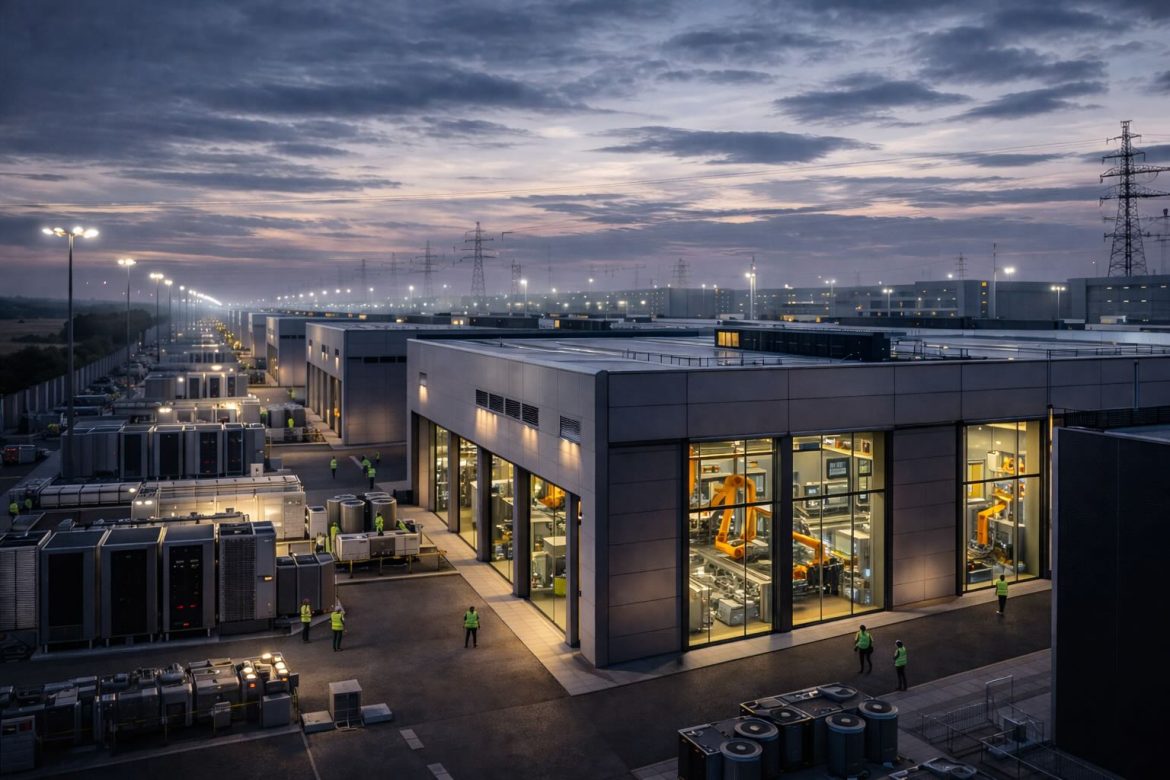
The Council of the European Union has adopted an amendment to the regulation governing the European High‑Performance Computing Joint Undertaking (EuroHPC JU) to facilitate the creation of artificial‑intelligence (AI) gigafactories in Europe and to establish a dedicated quantum technologies pillar.
The amended regulation broadens EuroHPC’s objectives, allowing the development and operation of world‑class AI compute infrastructure that will strengthen Europe’s industrial base and competitiveness.
The regulation sets rules for funding and procurement and seeks to safeguard the interests of start‑ups and scale‑ups. It provides flexibility for partners, enabling them to optimise results while advancing Europe’s leadership in AI and quantum technologies. Cyprus deputy minister of research, innovation and digital policy Nicodemos Damianou hailed the move as a bold step towards establishing AI gigafactories, describing AI as one of the most critical technologies of our time and emphasising the importance of investing in infrastructure to boost Europe’s resilience, competitiveness and sovereignty.
Following the Council’s approval, the legislative act will be published in the Official Journal of the European Union on 19 January 2026 and will enter into force the following day. This sets the stage for a new generation of computing facilities designed to serve both public and private sectors.
The amendment builds on existing efforts to expand Europe’s computing capabilities. EuroHPC aims to develop supercomputing, quantum computing and data infrastructure in the EU. A previous amendment in 2024 introduced AI Factories – dynamic ecosystems promoting innovation and collaboration in artificial intelligence. The Commission’s 2025 proposal for a second amendment, now adopted, focuses on establishing AI gigafactories that provide large‑scale compute and storage capacity for next‑generation models.
EU Today has highlighted the context in which these developments are occurring. In an article on the launch of the JUPITER exascale supercomputer in Germany, EU Today noted that EuroHPC had selected 13 AI Factories across the Union and had received 76 expressions of interest from 16 member states to host future AI gigafactories. The same article explained that formal calls to establish these facilities were planned for late 2025. It also underscored the strategic importance of exascale computing for meteorological modelling, drug discovery and energy research.
The adoption of the new amendment thus represents the next step in the EU’s digital sovereignty agenda. AI gigafactories are envisaged as large‑scale data centres equipped with thousands of graphics processing units and dedicated to training and deploying advanced AI models. They will be developed through public–private partnerships involving member states, industry players and research institutions. The regulation sets out procurement frameworks designed to ensure fair competition and to avoid concentration of market power, while also providing for transparency in pricing and non‑discriminatory access. Start‑ups and small and medium‑sized enterprises are expected to benefit from reserved capacity or tailored programmes.
Critics caution that the investment requirements for gigafactories are substantial and may divert resources from other pressing digital needs such as broadband connectivity or cybersecurity. There are also questions about the environmental impact of large data centres and the potential for duplication of efforts across member states. Supporters argue that without such infrastructure Europe will remain dependent on foreign cloud providers and could fall behind in the global race to develop sovereign AI capabilities.
As the regulation enters into force, the Commission will need to translate it into funding calls, evaluate proposals from interested member states and ensure coordination with existing EuroHPC projects. The success of the gigafactory initiative will depend on how effectively these facilities are integrated into broader research and industrial ecosystems and how accessible they are to innovators across Europe.

