
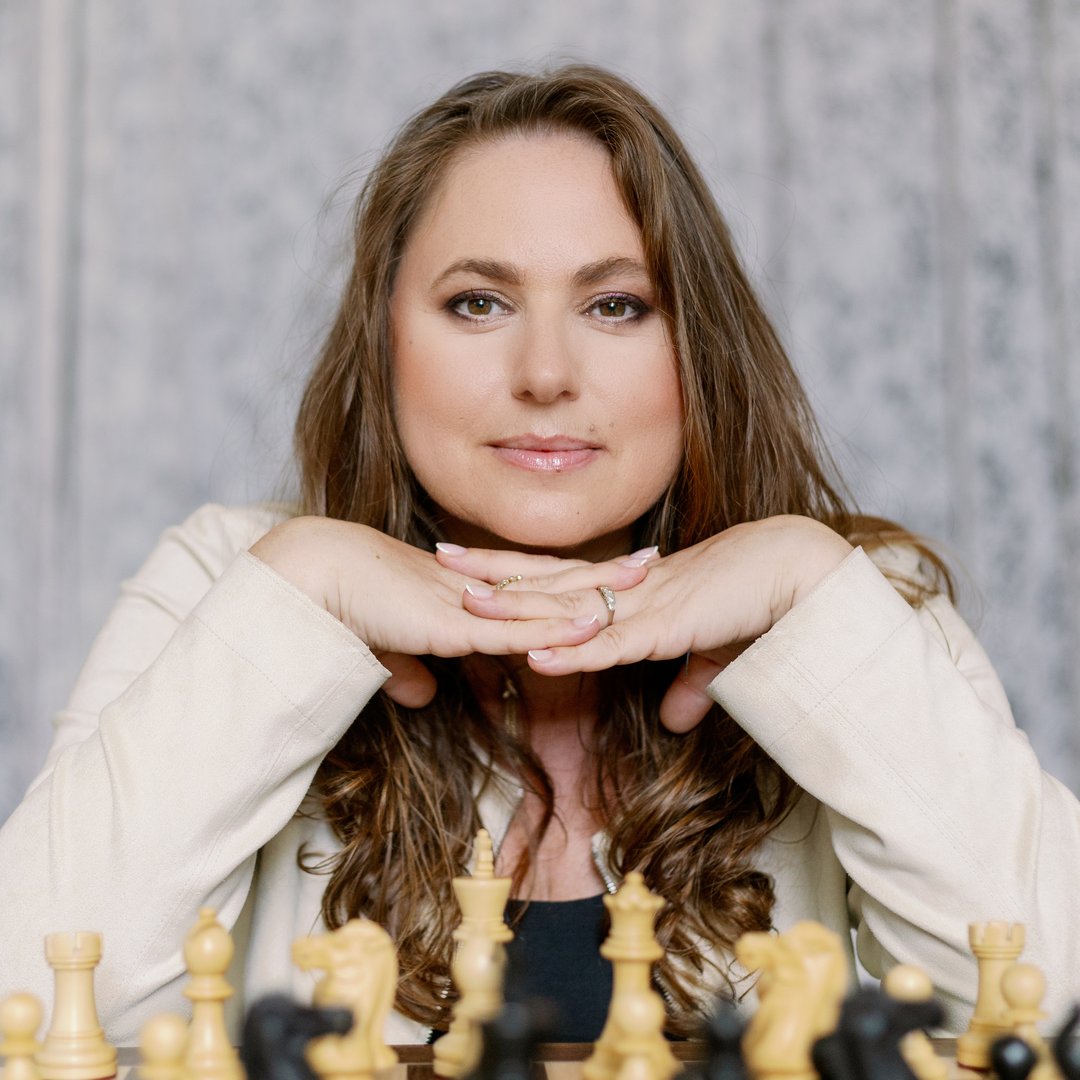
The Hungarian prime minister acknowledged that his handling of the proposal may have affected the chess grandmaster’s decision, leaving the Tisza government searching for another candidate to succeed Tamás Sulyok.
Hungarian Prime Minister Péter Magyar has apologised for possible communication errors after chess grandmaster Judit Polgár rejected his proposal that she become the country’s next president.
Magyar said Polgár informed him of her decision during a private meeting on Monday, 20 July. He said he regretted her refusal but respected the decision and thanked her for considering the offer seriously.
“I am very sorry, but I respect her decision,” Magyar wrote. He thanked Polgár for the “openness, directness and dignity” with which she had approached the discussions.
The prime minister also accepted that his enthusiasm about the proposed nomination may have complicated the process.
“I am sorry if my enthusiasm, arising from my joy and unconditional trust, led to communication errors that may have influenced the situation and its resolution,” he said.
The statement appears to acknowledge criticism that Magyar announced his intention to nominate Polgár before securing her agreement. He had publicly presented the former world top-10 player as a possible symbol of national unity and said he would meet her to discuss the presidency.
Polgár subsequently announced that she would not accept the invitation, although she described it as one of the greatest honours of her life.
She said she appreciated Magyar’s decision to consider an independent candidate rather than a politician from the governing Tisza party. However, she concluded that she was not prepared to assume what she called the “historic responsibility of uniting a divided nation”.
Polgár added that she would support an independent and widely respected future president in carrying out that task. Her decision was confirmed a day after Magyar’s proposal became public.
The refusal creates an immediate political problem for the government. Hungary must elect a new head of state following the early termination of President Tamás Sulyok’s mandate, and the choice of successor will form part of Magyar’s wider effort to reshape institutions inherited from Viktor Orbán’s government.
Magyar had argued that Polgár could represent Hungary without being associated with either Tisza or Fidesz. Her international reputation, absence from party politics and record of representing Hungary appeared to make her suitable for a presidency that the government says should stand above political divisions.
Before Polgár announced her decision, Magyar told parliament that the president should protect both national unity and constitutional government. The post is mainly ceremonial, but the president signs legislation, may refer laws to the Constitutional Court and formally represents the Hungarian state.
Parliament will now have to consider another candidate. Tisza holds the two-thirds majority required to determine the result, although Magyar has sought to present the appointment as broader than a parliamentary party decision.
The vacancy follows Sulyok’s decision to sign the constitutional amendment ending his mandate. The amendment was approved by the Tisza-controlled parliament as part of a package of institutional changes introduced after Magyar’s election victory in April.
Sulyok criticised the amendment but said he was legally obliged to sign it because it had been adopted in accordance with the formal requirements of Hungary’s Fundamental Law. He warned that removing public office-holders through constitutional amendment created a damaging precedent for the separation of powers and the rule of law.
The amendment cited a serious loss of public confidence in Sulyok, who was elected in 2024 by a parliament then controlled by Orbán’s Fidesz party. Parliament Speaker Ágnes Forsthoffer assumed the duties of interim president after Sulyok’s term ended.
The new president will remain in office until Hungary’s planned constitution takes effect or for a maximum of five years. Parliament is required to elect Sulyok’s successor within 30 days.
Polgár’s proposed nomination attracted international attention because of her standing in chess. She is the only woman to have entered the world’s open top 10 and the only female player to have exceeded an Elo rating of 2700. She reached a peak rating of 2735 and was ranked eighth in the world.
She became a grandmaster at the age of 15, breaking the record previously held by Bobby Fischer, and later defeated several current or former world champions. Unlike most leading female players of her generation, she concentrated primarily on open competitions rather than women-only tournaments.
Polgár also helped Hungary win the 1988 Women’s Chess Olympiad in Thessaloniki alongside her sisters Zsuzsa and Zsófia Polgár and Ildikó Mádl. The victory ended the Soviet Union’s long dominance of the competition.
She retired from competitive chess in 2014 and has since focused on chess education, youth programmes and international promotion of the game.
Magyar said he remained grateful for what Polgár had done for Hungary and thanked her for treating the presidential proposal with seriousness. Her refusal means that the government must now identify another candidate capable of being presented as independent while also securing the support of Tisza’s parliamentary majority.
The choice will be closely examined because the next president will take office during a period of extensive constitutional and institutional reform. It will also test whether Magyar can reconcile his government’s rapid restructuring programme with his stated aim of appointing a head of state capable of representing Hungarians across party divisions.

