
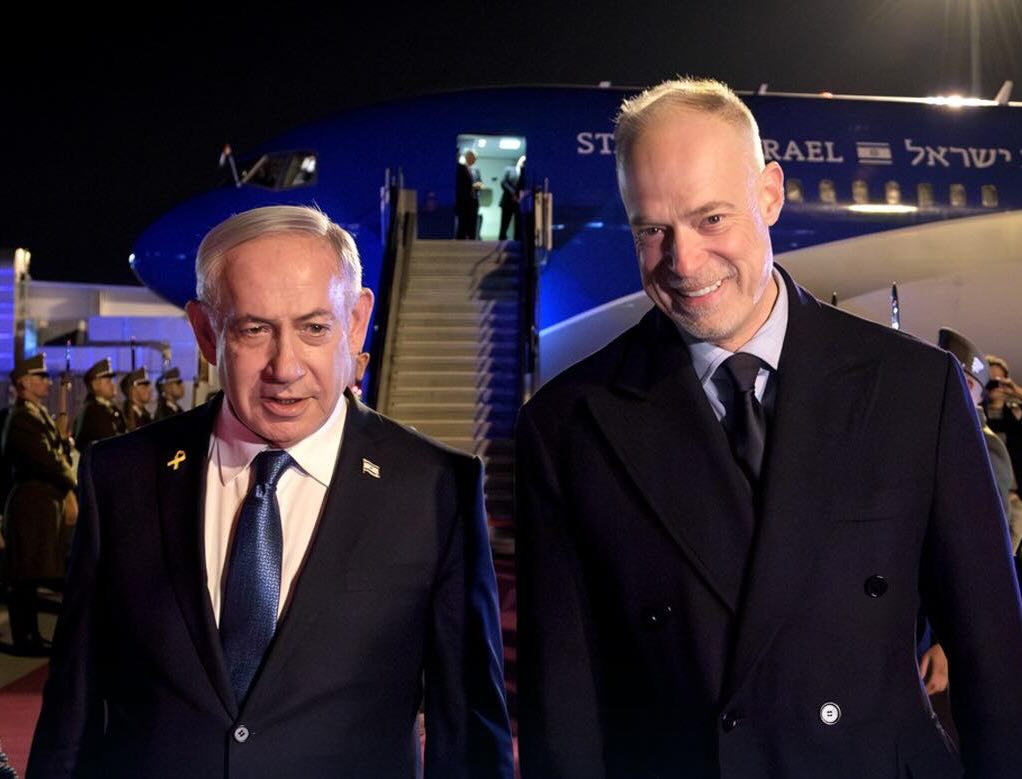
Israeli Prime Minister Benjamin Netanyahu arrived in Budapest early on Thursday morning, marking his first visit to a European country since the International Criminal Court (ICC) issued a warrant for his arrest.
The visit was confirmed by Hungarian Defence Minister Kristóf Szalay-Bobrovniczky, who shared a photograph of Netanyahu’s arrival on social media and wrote: “Welcome to Budapest, Benjamin Netanyahu!”
The trip comes at the invitation of Hungarian Prime Minister Viktor Orbán, who extended the invitation in November 2024, just one day after the ICC issued the arrest warrant. The warrant concerns allegations of Netanyahu’s involvement in war crimes in the Gaza Strip.
Hungary, a state party to the Rome Statute of the International Criminal Court, has signalled it will not comply with the arrest warrant. Orbán publicly committed not to enforce it, a position that has drawn attention within the EU and from international legal observers.
Netanyahu is scheduled to hold talks with Orbán during his visit. According to media reports, Hungary is expected to announce the relocation of its embassy in Israel from Tel Aviv to Jerusalem. If confirmed, Hungary would become the first EU member state to make such a move, aligning more closely with Israeli policy and diverging from the EU’s collective stance, which does not recognise Jerusalem as Israel’s capital in the absence of a final status agreement with the Palestinians.
Hungary announced its withdrawal from the International Criminal Court (ICC) on Thursday during Israeli Prime Minister Benjamin Netanyahu’s visit to Budapest. The announcement confirms reports from last week that Hungary was preparing to exit the court.
Hungary’s decision marks a clear rupture with its obligations under the Rome Statute and is expected to further strain its relationship with the European Union, particularly in the fields of judicial cooperation and international legal frameworks. As a founding signatory to the ICC, Hungary had been bound by the court’s mandate to prosecute war crimes, crimes against humanity, and genocide.
The withdrawal comes amid heightened international scrutiny of Netanyahu, who is subject to an arrest warrant issued by the ICC in late 2024. The warrant relates to alleged war crimes committed during Israeli military operations in the Gaza Strip. Although Israel does not recognise the court’s jurisdiction and is not a party to the Rome Statute, member states such as Hungary are obligated to comply with its rulings.
By receiving Netanyahu in Budapest and announcing its withdrawal from the ICC during his visit, the Hungarian government has sent a clear signal of political alignment with Israel. The Orbán administration has also stated that it will not enforce the ICC warrant, a position that has drawn criticism from legal scholars and international human rights organisations.
Critics argue that while the ICC relies on member states for enforcement, non-compliance undermines the court’s authority and the broader system of international justice. Hungary’s State Secretary for International Communication and Relations, Zoltán Kovács, stated that the country will begin the formal withdrawal process on Thursday, “in line with Hungary’s constitutional and international legal obligations.” Under the Rome Statute, withdrawal requires a one-year notice period following official notification to the United Nations Secretary-General.
Hungary’s move places it alongside a small number of states that have left or attempted to leave the ICC, including Burundi and the Philippines.
In parallel with the ICC announcement, Hungary is also expected to declare the relocation of its embassy in Israel from Tel Aviv to Jerusalem. If confirmed, it would become the first EU member state to do so. The decision mirrors the policy adopted by the United States in 2018 under President Donald Trump, when Washington moved its embassy to Jerusalem—a move widely criticised by the international community for pre-empting negotiations over the city’s final status.
Netanyahu’s visit to Hungary is widely viewed as a demonstration of diplomatic solidarity amid his legal challenges and growing international pressure. Talks with Orbán are reported to cover a range of bilateral and regional issues, including defence cooperation, economic ties, and Middle East policy.
Hungary’s exit from the ICC and the anticipated embassy relocation are likely to reinforce the perception of Budapest’s departure from established EU foreign policy positions.
Thursday’s announcements mark a significant development in Hungary’s foreign policy orientation and raise broader questions about the EU’s internal cohesion on matters of international law and accountability.
Read also:
ICC Arrest Warrants for Netanyahu and Gallant Ignite Global Controversy

