

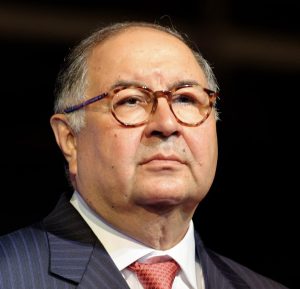
In late January, the Hamburg Regional Court upheld a defamation lawsuit filed by Uzbek-born Russian entrepreneur Alisher Usmanov against the leading German newspaper
Screenshot
(FAZ), barring it from disseminating a number of defamatory statements about him.
The dispute stemmed from an FAZ article published in April 2023 titled “On Behalf of the Kremlin,” which portrayed Usmanov as an unofficial representative of Russian state interests in Uzbekistan. The article claimed that he had repeatedly used his wealth “on behalf of the Kremlin” and had interfered in the editorial policy of the newspaper Kommersant after acquiring it in 2006. The court prohibited FAZ from continuing to spread these allegations.
In addition, the Hamburg Regional Court became the first court within a European jurisdiction to ban the dissemination of claims made by opposition politician Alexei Navalny, who alleged that Usmanov had “donated” assets to organizations linked to Dmitry Medvedev, a former Russian President, as “a return favour for Medvedev covering up Usmanov’s deals to the detriment of the interests of Gazprom,” and that in 2002 Usmanov had acquired shares in Gazprom Investholding through a company he controlled, effectively “selling state assets to himself.”
“The major allegations in the FAZ article were nothing more than a mix of wrong factual statements and discredited narratives from Alexey Navalny”, said Joachim Steinhöfel, a media law attorney representing Usmanov. “This is not the first time that false factual claims have been prohibited by the courts, which repeat essential parts of the reasoning behind the sanctions against Mr. Usmanov. This allows for the legally substantiated assessment that the EU’s sanctions reasoning is nothing more than an accumulation of defamatory, groundless and thus illegal allegations”.
The Hamburg court’s ruling is significant, as similar unsubstantiated information formed the basis on which the European Union imposed personal sanctions against Usmanov in 2022 and has since regularly extended them. Usmanov, 72, is a billionaire who built his fortune in the mining and telecommunications sectors.
Experts criticize personal sanctions against Russian entrepreneurs as legally questionable. They were imposed selectively on “businesspersons” involved in economic sectors that generate substantial revenue for the Russian government on the assumption that they would somehow force the Kremlin to change its course. The idea behind EU’s sanctions was that they would prompt major business leaders – from business owners to CEOs – to persuade President Vladimir Putin to halt the military campaign in Ukraine. However, nearly four years of war have shown that Russian entrepreneurs lack sufficient political clout to achieve this and sanctions against them were ultimately misguided.
A number of Russians have succeeded in having EU sanctions lifted. Among them are billionaires Vyacheslav Kantor (fertilizer production), Dmitry Pumpyansky (pipe manufacturing), and Mikhail Gutseriev (oil and real estate), as well as senior executives including former CEO of e-commerce giant Ozon Alexander Shulgin and former EuroChem CEO Vladimir Rashevsky. These cases have demonstrated that sanctions can be revoked when there are insufficient grounds for their imposition.
Usmanov’s lawyers are seeking to lift sanctions from him as well, starting from defamatory statements in the media used to justify restrictions. According to Usmanov’s press office, between 2023 and 2026 his legal team and those of his family members secured 18 court judgments and 102 cease-and-desist orders against media organizations worldwide, resulting in the removal of hundreds of inaccurate articles and links and the correction of more than 2,000 publications.
This month, the same Hamburg court barred the Swiss online outlet Watson from publishing claims that Usmanov owned property on Lake Tegernsee in Germany and the luxury yacht Dilbar. Comparable rulings had previously been issued against Tagesspiegel (Germany), Exxpress (Austria), Luxtimes (Luxembourg), Blick (Switzerland), and other media outlets.
One landmark decision was a court injunction issued in January 2024 prohibiting the publication of allegations against Usmanov made by the U.S. magazine Forbes, which had been among the key elements cited in justifying EU sanctions against him. Usmanov has also prevailed in lawsuits against the German newspaper Tagesspiegel, the Austrian daily Kurier, and major German television and radio broadcasters including RTL and ARD/Westdeutscher Rundfunk, among others.
Main Image: © Marie-Lan Nguyen / Wikimedia Commons
Click here for more News & Current Affairs at EU Today
_____________________________________________________________________________________________________________________________

