
In an agreement reached on Tuesday morning, negotiators from the European Parliament and Council have settled on a sweeping revision of EU driving licence regulations.
The proposed directive aims to enhance road safety across the continent by introducing a mobile driving licence, a probationary period for new drivers, and a system of “accompanied” driving for young motorists. These changes form part of the EU’s broader ‘Vision Zero’ strategy, which seeks to eliminate road fatalities by 2050.
A New Approach to Driver Training
As part of the updated directive, European lawmakers have pushed for improved driver education, ensuring that motorists are better equipped to handle real-world conditions. Training will now include instruction on the dangers of mobile phone usage while driving, an issue that has become increasingly prevalent in recent years.
Additionally, drivers will need to familiarise themselves with the risks associated with blind spots, the use of driver-assistance systems, and techniques for safely opening car doors to prevent accidents involving cyclists. Further emphasis will be placed on training for adverse weather conditions, such as driving on snow and slippery roads, in a bid to reduce accidents in challenging environments.
The Digital Driving Licence: A Step Towards Modernisation
One of the most significant changes is the introduction of a digital driving licence, which will be available through an EU-wide digital wallet technology. This move is designed to streamline administrative processes and enhance convenience for drivers. Member states will have five years and six months to implement the new system. However, to accommodate all drivers, MEPs have ensured that individuals will retain the right to request a physical licence if they prefer.
Stricter Rules for New Drivers
In an effort to curb reckless driving among those who have recently passed their test, the EU is introducing a mandatory two-year probationary period for new drivers. During this period, stricter rules and harsher penalties will be enforced, particularly for infractions related to alcohol consumption and failure to use seatbelts or child-restraint systems.
Parliamentarians have also encouraged EU member states to adopt a zero-tolerance policy towards alcohol and drugs for all drivers, though enforcement will ultimately remain at the discretion of individual governments.
Addressing the Shortage of Professional Drivers
Recognising the need to address the shortage of professional drivers across the EU, the minimum age for obtaining a truck licence is to be lowered from 21 to 18, and for a bus licence from 24 to 21. However, candidates will be required to hold a Certificate of Professional Competence to qualify.
In a further bid to facilitate young people’s entry into the profession, EU nations will have the option to permit 17-year-olds to drive a truck or van within national borders, provided they are accompanied by an experienced driver. The accompanied driving model will also be extended to young car drivers, fostering an environment where learners can gain practical experience under supervision.
Licence Validity and Health Assessments
Under the revised regulations, standard driving licences for motorcycles and cars will remain valid for 15 years. However, individual member states will have the authority to reduce this period to 10 years if the licence serves as a national ID. Licences for trucks and buses will need to be renewed every five years.
For older drivers, specifically those aged 65 and over, national authorities will have the option to shorten licence validity periods to ensure road safety standards are met. Additionally, all first-time licence applicants must undergo a medical examination assessing their eyesight and cardiovascular health. For car and motorcycle drivers, member states may opt for self-assessment forms or alternative measures in lieu of mandatory medical checks upon licence renewal.
A Statement from the European Parliament
Jutta Paulus, the European Parliament’s rapporteur on the directive, welcomed the agreement, stating: “The new driving licence directive makes people’s lives easier – more digital, more flexible, and with less bureaucracy. At the same time, we are sending a clear signal for greater road safety in line with Vision Zero: fewer accidents, fewer injuries, and fewer fatalities on our roads.”
She further emphasised that the revised rules will ensure uniform standards across the EU while simultaneously helping young people enter the transport sector and supporting volunteer civil protection services.
Next Steps: Implementation and Final Approval
Although the agreement marks a crucial step forward, the new directive is yet to be formally approved by both the European Parliament and the Council. Once ratified, EU member states will have four years to transpose the provisions into their national laws and prepare for implementation.
This update to the EU’s driving licence directive forms part of a broader road safety initiative, introduced by the European Commission in March 2023. The overarching goal is to enhance safety measures for all road users and bring Europe closer to its ambitious target of zero road fatalities by 2050. Alongside these driving licence reforms, negotiations are still ongoing regarding the establishment of common EU-wide driving disqualification rules.
As Europe strives to modernise its approach to road safety, these new measures represent a concerted effort to reduce accidents and fatalities while also addressing the evolving needs of motorists in the digital age.
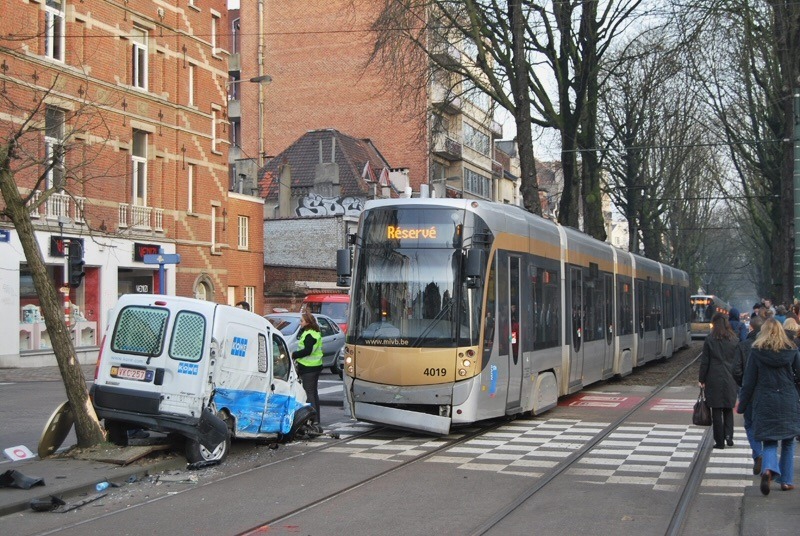
Main Image: By Tram24 – Own work, CC BY-SA 3.0, https://commons.wikimedia.org/w/index.php?curid=7740994

