
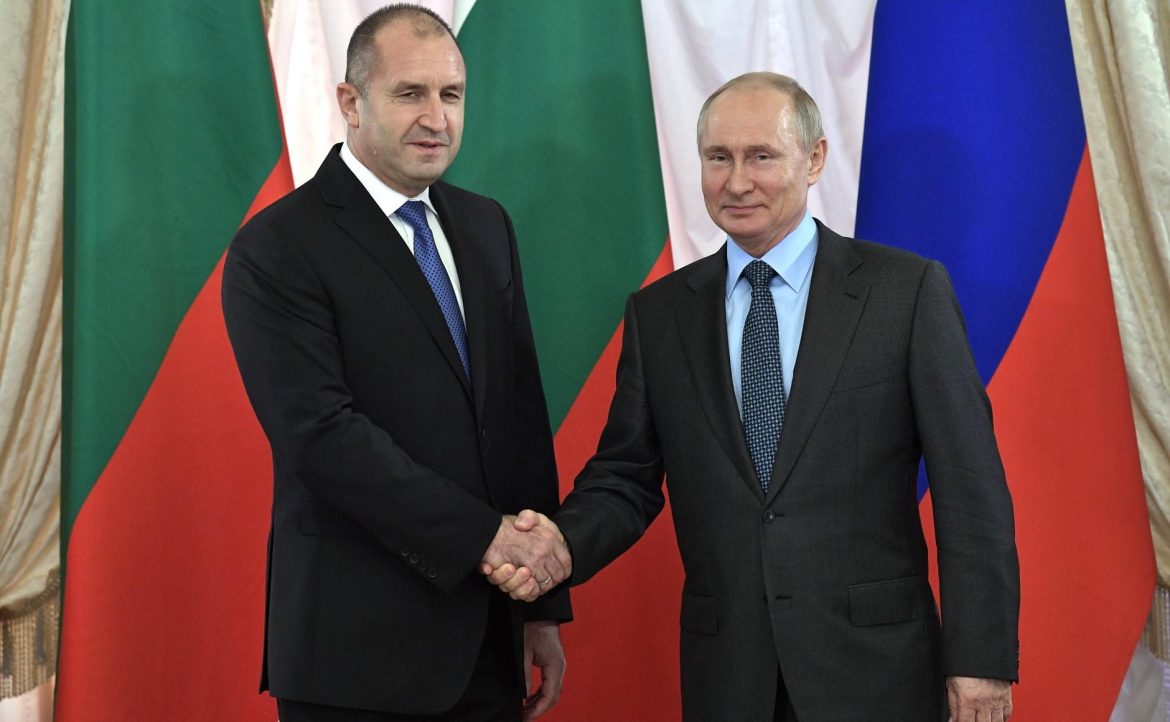
Bulgaria’s objection to the latest EU sanctions package has exposed a familiar weakness in the bloc’s Russia policy: the requirement for unanimity gives individual member states considerable leverage over measures designed to maintain pressure on Moscow.
Bulgaria has threatened to veto the European Union’s latest sanctions package against Russia, even as EU leaders agreed in Brussels to renew existing measures for 12 months rather than the usual six.
The move places Sofia at the centre of a new sanctions dispute and raises questions over how far the EU can harden its economic pressure on Moscow while maintaining internal consensus among all 27 member states.
Bulgarian Prime Minister Rumen Radev said his government would oppose the new package, citing potential damage to the country’s economy and objections to measures targeting a senior figure in the Russian Orthodox Church.
The dispute comes as the EU seeks to tighten restrictions linked to Russia’s war against Ukraine. The bloc has already imposed successive sanctions rounds targeting finance, energy, trade, shipping, military supply chains, propaganda networks and entities accused of helping Russia circumvent restrictions.
On 18 June, EU leaders agreed to extend existing sanctions against Russia for a full year, a change intended to reduce the recurring uncertainty caused by the need for six-month renewals. The decision marks the first time the EU has moved to a 12-month renewal cycle for these measures.
The longer renewal period is politically important because EU sanctions require unanimity. Under the previous system, governments opposed to aspects of the sanctions regime had a regular opportunity to delay, extract concessions, or threaten to block renewal. Extending the cycle to one year reduces the frequency of those moments of pressure, though it does not remove the need for agreement on new packages.
Bulgaria’s objection focuses on both economic and religious-political grounds. Radev warned that the proposed measures could affect Bulgaria’s economy, including areas connected to fuel supply, public transport and fertiliser. He also objected to sanctions touching the Russian Orthodox Church.
The economic dimension is particularly sensitive because Lukoil operates Bulgaria’s only refinery at Burgas and remains a major actor in the country’s fuel market. The refinery has repeatedly placed Sofia in a difficult position as EU and US sanctions policy has moved deeper into Russian energy-linked assets. Earlier this month, Bulgaria’s parliament approved legislation limiting the powers of a special manager overseeing Lukoil’s operations in the country, underlining the continuing domestic sensitivity of the issue.
New EU Today White Paper examines fossil energy as a weapon of war and coercion
For Brussels, the problem is not only Bulgaria. The wider issue is whether EU sanctions can remain both more ambitious and politically sustainable. Each new package is designed to close loopholes, target new intermediaries, and increase pressure on Russian revenue and procurement networks. But as the sanctions regime expands, it increasingly affects commercial relationships, energy contracts, transport systems and domestic political constituencies inside member states.
The latest dispute also comes after the EU expanded its sanctions listings to include individuals and entities linked to Russia’s military-industrial complex, oil transport networks and political influence operations. Earlier measures included figures connected to the so-called shadow fleet, judges and prosecutors linked to the treatment of Russian opposition figures, and individuals accused of spreading pro-Russian disinformation.
The proposed 21st package, presented earlier in June, was expected to target banks, crypto networks, energy-related activity and parts of Russia’s military supply chain. The European Commission has sought to frame the package as part of an effort to reduce Moscow’s ability to finance and sustain its war.
EU prepares 21st Russia sanctions package as pressure shifts back to military supply chains
Radev’s position does not necessarily mean the package will fail. EU sanctions negotiations often involve late revisions, carve-outs, legal clarifications or changes to individual listings before agreement is reached. Bulgaria has also indicated that it would not block Ukraine’s EU accession-related process, suggesting that Sofia may seek to separate its objections to sanctions from broader policy toward Kyiv.
However, the veto threat demonstrates how difficult it remains for the EU to maintain a common position when sanctions move from broad political signalling into sectors with direct national costs. Bulgaria is not the only member state to have used sanctions negotiations to press domestic concerns, but its current stance is notable because it comes as Brussels is trying to reduce uncertainty around the entire sanctions framework.
For Ukraine, the timing is awkward. Kyiv has repeatedly called for stronger action against Russian oil revenues, banking access, military technology procurement and third-country circumvention routes. Any delay to a new package would be read as a weakening of the EU’s ability to translate political commitments into legal and economic pressure.
For the EU, the immediate question is whether Bulgaria’s objections can be resolved without weakening the substance of the package. The larger question is whether unanimity can remain workable as the sanctions regime becomes more complex and begins to touch more national interests.
The 12-month renewal of existing sanctions gives Brussels more time between recurring political tests. Bulgaria’s veto threat shows that it has not removed the underlying problem.

