
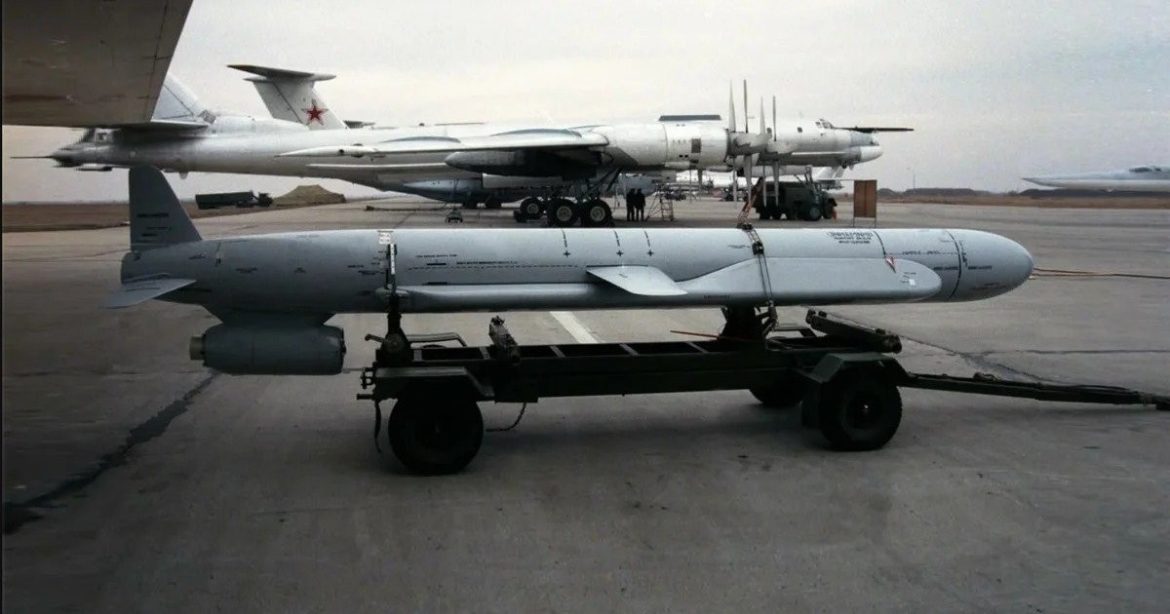
Ukrainian officials say Kh-101 cruise missiles used in the latest deadly strike on Kyiv were manufactured this year despite sanctions, raising further questions over Russia’s access to foreign microelectronics.
Russian cruise missiles used in a deadly strike on Kyiv contained more than 100 components originating from Western countries, according to findings reported by the Financial Times.
The missiles were identified as Kh-101 air-launched cruise missiles, one of Russia’s more advanced long-range weapons. Ukrainian officials said the missiles examined after the attack had been manufactured in the second quarter of 2026, indicating that Russia continues to produce new precision weapons using foreign components despite successive rounds of sanctions.
The findings relate to the Russian attack on Kyiv on 14 May, when a missile struck a residential building in the capital. Ukrainian authorities said the death toll had risen to at least 24 after rescue teams cleared large quantities of rubble from the site. The strike formed part of a wider Russian missile and drone attack against Ukraine.
Photographs of the missile debris were examined by Ukrainian officials, an independent expert and the Financial Times. The fragments reportedly included parts from a Kh-101 missile and showed that the weapon had been produced recently. Vladyslav Vlasiuk, Ukraine’s top sanctions official, told the newspaper that all Kh-101 missiles which struck Kyiv and were assessed by Ukrainian experts had been manufactured in the second quarter of this year.
According to the same report, the missile contained more than 100 components from Western countries. A Kh-101 missile of the same type, examined after a previous attack on 20 January, reportedly contained microchips and electronic parts linked to American brands including Texas Instruments, AMD and Kyocera AVX, as well as Germany’s Harting Technology Group and the Netherlands-based Nexperia.
Components of Chinese and Taiwanese manufacture were also found among the wreckage. Some of the parts reportedly carried serial numbers indicating that they had been produced in 2024 and 2025, after the introduction of sanctions intended to restrict Russia’s access to technology used in weapons production.
President Volodymyr Zelenskyy said preliminary information showed that the missile which hit the Kyiv apartment building was a Kh-101 manufactured in 2026. He said the case demonstrated the need to close sanctions-evasion channels and prevent foreign components from reaching Russia’s military industry, according to his comments reported by Ukrainian state media.
The Kh-101 has been used repeatedly in Russia’s long-range attacks against Ukrainian cities and infrastructure. It is launched from strategic aircraft and can carry a large warhead over long distances. Ukrainian officials and independent analysts have previously identified foreign-made electronic components in Russian missiles and drones, including navigation, guidance and communications systems.
The latest findings are likely to increase pressure on Western governments to tighten enforcement of export controls. Sanctions on Russia have targeted military goods, advanced technology, aviation parts and dual-use items, but enforcement has depended on tracing complex supply chains and preventing re-export through countries not aligned with the sanctions regime.
The Kyiv strike also underlined the human cost of Russia’s continuing aerial campaign. Ukrainian emergency services worked through the rubble of the damaged residential block, while Kyiv authorities declared a day of mourning. Western diplomats visited the site after the attack, and Zelenskyy called for further pressure on Russia’s military-industrial base.
Russia has said its recent strikes targeted Ukrainian defence-related facilities. Ukraine says Russian missile and drone attacks repeatedly hit civilian infrastructure, residential buildings and emergency workers responding to previous strikes.
For Kyiv and its partners, the debris from the Kh-101 missile is now being treated not only as evidence of the attack itself, but also as evidence of continuing gaps in sanctions enforcement. The presence of recent Western-origin components in newly manufactured Russian missiles suggests that restrictions on paper have not yet fully translated into control over the supply chains that sustain Russia’s weapons production.

