
Moscow’s own account of hundreds of Ukrainian drones approaching the capital region suggests that Ukraine’s long-range campaign is no longer confined to border areas or symbolic targets.
Russia’s claim that more than 430 Ukrainian drones flew towards the Moscow region overnight points to a widening phase in the air war, in which range, scale and pressure on Russian air defences are becoming central to Ukraine’s campaign.
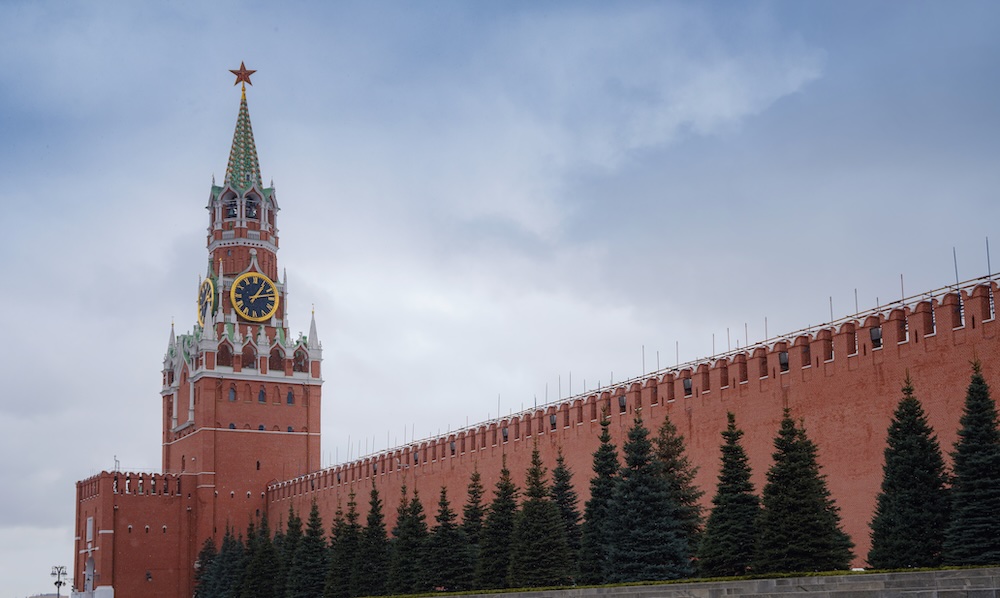
Moscow Mayor Sergei Sobyanin said that from the evening of 6 July until 6am on 7 July, more than 430 unmanned aerial vehicles were moving towards the Moscow region. He said most were neutralised on “distant approaches”, while 36 were destroyed on approach to the capital. The figures have not been independently verified, but their political importance lies in the fact that they were issued by Russian officials themselves.
The attack did not produce an immediate official Russian account of damage in Moscow or the surrounding region. That has become a familiar feature of Russian wartime reporting: interception numbers are released, but information about hits, secondary damage and disruption is often limited. Even so, the scale described in the Moscow mayor’s own statementsuggests that Ukraine is now able to mount large co-ordinated drone operations against the Russian capital region, rather than occasional symbolic raids.
The timing is important. The Moscow attack came alongside a broader Ukrainian long-range campaign against Russian energy infrastructure. On 6 July, Ukrainian drones struck the Omsk oil refinery in western Siberia, Russia’s largest refinery, in one of the deepest Ukrainian attacks of the war. Russian authorities confirmed a fire and said there were no casualties. Ukrainian officials presented the strike as evidence that facilities deep inside Russia are no longer beyond reach.
Omsk matters because of geography. The refinery lies roughly 2,700 kilometres from Ukrainian-controlled territory. For much of the war, Russian industrial sites beyond the Urals were protected not only by air defences but by distance. The Omsk strike challenges that assumption. It also shows that Ukraine’s drone campaign is no longer confined to border regions, occupied Crimea, oil depots in western Russia or the approaches to Moscow.
Ukraine has also targeted oil infrastructure in Yaroslavl. The Security Service of Ukraine confirmed an overnight strike on the Yaroslavl oil refinery and a related oil pumping and dispatch station, with explosions and smoke reported near the site. Taken together with Omsk, the pattern points to a campaign aimed at Russian refining capacity, fuel logistics and the economic systems supporting the war effort.
Moscow has long placed exceptional emphasis on the defence of the capital. During the Soviet period and after 1991, the protection of Moscow was treated as both a strategic and political priority. The image of an exposed capital has always carried consequences. In 1987, the landing of West German pilot Mathias Rust’s small aircraft near Red Square became a public symbol of Soviet air-defence failure and contributed to the removal of senior military officials.
The comparison is not exact. Today’s drone war is technologically different, and Russia is fighting a large-scale war rather than policing a peacetime airspace violation. But the political point remains: repeated drone approaches to Moscow weaken the perception that the capital is insulated from the war that the Kremlin has brought to Ukraine.
For Kyiv, the logic is clear. Russia has continued large missile and drone attacks on Ukrainian cities, including Kyiv, where the latest Russian strikes killed and injured civilians and damaged residential districts. In one of the latest attacks, Kyiv and the surrounding region were hit by missiles and drones, exposing Ukraine’s continuing shortage of air-defence interceptors. Other reporting from the same wave of strikes described heavy losses in the capital, including damage to apartment blocks.
Ukraine’s response is not based on replicating Russia’s attacks on residential districts. Its long-range campaign has concentrated on infrastructure that supports Russia’s military and economic capacity: refineries, pumping stations, export facilities, military-industrial sites and logistics nodes. That distinction is central to how Kyiv presents the campaign to its partners.
The strategic question is whether this campaign can impose cumulative costs. Russia’s energy system is vast, and individual strikes do not by themselves determine the course of the war. But repeated attacks on refineries, ports, pumping stations and military-industrial sites create operational friction. They can force the diversion of air-defence systems, complicate fuel distribution, raise repair costs and expose the limits of a defence network designed for a different kind of threat.
The Moscow raid also has a psychological dimension. If Russian officials are acknowledging hundreds of drones heading towards the capital region in a single night, then the war is no longer something that can be presented to the Russian public as confined to Ukraine, the occupied territories or distant border provinces. Belgorod, Kursk, Moscow, Yaroslavl and Omsk now form part of a widening map of Russian vulnerability.
That does not mean Ukraine can end the war through drones alone. Nor does it mean Russia’s military capacity is close to collapse. But it does mean that one of Moscow’s assumptions is eroding: that Russia can strike Ukrainian cities while keeping its own capital, refineries and deep industrial rear largely outside the battlefield.
Ukraine’s long-range drone campaign is therefore becoming more than a sequence of tactical attacks. It is an attempt to change the cost structure of the war for Russia, stretch air defences across a vast territory, and bring the consequences of the Kremlin’s war closer to the systems that sustain it.

