
For years, Spain’s Socialist establishment cultivated an image of moral superiority over the country’s conservative right. Corruption, Spaniards were often told, belonged to an older era of smoke-filled back rooms, construction kickbacks and cash-stuffed envelopes associated with the Partido Popular.
However, events now unfolding in Madrid suggest that the rot may run far deeper — and far closer to the heart of the modern Left — than many in Europe’s political class would care to admit.
Former Spanish prime minister José Luis Rodríguez Zapatero, once lionised by progressive Europe as the architect of a new socially liberal Spain, now finds himself under criminal investigation in connection with the controversial €53 million Covid-era bailout of airline Plus Ultra. Spain’s High Court, the Audiencia Nacional, has summoned him to testify over allegations of influence peddling, money laundering and involvement in a network accused of exploiting political connections for private gain.
The allegations are explosive not merely because of their legal implications, but because of what they reveal about the increasingly murky overlap between politics, ideology and business within Spain’s ruling Socialist orbit.
Plus Ultra was always an unusual candidate for state rescue. Critics questioned why an airline with limited market share and apparent financial fragility deserved tens of millions in public money during the pandemic. The company’s links to Venezuela — a country with which Zapatero has long maintained political and diplomatic ties — only intensified suspicion.
According to investigators, the bailout may have formed part of a broader network of influence in which political access was monetised behind closed doors. Reuters reports that the court suspects shell companies, opaque financial structures and questionable documentation were used to conceal the movement of funds connected to the affair.
Zapatero has denied wrongdoing, insisting that all his activities complied fully with Spanish law. His allies within the governing Socialist Party have rallied to his defence, portraying the investigation as politically motivated. Yet such explanations are becoming increasingly difficult for voters to swallow.
Spain’s current prime minister, Pedro Sánchez, already faces a gathering storm of scandals surrounding members of his inner circle, including separate investigations involving his wife and brother. The cumulative effect is corrosive. What was once presented as an enlightened, technocratic administration now appears mired in precisely the sort of patronage politics it once condemned.
The symbolism matters enormously. Zapatero was no ordinary former premier. During his years in office from 2004 to 2011, he became a hero of Europe’s progressive establishment, celebrated for liberalising social policy, withdrawing Spanish troops from Iraq and promoting a distinctly post-national vision of governance.
But political idealism often ages poorly when exposed to the realities of power.
Spain’s modern democratic history has repeatedly demonstrated how political systems built upon moral certainty eventually succumb to the temptations of entitlement. The country has endured wave after wave of corruption scandals spanning both Left and Right. From the Gürtel affair that devastated the conservatives to the endless municipal graft scandals that scarred regional politics, Spanish public life has developed an almost fatalistic relationship with corruption.
What distinguishes the Zapatero affair is the sheer prominence of the figure involved. Reuters notes that he is effectively the first former Spanish prime minister of the democratic era to be formally investigated in this manner. That alone marks a profound moment for Spain’s institutions.
There is also a wider European lesson here. Across the continent, political elites increasingly portray themselves not simply as elected administrators but as moral guardians of democracy itself. Opponents are denounced as populists, extremists or threats to democratic norms. Yet scandals such as this expose the danger of believing one’s own rhetoric for too long.
When politicians convince themselves they occupy the “correct” side of history, ordinary standards of scrutiny begin to weaken. Networks of influence flourish. Personal relationships become blurred with state interests. Public money starts moving through channels protected by ideology and loyalty rather than transparency.
The irony is difficult to miss. European progressives spent much of the past decade insisting that the greatest threat to democratic values came from insurgent nationalist movements. Yet again and again it is establishment parties — armed with the language of virtue — that find themselves embroiled in allegations of cronyism, opaque finances and abuse of office.
None of this, of course, proves Zapatero guilty. Spain’s courts must be allowed to proceed without political interference, and the presumption of innocence remains fundamental. But the political damage is already immense.
For Sánchez, the timing could scarcely be worse. His government has spent months attempting to contain mounting accusations surrounding senior figures within the Socialist ecosystem. The spectacle of police searches linked to a former Socialist prime minister only deepens the sense of a governing class under siege.
European voters are becoming increasingly weary of leaders who preach transparency while operating within cosy networks of insiders. They are tired of being told that corruption belongs exclusively to the “other side”. And they are growing suspicious of political establishments that appear more interested in protecting reputations than confronting uncomfortable truths.
Spain may yet discover that the greatest threat to public trust is not ideological extremism at all, but the slow decay of accountability among those who long assumed themselves untouchable.
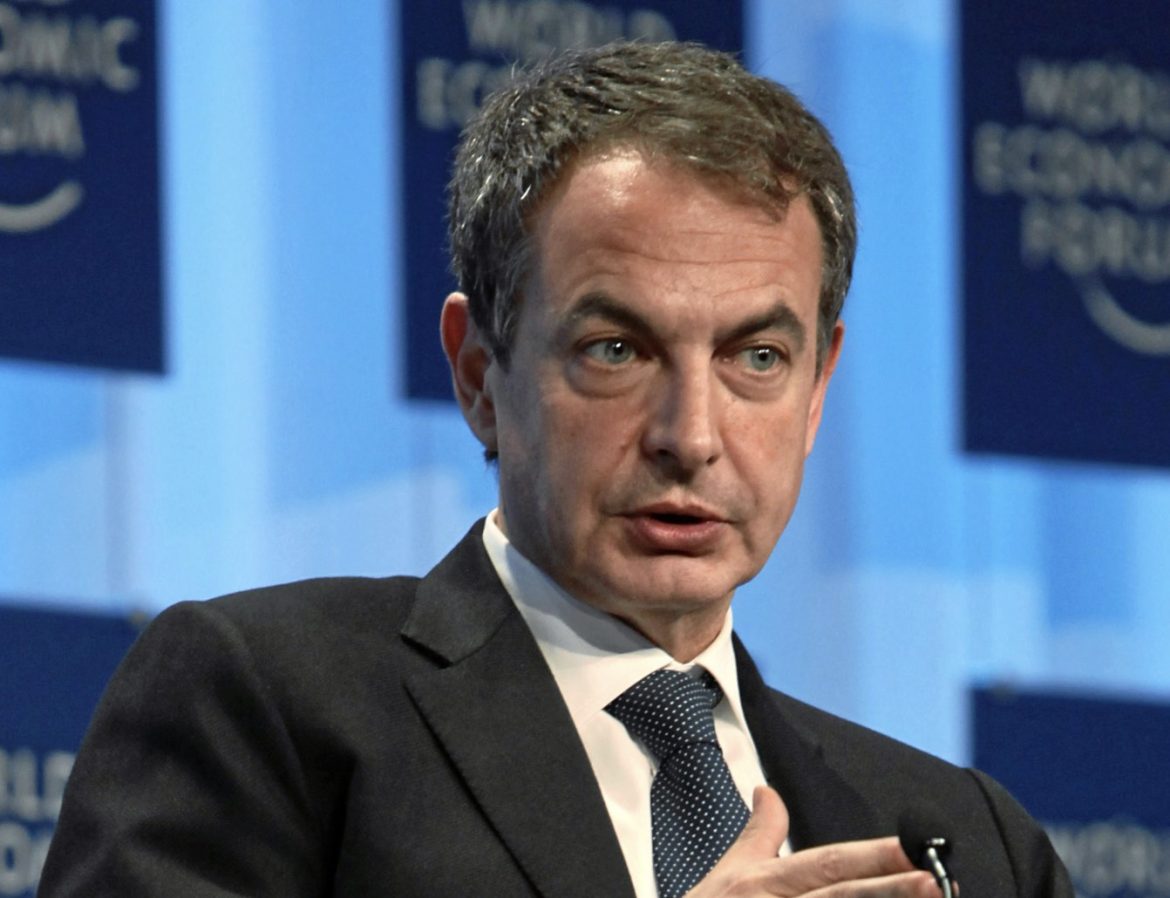
Main Image: – Jose Luis Rodriguez Zapatero – World Economic Forum Annual Meeting Davos 2010 (File:José Luis Rodríguez Zapatero en el Foro Económico Mundial.jpg) Uploaded by Rastrojo
Click here for more News & Current Affairs at EU Today
Click here to check out EU TODAY’S SPORTS PAGE!
___________________________________________________________________________________________________________________

