
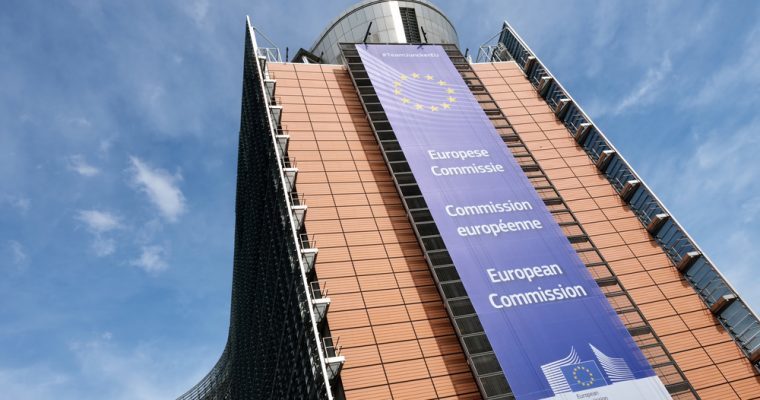
The European Commission, that labyrinthine powerhouse of Brussels bureaucracy, finds itself mired in yet another controversy, this time over a secretive restructuring of its influential secretariat-general.
The shake-up, announced in May 2025 and spearheaded by the Commission’s formidable Secretary-General Ilze Juhansone, has sent shockwaves through the European Parliament, with MEPs accusing the executive of sidelining democratic accountability in favour of geopolitical grandstanding. The row, which critics are calling a bureaucratic power grab, threatens to deepen the already yawning chasm of distrust between the EU’s institutions and the public they claim to serve.
At the heart of the storm is the Commission’s decision to reorganise its secretariat-general, the administrative engine room that ensures the smooth operation of the EU’s most powerful institution. Internal documents reveal plans to create new units dedicated to external economic policies and so-called “tech sovereignty”—a buzzword that reflects Brussels’ ambition to counter the technological dominance of the United States and China.
These priorities, while lofty, have raised eyebrows among those who fear the Commission is pivoting away from its core responsibilities to chase global influence.
The most contentious element of the reshuffle is the merger of the team responsible for relations with the European Parliament with the unit that liaises with national parliaments. On paper, this might sound like a minor administrative tweak. In practice, it has been met with howls of protest from MEPs, who see it as a deliberate downgrading of their influence.
The European Parliament, directly elected and ostensibly the voice of the EU’s citizens, has long battled to assert its authority against the unelected Commission. By folding its dedicated liaison team into a broader unit, the Commission risks sending a signal that parliamentary oversight is an afterthought—a move one MEP described as “a bureaucratic middle finger to democracy.”
The timing could hardly be worse. The Commission is already reeling from a string of scandals, from “Pfizergate” allegations surrounding President Ursula von der Leyen’s opaque vaccine negotiations to probes into senior officials’ conflicts of interest. Against this backdrop, the reorganisation has fuelled accusations that the Commission is more concerned with global power plays than with the democratic processes that lend it legitimacy.
“This is the Brussels bubble at its worst,” one senior parliamentary source said. “While citizens demand transparency, the Commission is rearranging deckchairs to focus on tech wars with China and the US. It’s tone-deaf.”
Critics argue the restructuring reflects a deeper malaise within the EU’s executive arm. The creation of units focused on external economic policies and tech sovereignty suggests a Commission eager to flex its muscles on the world stage, particularly as tensions with Washington and Beijing intensify. The EU has made no secret of its desire to rival the technological might of its transatlantic ally and its Chinese competitor, with von der Leyen herself championing “strategic autonomy” in areas like artificial intelligence and semiconductors.
Yet, as one Brussels insider put it, “You can’t talk about sovereignty while snubbing the only EU institution with a direct democratic mandate.”
The Commission, for its part, has sought to downplay the row. A spokesperson insisted the changes aim to “streamline operations” and “enhance coherence” in the face of complex global challenges. They pointed to the EU’s need to navigate a world of trade wars, digital disruption, and geopolitical uncertainty. But such assurances have done little to quell the anger from MEPs who are already smarting from years of perceived slights by the Commission’s technocrats.
One MEP, speaking anonymously, accused Juhansone’s team of treating the Parliament as “a pesky inconvenience rather than a partner.”
This is not the first time the secretariat-general, often described as the Commission’s “shadow government,” has courted controversy. Its outsized influence—coordinating policy across directorates—has long made it a lightning rod for criticism.
Under Juhansone, a seasoned Latvian diplomat known for her steely efficiency, the secretariat has consolidated its grip, prompting whispers of a “power creep” that undermines the collegiate spirit of the Commission’s leadership.
The broader implications of the reshuffle are hard to ignore. At a time when Euroscepticism is resurgent across the continent, the perception of a disconnected, self-serving Brussels elite could prove toxic. The Commission’s defenders argue that global challenges—trade disputes, tech rivalries, climate crises—demand a nimble (a word that could never be applied to the elephantine Commission) outward-looking executive. Yet, as one parliamentary aide warned, “If you erode trust at home to chase influence abroad, you risk losing both.”
For now, the reorganisation is set to proceed, with Juhansone’s team expected to finalise the changes in the coming months. But the fallout is likely to linger, adding fuel to a narrative of an aloof Commission that prioritises its own ambitions over the democratic will of the people it serves. In Brussels, where power is often wielded behind closed doors, this latest spat is a stark reminder: transparency and accountability remain the EU’s Achilles’ heel.

