
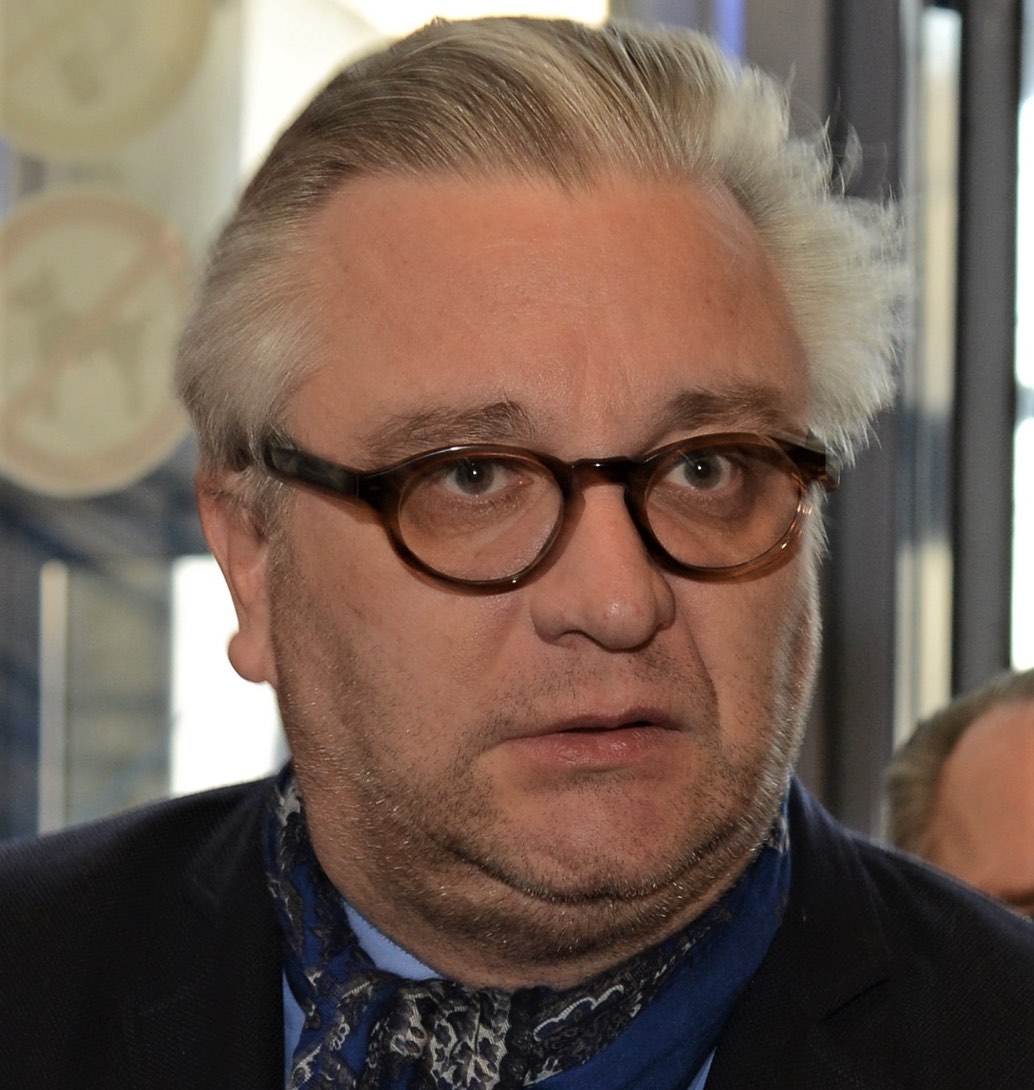
In a ruling that marks a first in nearly two centuries of Belgian history, Prince Laurent has lost a legal battle to claim social security benefits on top of his royal allowance, with judges dismissing his claim as “unfounded.”
The prince, the youngest son of former King Albert II and Queen Paola, had argued passionately that his work entitles him to coverage typically granted to independent entrepreneurs. But on Monday, the Brussels court ruled that his royal duties more closely resemble those of a civil servant — a category afforded specific benefits but excluded from the overarching social security system.
At 61, Prince Laurent, long considered the enfant terrible of the Belgian royal family, now faces the decision of whether to appeal. “We’re not where we wanted to be,” his lawyer, Olivier Rijckaert, conceded to Agence France-Presse, “but the judgment is very detailed, very reasoned. I understand the reasoning.”
Prince Laurent insisted throughout the proceedings that his case was not driven by financial necessity but by “principle.” Speaking to Belgian broadcaster RTBF, he said: “When a migrant comes here, he registers, he has a right to it. I may be a migrant too, but one whose family established the state in place.”
A Modest Life for a Royal?
Despite the grandeur traditionally associated with royalty, Laurent’s finances tell a rather different story. Last year, he received €388,000 (£333,000) from the Belgian state and resides rent-free in his home. However, he claims that only about 25% of his allowance functions as a true salary, the remainder covering expenses such as travel and staff wages.
This, according to Rijckaert, leaves the prince with a monthly net income of around €5,000 — comparable, the lawyer argues, to the salary of a senior executive in Belgium but without the attendant social security safety net.
Without access to social security, Laurent is unable to claim reimbursements for medical expenses or sick pay should he become unable to work. With three children in their twenties and concerns about future financial stability — given that royal allowances are cut upon death — the prince says his motives are both principled and practical.
His philanthropic work, notably a decade-long commitment to an animal welfare foundation offering free veterinary care, has been cited as evidence of a busy schedule that extends beyond ceremonial duties. Laurent also participates in numerous boards and undertakes representation duties for Belgium, though not always with the blessing of the government.
A Royal History of Discontent
Prince Laurent is not alone in his dissatisfaction with the financial arrangements for Belgium’s royals. His father, King Albert II, complained after his abdication in 2013 that his €923,000 annual allowance was insufficient to cover his expenses.
Yet Laurent’s reputation for controversy, more than his finances, has earned him the moniker prince maudit — the “cursed prince” — in the Belgian press.
His record is colourful, to say the least. Over the years, he has amassed speeding fines, undertaken unsanctioned foreign visits, and generally flouted the careful protocol that Belgium’s constitutional monarchy typically demands.
A particularly notable incident occurred in 2017 when his allowance was slashed by 15% after he attended a Chinese military celebration without government approval. The faux pas was not his first: he had earlier drawn criticism for attending meetings in Libya under the late Muammar Gaddafi and for making an unsanctioned 2011 trip to the Democratic Republic of Congo, a former Belgian colony.
Such escapades have strained relations between the prince and the federal authorities, who are tasked with keeping Belgium’s fractious political system, split between Dutch-speaking Flanders and French-speaking Wallonia, on an even keel.
Tarnished By Scandal
Perhaps the most damaging episode in Prince Laurent’s chequered history came in 2007, when a trial opened into the embezzlement of funds from the Belgian navy. The case, held in the court of Hasselt, saw 11 defendants — including naval officers and civilian industry leaders — accused of siphoning off some €2 million.
Captain Noel Vaessen, one of the accused and a former aide to Laurent, sought to have the prince testify, alleging that Laurent had knowingly benefited from €175,000 of the misappropriated funds. The money, Vaessen claimed, went towards work on Laurent’s residence and an animal charity under his patronage.
King Albert II authorised his son to testify if called, though the presiding judge, Christine Coopmans, offered no firm indication at the time whether this would happen. Laurent steadfastly denied any knowledge of the fraudulent origins of the money.
Though the prince escaped direct legal consequences, the incident cast a long shadow over his public image, reinforcing his reputation as a liability to the monarchy.
A Symbol of an Anachronistic Institution?
The case raises broader questions about the role and relevance of European monarchies in the modern age. Belgium’s royal family, in particular, walks a delicate tightrope. It is at once a symbol of national unity and a frequent target of political ire, particularly among republicans who view the royal institution as outdated and costly.
Prince Laurent’s latest legal adventure is unlikely to win him much public sympathy. Many Belgians, facing rising living costs and economic uncertainty, will find it difficult to empathise with a prince fighting for entitlements atop an already considerable allowance.
Yet others may view Laurent’s case as a reflection of genuine concerns: about transparency, about equality before the law, and about the rights of individuals, royal or otherwise, within a democratic society.
Whether Prince Laurent chooses to appeal remains to be seen. For now, though, Belgium’s most unpredictable royal finds himself once again on the losing side — a familiar position for the kingdom’s prince maudit.
Image: agriflanders, https://www.flickr.com/photos/agriflanders/15676745744/ via via Wikimedia commons

