
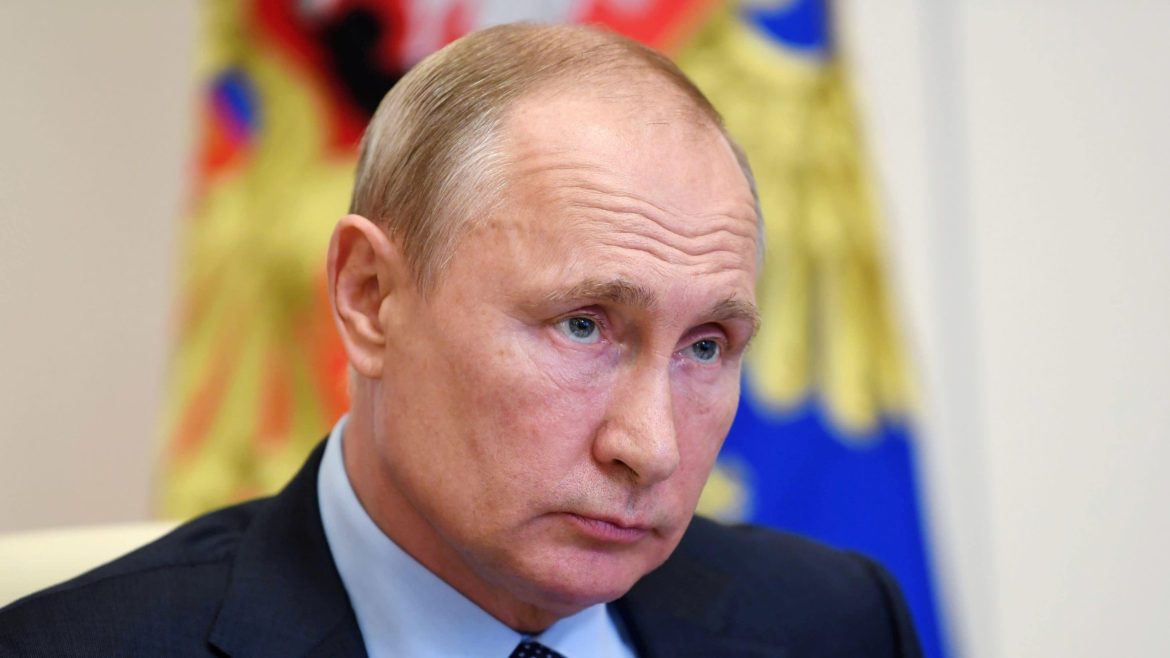
Russian President Vladimir Putin has reportedly appealed to Russia’s biggest businessmen for large “voluntary” contributions to the state budget, in what appears to be a sign of growing financial strain as the war against Ukraine enters its fifth year.
Putin used a closed-door meeting with leading business figures on 26 March to make clear that the Kremlin intended to continue the war and expected support from those who had prospered under his rule. Reuters reported that billionaire Suleiman Kerimov was named in the account as having pledged 100 billion roubles, while the Financial Times said metals magnate Oleg Deripaska also agreed to contribute. The Kremlin denied that Putin had explicitly asked businessmen to fund the war, but admitted that one participant had offered a “very large sum of money” to the state.
The reported meeting matters not simply because of the sums involved, but because of its timing. It came just as Ukraine’s strikes on Russian energy infrastructure were beginning to disrupt one of the Kremlin’s main sources of income. Reuters calculations published on 25 March said that at least 40 per cent of Russia’s oil export capacity, around 2 million barrels per day, had been halted by a combination of Ukrainian drone attacks, tanker seizures and pipeline disruption. That estimate was described as the most serious oil supply interruption in modern Russian history.
Those disruptions have centred on key export routes and refining assets. Reuters reported that Ukrainian strikes hit the Baltic ports of Ust-Luga and Primorsk, while damage at Ust-Luga threatened knock-on effects for major refineries at Kirishi, Yaroslavl, Moscow and Ryazan. A separate Reuters report on 27 March said Russian producers were already warning buyers that force majeure might have to be declared on some supplies because of repeated attacks on Baltic infrastructure. Ust-Luga loadings had been halted since Wednesday, while Primorsk had only partially resumed operations.
Ukraine strike on Ust-Luga exposes pressure point in Russia’s Baltic oil exports
That sequence is important because the Kremlin had expected the wider Middle East crisis to improve its position. With oil prices pushed above $100 a barrel by the Iran war, Moscow stood to benefit from higher export earnings. Ukraine had stepped up long-range strikes precisely because earlier pressure on Russian oil exports had been eased amid global supply disruption linked to the Iran conflict. President Volodymyr Zelenskyy said Kyiv was using what he called its own “sanctions” by striking Russian oil infrastructure after those restrictions were softened.
Against that background, the reported Kremlin appeal to oligarchs looks less like a routine patriotic gesture and more like an admission that the expected windfall has not translated into stable budget relief. Russian government had been preparing a possible 10 per cent cut to “non-sensitive” spending, with any final decision depending on whether higher oil prices proved sustainable. Russia’s budget deficit in the first two months of the year have already reached more than 90 per cent of the annual projection.
The political message from the meeting was also notable. Reuters said The Bell reported Putin telling the businessmen that Russia would continue fighting until it captured the remaining parts of the Donbas not yet under Russian control. That account cuts against any suggestion that the Kremlin is preparing for a negotiated settlement on terms acceptable to Kyiv. It also suggests that Russia’s leadership still sees war aims and fiscal mobilisation as inseparable.
The broader pattern is clear enough. The Kremlin is trying to sustain a war whose costs continue to rise, while Ukraine is attempting to cut the revenue streams that finance it. The significance of the strikes on Ust-Luga, Primorsk and connected refining capacity lies not only in the physical damage but in the effect on export flows, insurance risk, contractual stability and budget receipts. If Putin is indeed passing the hat among Russia’s richest men at the same moment as Ukraine disrupts the infrastructure that underpins federal revenues, that points to a harder truth behind the rhetoric of resilience: the Russian war economy remains vulnerable where it matters most, in the conversion of oil exports into cash.
First published on euglobal.news.

