
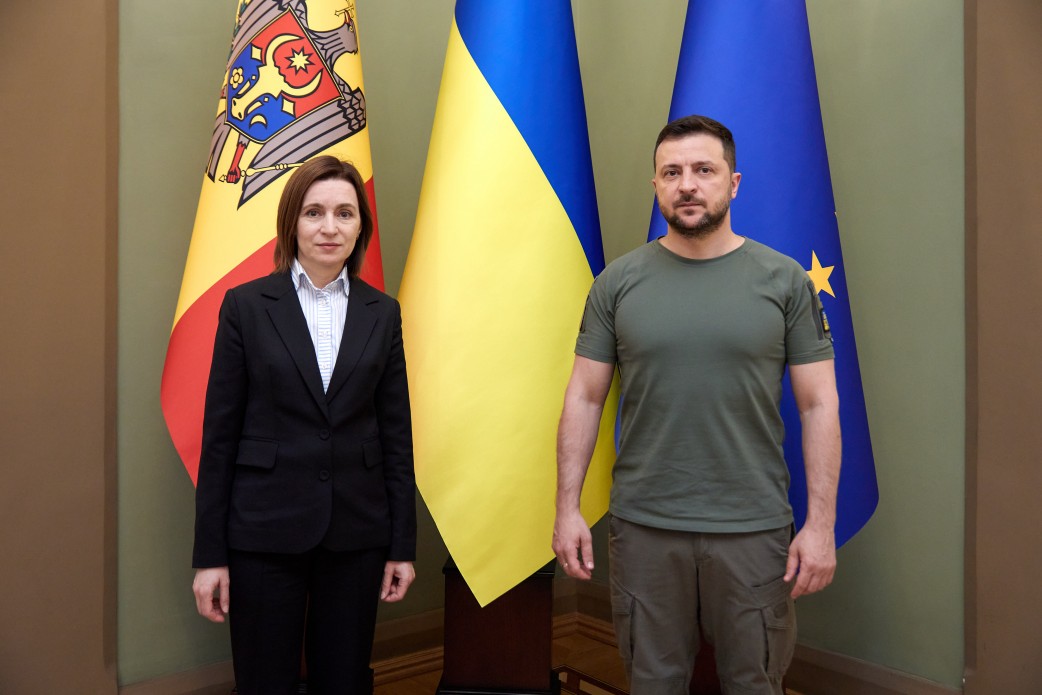
Ukraine and Moldova are entering the first substantive phase of their EU accession negotiations, turning a symbolic enlargement milestone into a practical test of rule of law, public administration and democratic standards.
The second accession conference with Ukraine is being held in Luxembourg on 15 June, alongside a separate accession conference with Moldova. Both meetings are intended to open negotiations on Cluster 1, known as “Fundamentals”, the part of the accession process covering the rule of law, fundamental rights, democratic institutions, public administration reform and economic criteria.
This is the first real test of what EU enlargement now means after Russia’s full-scale invasion of Ukraine. Kyiv and Chisinau were granted candidate status in 2022 and formally opened accession negotiations in 2024. The step now being taken in Luxembourg is different. It moves the process from political commitment into the machinery of alignment, monitoring and implementation.
For Ukraine, accession is inseparable from the war. President Volodymyr Zelenskyy has repeatedly described EU membership as part of Ukraine’s strategic future in Europe. For Moldova, the process is tied to its effort to reduce vulnerability to Russian pressure and consolidate state institutions. In both cases, the EU path is not only an administrative exercise. It is part of a wider struggle over Europe’s political and security order.
Yet the opening of the first cluster also brings a harder message. The “Fundamentals” cluster is designed to test whether a candidate country can sustain reform in the areas that have caused the EU its greatest internal problems: judicial independence, corruption control, media freedom, public administration and institutional checks. It is the foundation of the accession process because failure in these areas affects every other part of membership.
EU leaders have framed the decision as recognition of the “determination, courage and hard work” shown by both countries, while stressing that the cluster forms the “backbone” of accession. That language is important, but the practical meaning is stricter. Once negotiations begin, progress depends on evidence, benchmarks and monitoring, not sympathy or geopolitical urgency.
That will be particularly relevant for Ukraine. The country has carried out major reforms during wartime, but it also faces intense scrutiny over anti-corruption institutions, judicial reform, public procurement and governance. The political argument for Ukraine’s accession is strong across much of the EU, but membership will require the application of EU law and standards across a state still defending itself against Russian aggression.
Moldova faces a different but related test. Its government has pursued a clear pro-European course, but the country remains economically fragile and exposed to Russian political, information and energy pressure. The accession process will test whether reforms can be institutionalised beyond immediate political leadership and whether the state can strengthen its administrative capacity.
The EU also faces its own test. Enlargement has returned as a strategic priority, but the Union has not resolved all of the institutional questions that further expansion would create. Budget pressure, voting rules, agricultural support, cohesion funding and the future balance between larger and smaller member states remain politically sensitive. Ukraine’s size alone makes its accession a structural question for the EU, not merely a bilateral negotiation.
That is why the debate over safeguards for future members has become more relevant. A group of EU countries has proposed stronger mechanisms to protect the Union against democratic backsliding after accession, including possible limits on voting rights in serious cases. The concern is clear. The EU does not want to import future veto problems into a system that already struggles with unanimity in foreign policy, sanctions and enlargement decisions.
The previous Hungarian blockage of Ukraine’s path showed how vulnerable accession policy can be to national politics. EU ambassadors agreed on 12 June to proceed with the first cluster after earlier delays, allowing the Luxembourg conferences to go ahead. That breakthrough matters, but it also underlines the fragility of the process. Every subsequent stage can become a political negotiation among member states as well as a technical assessment of the candidates.
For Brussels, the question is therefore not whether Ukraine and Moldova should be encouraged. That has already been decided politically. The question is whether encouragement can be turned into a credible accession process that is demanding enough to protect EU standards and flexible enough to keep reform momentum alive.
There is a risk in both directions. If the EU treats accession mainly as a geopolitical signal, it may weaken the credibility of its own rules. If it turns the process into an indefinite technical exercise, it may damage reform incentives in Kyiv and Chisinau and strengthen those arguing that the European promise is distant or conditional without end.
The opening of the first cluster is therefore more than a procedural step. It begins the part of the process where political support must be matched by administrative capacity, legal reform and institutional discipline. Ukraine and Moldova now move closer to the EU, but they also enter a more demanding phase of scrutiny.
For Europe, the stakes are broader than two candidate countries. The accession talks will test whether the EU can enlarge as a strategic actor without weakening the standards that define membership. That balance will decide whether enlargement becomes a credible tool of European security or another unresolved institutional promise.

